United States ‘exceptionalism’ built on backs of the 99 percent

United States ‘exceptionalism’ built on backs of the 99 percent

[click on title to be redirected to The Standard Times]

Dr. Guillermo Paz-y-Miño C. — © 2011

Department of Biology, University of Massachusetts Dartmouth 

“A sense of inner exceptional nature probably drives the existence of most individuals and seems to be a Darwinian adaptive trait. Tribal pride is not only ancestral but ubiquitous…”

Overconfidence, or “believing you are better than in reality, is advantageous because it increases ambition, morale, resolve, persistence or the credibility of bluffing, generating a self-fulfilling prophecy in which exaggerated confidence boosts up success,” write Dominic D.P. Johnson and James H. Fowler in their latest article, The Evolution of Overconfidence, published in Nature in September.

Johnson and Fowler remark that “populations become overconfident, as long as benefits from contested resources are large compared with the cost of competition. The fact that overconfident populations are evolutionarily stable in diverse environments may explain why overconfidence remains prevalent today, even if it contributes to hubris, market bubbles, financial collapses, policy failures, disasters and wars.”
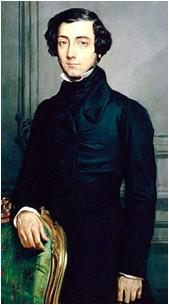
In “Democracy in America” (Volumes I, 1835, and II, 1840: visit Democracy in America Online), the French sociologist and historian Alexis de Tocqueville [image left] acknowledged and critically contemplated the originality and uniqueness of the 19th century emerging superpower, the United States. He called it “exceptional” for its generalized equality and constitutional democracy, and for its commercial habits and pragmatism.

In retrospect, his observations about American ideology, cultural cohesiveness and shared values were astute and visionary. But de Tocqueville also detected the underlying fabric of puritan thinking, the essence of our modern conservatism:

“Almost all the sects of the United States are comprised within the great unity of Christianity, and Christian morality is everywhere the same. In the United States the sovereign authority is religious, and consequently hypocrisy must be common; but there is no country in the whole world in which the Christian religion retains a greater influence over the souls of men than in America, and there can be no greater proof of its utility, and of its conformity to human nature, than that its influence is most powerfully felt over the most enlightened and free nation of the earth [Alexis de Tocqueville].”

The clause “American exceptionalism” was apparently used, depreciatively, by Joseph Stalin (1878-1953) while forecasting in the 1920s that the American wealth, technological pride and social fairness were temporary and fated to collapse, unless communism took over. Ironically, the Soviet system crumpled in the 1980s and its “restructuring” — Perestroika — led to political and economic reform by mimicking the market-based models of the West, which, paradoxically, became today’s fiasco in a landscape of deregulated money-making opportunities that did not benefit –mainly– the people.
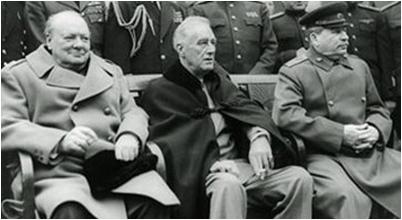
Winston Churchill (UK), Franklin Roosevelt (USA) and Joseph Stalin (USSR), The “Big Three,” at The Yalta Conference, 1945. They met to discuss the future of Europe after World War II. [Click for VIDEOS The Yalta Conference].

The idea of exceptionalism consolidated in the United States and abroad after the 1950s, based on unparalleled industrial transformations, scientific achievements, competitive labor and education. Reality surpassed the cliche of uniqueness and actually disproved one of de Tocqueville’s assertions: that Americans’ exclusive trading interests “diverted their minds from the pursuit of science, literature and the arts” and that, therefore, exceptionalism was evident mainly in socio-economic affairs.

But living up to exclusiveness has proved difficult, and fast excessive wealth has led to ignore the history that created the “extraordinary.” It was judicious investment in rigorous education, basic science and technology that gave rise to the best universities in the world, the finest hospitals, unrivaled space explorations, magnificent natural history museums and ecologically managed national parks. Farms, factories, highway connectivity and urbanization prospered due to an agile economy that generated, in hindsight, short lasting bonanza.

“It was judicious investment in rigorous education, basic science and technology that gave rise to unrivaled space explorations” — Mission Control International Space Station — Houston, photo G. Paz-y-Miño C. © 2011

And it was an outstanding work force, driven by the highest standards of performance, that enriched today’s heartless, and sometimes brainless, “top 1 percent,” the financial conservative elite who opposes science, mocks intellectuals and ridicules college education. The overconfident mega-wealthy who question the reality of human-induced climate change, reject evolution, blame vaccines for causing mental retardation or autism, diminish the importance of biodiversity, and oppose environmental protection and clean energy.

Above: Cumulative Growh in Average After-tax Income, by Income Group (percentage change in income since 1979, adjusted for inflation); source US Congressional Budget Office, CBO Report October 2011

Above: Share of Total After-tax Income, by Income Group (percent); source US Congressional Budget Office, CBO Report October 2011

Yet, they claim the value of exceptionalism as their own and intend to renegotiate it for the upcoming elections, re-sell it to the voters — as in the profitable stock market — of course, without committing their assets, or taxes, to the continuation of the “extraordinary,” thus neglecting that “uniqueness” took a century to be erected over the human capital of workers, artists, scientists, musicians, teachers, novelists or poets, who invested themselves, and fully, to harvest collective good.

If a bailout is an “act of loaning or giving capital to a company, a country, or an individual that is in danger of collapsing, in an attempt to prevent ruin,” then the exceptionalism that we treasure must be rescued — “bailed out” — by the prosperous untouchable class that amassed fortune over the exceptional labor of their compatriots.  — © 2011 by Guillermo Paz-y-Miño-C. all rights reserved

World Extreme Poverty Map 2008

Source: for original document Click on 2008 World Development Indicators, The World Bank.

For World Statistics on Poverty visit Global Issues Poverty Facts


Above: Almost half the world — over three billion people — live on less than $2.50 a day. Source World Bank Development Indicators 2008.

Above: In 2005, the wealthiest 20% of the world accounted for 76.6% of total private consumption. The poorest fifth just 1.5%. Source World Bank Development Indicators 2008.

Recommended Book: The Price of Civilization, 2011, by Jeffrey D. Sachs

“…At the root of America’s economic crisis lies a moral crisis: the decline of civic virtue among America’s political and economic elite. A society of markets, laws, and elections is not enough if the rich and powerful fail to behave with respect, honesty, and compassion toward the rest of society and toward the world. America has developed the world’s most competitive market society but has squandered its civic virtue along the way. Without restoring an ethos of social responsibility, there can be no meaningful and sustained economic recovery…” says author Jeffrey D. Sachs.

Boston’s Hayden Planetarium carries standard of scientific study – Editorial The Standard Times – Aug 17, 2011

[click on title to be redirected to The Standard Times]

Dr. Guillermo Paz-y-Miño C. — © 2011

Department of Biology, University of Massachusetts Dartmouth

Science is just a refined device for resolving ordinary curiosity and a powerful liberator of superstition. It is the subsistence kit to defeat re-emerging fundamentalism. And by recalling Giordano Bruno’s and Galileo’s past, as Santayana reasoned over the value of remembering history, we restate our right to learn the truth. This is why Boston’s Charles Hayden Planetarium is more than a “light show,” but a salutation to the triumph of scientific inquiry over blind belief…

Giordano Bruno was not as fortunate as Galileo to opt for the imprisonment of his body in trade for thinking and writing about cosmology under house arrest. The Roman Inquisition orchestrated Bruno’s “civil” burning in 1600, at age 52, for blasphemy and heresy, and for conjecturing that the sun was a star and that God and the universe were one and the same.

Giordano Bruno Evolution Literacy

Statue of Giordano Bruno by Ettore Ferrari (1845-1929), Campo de’ Fiori, Rome, Italy

Galileo’s fate, as philosopher, physicist and astronomer, was more honorable than Friar Bruno’s. Although the Catholic church did find Galileo “vehemently suspect of heresy” in 1633, for defending Copernicus’ proposal that the sun, not the Earth, was at the center of planetary orbiting, his precious mind could not be smoked by the clergy, nor smoldered by the populous, but rather retreated to concealed productivity. And so the church chaperoned Galileo’s brainpower until age 77.

Galileo Galilei Evolution Literacy

Galileo Galilei (as depicted by Justus Sustermans in 1636) and his “Faces of the Moon”

George Santayana Evolution Literacy“Those who cannot remember the past are condemned to repeat it” proclaimed the Spanish-American logician George Santayana (image left) [or “The One Who Does Not Remember History Is Bound To Live Through It Again“]. Indeed, recalling Bruno’s or Galileo’s tale is not pointless. It reminds us that exploring the cosmos can be obstructed by irrationalism, and that our worshipping for free science must continue to safeguard humanity’s scientific legacies. It alerts us that the word “obscurants” was coined to denounce those who veil facts from the public.

And this brings me to the cosmic celebration role played by the renovated Charles Hayden Planetarium in Boston, but not before urging an equal revamp of its host, the Museum of Science itself.

Nitpicking aside, each “Undiscovered Worlds,” “Explore the Universe,” “Cosmic Collisions” or “The Sky Tonight” show is a tribute to centuries of space explorations, and a joyful remembrance that, despite Bruno’s sadistic silencing and Galileo’s confinement, the empirical truth prevailed over institutionalized ignorance.

Zeiss Starmaster Projector Evolution LiteracyThe audience’s amazement while watching the planetarium animations is contagious. A Zeiss Starmaster projector (image left) creates the illusion of space travel and it is fun to go along. Visual and sound effects impress human senses and the virtual take-off in a helicopter, from the museum’s roof, while flying over Boston and metamorphosing into a spaceship that leaves Earth to immerse itself into galactic infinitude is magnificent.

Not surprisingly for an institution accountable for promoting science literacy, the planetarium has adopted clever marketing slogans: “Discover the beauty and wonder of the night sky that has fascinated humanity for millennia,” or “We have learned that our solar system is not alone in the universe, and we have had to redefine our understanding of planets and solar systems,” and my favorite “Explore cosmic collisions, the hypersonic impacts that drive the dynamic and continuing evolution of the universe.”

And pro evolution aphorisms are vital for the 40 percent of New Englanders who still do not accept the reality of evolution and seek —together with 70 percent of their equally incredulous American counterparts— air-conditioned recreation at summer museums.

And in a free-market society where the Book of Genesis sells more than the Book of Reason, the Boston Museum of Science and its planetarium must compete not only with reputable national co-exemplars of proper public outreach, but with impostor “sister institutions,” like the “creation museums” and “Genesis parks” emerging in the United States, where pseudoscience and intelligent design are smuggled in planetaria and aquaria format to depict foolishness, and so lure thousands of ticket buyers to harass plastic dinosaurs and inhale Eden.

Night Sky Image by Babak TafreshiThe night sky image by Babak Tafreshi, Lennart Nilsson scientific photography prize, 2009

But the Boston Museum of Science has just deployed an antidote to such pseudo-dinosauria frenzy: the exhibit “Dinosaurs: Ancient Fossils, New Discoveries,” open until Aug. 21 (2011), is another tribute to genuine science, and a co-effort with accredited institutions, including the American Museum of Natural History, Houston Museum of Natural Science, California Academy of Sciences, The Field Museum, and the North Carolina Museum of Natural Sciences.

Science is just a refined device for resolving ordinary curiosity and a powerful liberator of superstition. It is the subsistence kit to defeat re-emerging fundamentalism. And by recalling Giordano Bruno’s and Galileo’s past, as Santayana reasoned over the value of remembering history, we restate our right to learn the truth. This is why Boston’s Charles Hayden Planetarium is more than a “light show,” but a salutation to the triumph of scientific inquiry over blind belief. — © 2011 by Guillermo Paz-y-Miño-C. all rights reserved

Galileo Explains Astronomy to Pope Evolution Literacy

Fluffy the Galileo of the lemmings Evolution Literacy

Fluffy, the “Galileo of the Lemmings,” with his stopwatch

Wrong at Forecasting Armageddon – Editorial The Standard Times – June 3, 2011

Harold Camping wrong at forecasting “Biblical End”

[click on title to be redirected to The Standard Times]

Dr. Guillermo Paz-y-Miño C. — © 2011

Department of Biology, University of Massachusetts Dartmouth 

Scripture is a silly source of insight to forecast the end of the world. But science helps us hypothesize more fascinating phenomena than the delusional Rapture…

If human extinction comes abruptly, it shall be from the darkness of our galaxy or from within the Earth. In fact, cosmic collisions and mega eruptions have decimated life more than once during Earth’s 4.6 billion-year existence. Ubiquitous nuclear explosions and the effects of radiation could also wipe out people and most organisms, but I will not elaborate here on such threats, since they have been examined by scholars and speculated in the media.

We can predict the probability of occurrence of some events based on prior empirical observations. I am certain that, for example, all readers of this article will not be around in the year 2100. I can forecast with less confidence that 20 percent of my college students’ grandparents, ages 60-70, will pass away within this decade, and that one in every five students’ excuses for missing an exam — due to a “death in the family” — will be legitimate. And I can infer from survivorship tables compiled by the U.S. Centers for Disease Control and Prevention that Judgment-Day spiritualist Harold Camping, age 89 — who just postponed his “The End” of the world from May 21 to Oct. 21 of this year — is reaching his own finale.

Harold Camping Armageddon Evolution Literacy Image

Judgment-Day spiritualist Harold Camping forecasting The End… of the world for either May 21 or October 21, 2011

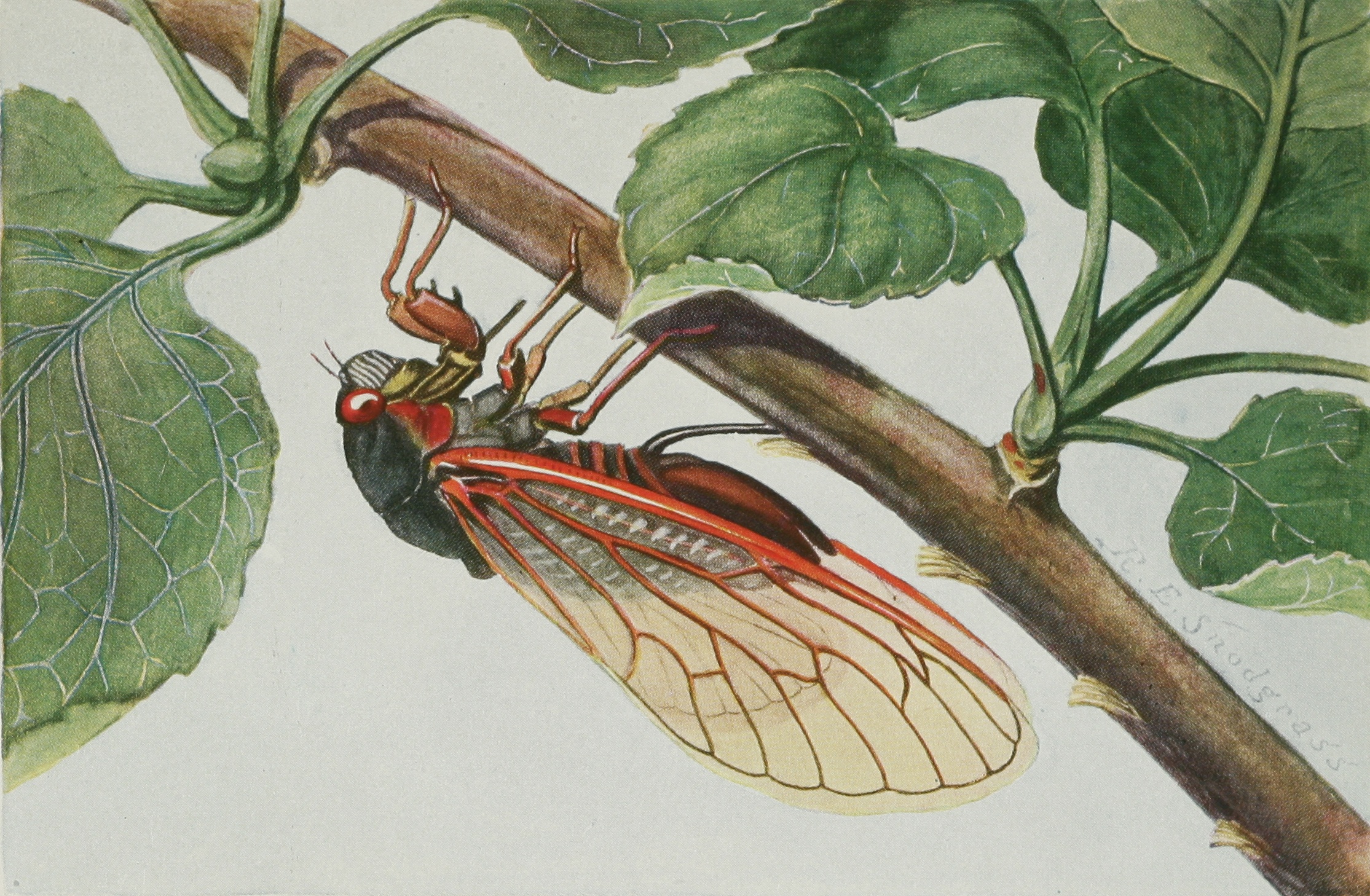
Redundant natural phenomena have led human intellect to discover predictable patterns of reality and, in consequence, reject superstition. And this is true about the cycles of the moon, the emergence and diversification of life from simple to more complex forms, the continental migrations of birds, the blooms of magicicadas every 13-17 years, or the seasonal intensification of tornadoes and hurricanes. Science has awarded us the luxury of anticipating the maladies of the blood (hemophilia) or the mind (porphyria) among the inbred Royal Houses of Europe, as much as foreseeing the geographic journey of the next influenza outbreak.

Magicicada Image Evolution Literacy

Magicicada illustration by R. E. Snodgrass (click on image for full resolution)

The self-correcting character of science guided astronomers to debunk Ptolemy’s geocentric model of the years 100 — when the Earth was worshipped as “the heart” of the universe — and replaced such optical illusion with Copernican heliocentrism — 16th century — an obvious deduction for those who refused to imagine heavens and constellations in the sky and rather saw planets and their moons revolving around our closest star, the sun.

Astronomy and modern cosmology have made sense of the chaotic night sky and allowed us to broadcast the passage of comets, alignment of planets, meteorite falls and polar auroras triggered by the collision of solar-wind particles against the atmosphere.

But why should we care about predicting cosmic events? Because by witnessing their majestic beauty and immensity we can also study and assess their destructive potential; and an educated public in matters of real global survival is more precious and needed than a vociferous street crowd surrendering at the brainless certitude of Camping’s prediction of Armageddon.

NASA eclipse website Evolution LiteracyThe NASA Eclipse Website offers an impressive education playground for those curious about previous eclipses of our sun and moon, plus accurate schedules of upcoming eclipses up to 2015 [updates reach year 3000]. And NASA’s Asteroid and Comet Impact Hazards Program informs online surfers about the predictability and reasonable uncertainty concerning future collisions between Earth and cosmic debris.

Watching the sky for possible encounters with large asteroids is a priority considering our planet’s heritage: A 6-mile asteroid cremated the “ruling class” Reptilia 65 million years ago when blasting a 110-mile-wide crater in the Yucatan Peninsula of Mexico. Few reptile lineages survived and repopulated.

Don Davis image Dinosaurs Extinction Evolution Literacy

Illustration by Don Davis (for additional images visit Don Davis asteroid impact

The end of the dinosaurs dragged tiny mammals out of their burrows, and they revisited old reptilian professions with limited originality: they became arboreal climbers, terrestrial herbivores and hunters, cave flyers, aquatic divers, and killers of killers. Their major evolutionary innovations were sweat glands turned into milk-producing udders and breasts, internal eggs that matured within a womb, and large skulls encasing clever minds. And it was the primate mind, shaped even further by natural selection in ape descendants, us, the thinking apes, that evolved scientific reasoning and consciousness.

Chicxulub crater image Evolution Literacy

The Chicxulub crater in the Yucatan peninsula of Mexico (for additional information visit “Revisiting Chicxulub” by the National Science Foundation)

It is the human mind through which the universe understands and predicts itself. And it is the scientific method, which civilizations have discovered and perfected over millennia, the most reliable approach to understanding the past and present, and hypothesizing about the future. There will never be Judgment Day or Rapture or Armageddon. Our planet shall remain cosmically unsafe with fluctuating danger until our sun, the cause of our existence, runs out of fuel within the next 5 billion years. — © 2011 by Guillermo Paz-y-Miño-C. all rights reserved

*          *          *

Humor: Judgment Day… did not happen

Harold Camping cartoon Evolution Literacy

All History is Black History – Editorial The Standard Times – March 2, 2011

All History is Black History

[click on title to be redirected to The Standard Times]

Dr. Guillermo Paz-y-Miño C. — © 2011

Department of Biology, University of Massachusetts Dartmouth 

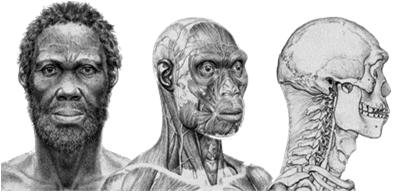
AfricanPhenotype 

Illustration by JH Matternes, click on image to access more of artist’s fantastic work

An African American blogger just settled an online dispute over human origins by asserting, with magnificent wisdom, that “all history is Black History.”

His co-bloggers had rejected the evolutionary significance of a recent fossil discovery in Hadar, Ethiopia, of a 3.2 million year old foot bone belonging to Australopithecus afarensis –the famous Lucy’s lineage– which has unveiled hints about the locomotion habits of early hominids. The clever blogger brought reason into a trivial exchange of brain gas among sponsors of one wrong over another belief about human ancestry. “Deal with it” –that is with our common African heritage– were his last gentle, yet shut-up devastating words.

The left fourth metatarsal bone described in Science magazine by professors Carol Ward, William Kimbel and Donald Johanson, the latter discoverer of the very Lucy, also in Hadar, in 1974, tells a compelling story: Lucy’s relatives walked upright, a conclusion awaiting unequivocal evidence for almost four decades, and the tiny bone just provided it in its complex anatomy. The now famous AL-333-160 three-inch bone (in paleontology identification numbers are precious) resembles the bipedal human ‘arched’ metatarsals –shock absorbers for “walker apes”– and differs from the quadrupedal chimpanzee’s, bonobo’s and gorilla’s, which are more elongated.

AL-333-160 left fourth metatarsal A afarensisAL-333-160 left fourth metatarsal in dorsal, lateral, medial, plantar, and proximal views (Ward et al. Science 2011;331:750-753). Click on image to explore the Science magazine article and to download the power point slide for teaching. 

Lucy, herself 3.2 million years old, still is the most famous, although not most significant, hominid fossil ever described. Ardi, a 4.4-million year old almost complete skeleton discovered in Aramis, Ethiopia, by Tim White in 2009, and Toumai, a 7-million year old hominid skull found in Chad by Michel Brunet in 2001, are Lucy’s fair competitors.

Lucy was brought to celebrity status by her always calculating manager, Johanson, who named her after The Beatles song Lucy In The Sky With Diamonds,” thus launching her popularity into textbooks, anatomical reconstructions, cartoons of a stocky yet friendly smiling “ape cousin,” and full-body hairy depictions of her 3-feet tall “reconstructed flesh” at museums and exhibits of human origins.

Lovely Lucy Australopithecus afarensisLovely Lucy Australopithecus afarensis, for image credit and additional images click on her rostrum

For bloggers and alike who question the African origin of humans, of which Lucy’s tale is only part of the story since she was also born to common ancestors between her family and ours, the enigma has long been solved. But the journey to acknowledge that “we are all Africans” has been tortuous.


“…the journey to acknowledge that ‘we are all Africans’ has been tortuous…”

In The Descent of Man, 1871, Charles Darwin reasoned: “In each great region of the world the living [animals] are closely related to the extinct species of the same region. It is therefore probable that Africa was formerly inhabited by extinct apes closely allied to the gorilla and chimpanzee; and as these two species are now man’s nearest allies, it is somewhat more probable that our early progenitors lived on the African continent than elsewhere.”

Darwin’s inference was brilliant, but it took more than a century to be definitely embraced by scholars. This “Out of Africa” hypothesis has been corroborated by DNA evidence, physical anthropology, and specimens.

Out of Africa Hypothesis

The out-of-Africa journey and dispersal of modern humans. Click on Human Migration image from National Geographic to access high-definition map

Indeed ancient forms of Homo sapiens evolved to anatomically modern humans entirely in the Ethiopian realm, about 200,000 years ago. And they walked out of Africa to populate the planet, which can be demonstrated with fossils and genetic pedigrees of indigenous peoples worldwide. Even human languages follow a pattern of geographical distribution consistent with a common origin in Northeastern Africa and nearby Mesopotamia.

More recently, the “Multi Regional” hypothesis of human origins, which counters the out-of-Africa postulate by conceiving an overall hybridization and integration of all world Homo species, including archaic forms, such as the Asian Peking Man, Homo erectus, and modern variants, such as the Northeast African and Southern European Homo sapiens, into a unified single Homo sapiens sapiens, has regained closer attention –after losing power during the 1990s– due to the discovery of shared genetic features between us and Neanderthals, a fairly modern human variety which became extinct 40,000 years ago.

The single origin or Out of Africa idea is nowadays well accepted among scientists. And even if the multi-regional hypothesis regains strength, all ancestral forms of hominids seem to coalesce to Africa. Disagreements among scientists do not invalidate science as believed by misinformed illiterate bloggers, who insist that there are not enough fossils to account for evolution or that the questions about human origins are far from being answered.

As much as our African American blogger so intuitively stated that all history is, ultimately, Black History, Darwin’s own writings from 1871 continue to alert us about the essence of belief-based debates: “It has often and confidently been asserted, that man’s origin can never be known: but ignorance more frequently begets confidence than does knowledge: it is those who know little, and not those who know much, who so positively assert that this or that problem will never be solved.” — © 2011 by Guillermo Paz-y-Miño-C. all rights reserved

African American Colorful Fishes

Two African Americans celebrating color and creativity, photo courtesy Rashida Charles

New England Professors Accept Evolution, But They Are Religious – Editorial The Standard Times – Jan 15, 2011

Why Accepting Evolution Matters

…New England professors accept evolution, but they are religious…

[click on title to be redirected to The Standard Times]

Dr. Guillermo Paz-y-Miño C. — © 2011

Department of Biology, University of Massachusetts Dartmouth 

People do not “believe” in evolution; we either accept it, or doubt about it, or reject it. But the reality of the evolutionary process continues regardless of our cognitive awareness or position about it. Evolution is true.

Together with my collaborator, Dr. Avelina Espinosa, professor at Roger Williams University in Rhode Island, we have uncovered the patterns of acceptance of evolution among university professors in New England, and the results are both fascinating and startling.

A cultural assumption has been that scholars are supportive of science and remain distant from belief-based perspectives regarding the natural world. Is this factual?

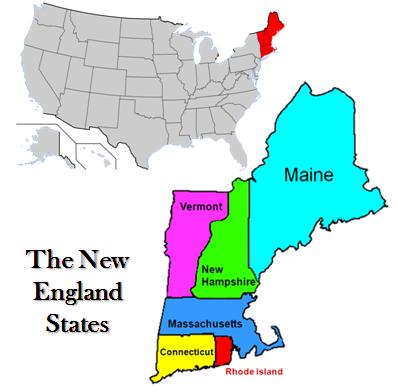
We surveyed 244 faculty — 90 percent Ph.D. holders in 40 disciplines at 35 colleges and universities widely distributed geographically in Connecticut, Maine, Massachusetts, New Hampshire, Rhode Island and Vermont. Our study was recently published online in Evolution, Education and Outreach, and the hard-copy report will appear in the March 2011 issue of the journal.

NewEnglandStatesInTheUSA

Why New England? The first shocking fact that triggered our interest in studying the Northeast of the United States was that, back in 2005, the Pew Research Center for the People and the Press had documented that only 59 percent of New Englanders accept evolution, the highest score nationwide, and that the overall regional acceptance of evolution in the United States was even more distressing: 57 percent in the Northwest, 45 percent in the Midwest, and 38 percent in the South.

More alarmingly, in 2006, the United States ranked 33rd among 34 other countries where acceptance of evolution was assessed, in contrast to Iceland, Denmark, Sweden, France, Japan and the United Kingdom, top in the list, where 75 to 85 percent of adults accept evolution (Science, 2006).

Our study revealed that 91 percent of the New England professors were very or somehow concerned about the controversy of evolution versus creationism versus “intelligent design” and its implications for science education. In fact, 96 percent of them supported the exclusive teaching of evolution in science classes and a 4 percent minority favored equal time to evolution and creationism (the latter declared unconstitutional by the Supreme Court in 1987). And 92 percent of the faculty perceived intelligent design as not scientific and as proposed to counter evolution, or as doctrine consistent with creationism.

NewEnglandFaculty_IntelligentDesign 

Percentage of New England faculty (Fac) versus college students from public secular (Pub), private secular (Priv), and religious (Rel) institutions who consider one of the following statements to be consistent with intelligent design (ID): (A) ID is not scientific but has been proposed to counter evolution based on false claims; (B) ID is religious doctrine consistent with creationism; (C) no opinion; (D) ID is a scientific alternative to evolution and of equal scientific validity among scientists; (E) ID is a scientific theory about the origin and evolution of life on Earth.

Although 92 percent of the professors thought that evolution relies on common ancestry — or that organisms can be traced back in time to ancestors that reproduced successfully and left descendants — one in every four faculty did not know that humans are apes, or relatives of primates. Worse, 30 percent of the faculty were Lamarckian, or believed in the inheritance of acquired traits during an organism’s lifetime, like longer necks, larger brains, or resistance to parasites, which are passed on to the progeny, a hypothesis rejected a century ago.

NewEnglandFaculty_DefineEvolutionAs

Percentage of New England faculty (Fac) versus college students from public secular (Pub), private secular (Priv), and religious (Rel) institutions who consider the following definitions of evolution to be either true (black bars) or false (color bars): (A) gradual process by which the universe changes, it includes the origin of life, its diversification and the synergistic phenomena resulting from the interaction between life and the environment; (B) directional process by which unicellular organisms, like bacteria, turn into multicellular organisms, like sponges, which later turn into fish, amphibians, reptiles, birds, mammals, and ultimately humans, the pinnacle of evolution; (C) gradual process by which monkeys such as chimpanzees, turn into humans; (D) random process by which life originates, changes, and ends accidentally in complex organisms such as humans; and (E) gradual process by which organisms acquire traits during their lifetimes, such as longer necks, larger brains, resistance to parasites, and then pass on these traits to their descendants.

We asked the professors if faith in God is necessary for morality, if religion is important in their lives, and if they pray. Only 5 percent agreed with the need of a God to secure proper social behavior, but 30 percent considered religion to be very important in their daily existence, and 17 percent confessed to pray daily.

The one-third of the faculty who thought that religion is important in their lives was comparable to the 33 percent of American scientists who admit to believe in God (Pew Research Center, 2009), but differed from the 12 percent of “professional evolutionary scientists” — members of the North American, European, United Kingdom, and other countries’ National Academies of Sciences (American Scientist, 2007) — and particularly the 7 percent of members of the United States National Academy of Sciences who believe in a personal God (Nature, 1998).

Indeed, most international scientists and the elite of the United States researchers are not religious.

NewEnglandFaculty_AcceptEvolutionOpenly

Percentage of New England faculty (Fac) versus college students from public secular (Pub), private secular (Priv), and religious (Rel) institutions who believe one of the following statements describes them best: (A) I accept evolution and express it openly regardless of others’ opinions; (B) no opinion; and (C) I accept evolution but do not discuss it openly to avoid conflicts with friends and family.

Why does acceptance of evolution matter? Because public acceptance of evolution in the United States (about 40 percent) correlates with support to: (1) proper science education in public schools; (2) science and technology as essential components of development and prosperity; and (3) rationalism and freedom of thought, all indisputable ingredients for a thriving society.

And it also matters because only the highly educated university professors of New England — hopefully of the nation — have levels of acceptance of evolution (97 percent according to our study) comparable to or higher than the ordinary public in other industrialized countries of Northern and Western Europe.

Because attitudes toward evolution correlated positively with understanding of science and negatively with religiosity and political ideology, aspects examined in our study, we concluded that science education combined with vigorous public debate should suffice to increase acceptance of naturalistic rationalism and decrease the negative impact of creationism and intelligent design on collective evolution literacy. — © 2011 by Guillermo Paz-y-Miño-C. all rights reserved

For original scientific article (New England Faculty and College Students Differ in Their Views  About Evolution, Creationism, Intelligent Design, and Religiosity), published in Evolution Education & Outreach, click on [PDF]

*          *          *

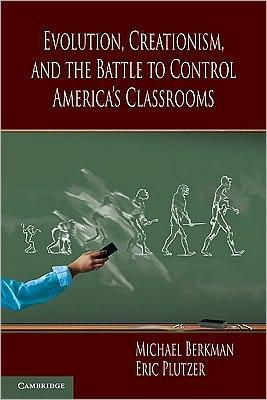
Recommended Book: Evolution, Creationism, And The Battle To Control America’s Classrooms, by Michael Berkman & Eric Plutzer click on book for link

EvolutionCreationism_Book_Berkman_Plutzer_2010

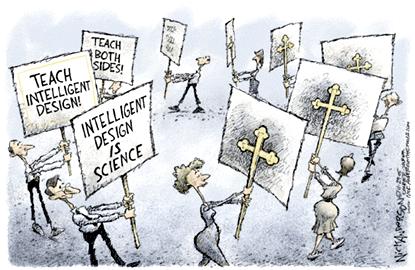
Cartoon: Intelligent Design as Science…

IntelligentDesignAsScience

Cartoon: Biology 101… The Lord Censored Textbooks

TheLordCensoredTextbooks

Can We Forecast the Fall of Today’s Empires? – Editorial The Standard Times – Dec 13, 2010

Can We Forecast the Fall of Today’s Empires?

[click on title to be redirected to The Standard Times]

Dr. Guillermo Paz-y-Miño C. — © 2010

Department of Biology, University of Massachusetts Dartmouth 

History reminds us that empires can supplant one another…

quipuThe Inca Empire (1430s-1530s) relied on an ingenious system of numeric recording, the quipus, or serial knots tied in colored threads made of hair from South American camelids, and used by accountants — the Quipucamayucs — to convey information on the calendar, trade, tributes and census, to other quipu-literate authorities who decoded the “talking knots” or used them in arithmetic operations (See photo from Khipu Database Project at Harvard University).

Messages encoded in ropes were carried by Chasquis, or runners, who delivered quipus from Cuzco, the capital of the Tawantinsuyu — the Inca Empire — to its four Andean provinces. The network of Inca roads impressed the conquistadores, including Francisco Pizarro, who mobilized his 168 men and a few horses through the highland trails to reach Cajamarca — nowadays Peru — and, in 1532, captured and later killed the last of the Sapa Incas, Atahualpa, whose 80,000 troops succumbed to the military superiority of the Spaniards.

Ironically, smallpox was the major executor of the Amerindians, next to the brutality of the conquest and Christianization crusade to suppress and replace with Catholicism not only the Inca god, the Sun — at least a real star venerated for nourishing maize and tuber fields — but any trace of cultural identity, including the quipu, the chasquis and the sound of their pututos — large conch shells used as horn-trumpets to announce the arrival of a message — and the Quechua language.

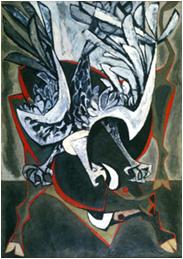
Condor ToroIn “Of Rage and Redemption: The Art of Oswaldo Guayasamin (1919-1999),” the Ecuadorian painter depicts an Andean condor subduing a Spanish bull, shockingly illustrating how Inca descendants still wear the scars of the European invasion to their land. The Inca civilization collapsed in the 1530s, and 500 years of misery shadowed the survival of Indian villages in the Andes of Ecuador, Peru, Bolivia, Chile and Argentina.

Besides diseases, oppression, imposed ignorance to secure dominance, and neglect after war, what factors drive the decline of sociopolitical assemblages? What processes make civilizations emerge?

In two fascinating books, “Guns, Germs and Steel” (1997) and “Collapse” (2005), Jared Diamond, professor at the University of California Los Angeles, theorized how warfare, immunity or susceptibility to pathogens, and technology have driven the evolution of archaic societies, and how depletion of resources determined the breakdown of prosperous communities.

GunsGermsSteel_Collapse_Books

But the sequential steps of societal evolution had not been explored quantitatively.

Using evolutionary biology, researchers from the University of Tokyo, University College London and University of Auckland, New Zealand, have plotted models of societal organization onto linguistic diversification trees of 84 Austronesian (Southeast Asian and Pacific) groups (Nature, 2010).

Thomas Currie and his collaborators have demonstrated that political complexity during island colonization, from Taiwan to Western Polynesia and Southeast Asia, raised gradually — and predictably. It raised from leaderless societies to simple chiefdoms (one leader), complex chiefdoms (one leader over another) and states (hierarchical leadership), rarely skipping in-between levels of organization.

Collapses, however, did occur in jumps, from state to simple chiefdoms or leaderless levels, or from complex chiefdoms to unorganized aggregations.

Currie and co-authors think that their statistical analyses “move us beyond purely verbal arguments” about “history’s broadest pattern” of societal growth and breakdowns, and offer a model for deeper digging into the predictability of cultural change.

FranciscoDeOrellanaIf the encounter between the Tawantinsuyu and the conquistadores led inevitably to the disintegration of the Incas — due to the technological disparity between the New and Old Worlds — and if the European economies of the 15th to 17th centuries, like Spain, Portugal and France, later lost predominance when facing the emergence of England (18th to 19th centuries), can we forecast the fall of today’s empires?


(Left – Francisco De Orellana ca. 1511-1546, Spanish conquistador and explorer of the Amazon;  photo © G. Paz-y-Miño C. 2009, Guapulo, Ecuador)

Would market rivalry alone push aside prevalent systems and replace them inescapably with competitors? Would human capital immersed in technological skillfulness suffice to substitute the wealthy illiterate societies?

Empires can indeed supplant one another. And the example of the quipu versus the European bookkeeping systems illustrates how the clashing of technologies can freeze in time a “clever-practical system of information storing,” the quipu, and replace it with a more efficient written mathematical notation.

But the vicious stamping of the Iberian bull over the Andean culture was atrocious. — © 2010 by Guillermo Paz-y-Miño-C. all rights reserved

Condor and Bull Mural Guayasamin

Mural ‘Bull and Condor’ at Guayasamin’s “The Chapel of Manphoto © G. Paz-y-Miño C. 2010, Quito, Ecuador.

Can Atheists Be Our Leaders? – Editorial The Standard Times – Nov 6, 2010

Can Atheists Be Our Leaders?

[click on title to be redirected to The Standard Times]

Dr. Guillermo Paz-y-Miño C. — © 2010

Department of Biology, University of Massachusetts Dartmouth 

Aatheistsand agnostics are among the most educated citizens in the United States. They rank highest not only in knowledge about science, American history, literature, politics and the role of religion in public life, but also in awareness about world religions. 

religionUsing a 32-question survey on religious knowledge, the Pew Forum on Religion and Public Life, a non-governmental organization based in Washington D.C., interviewed 3,400 adults during May and June of 2010. A 78-page report of the significant findings was released this past Sept. 28 (Inset Logo from the Pew Report available online). 

Knowledge about religion correlated with level of education. Responders holding a post-graduate degree knew, on average, 22 out of the 32 questions in the survey; college graduates responded correctly to 20 questions; those attending college were right about 17 to 19 questions; and the high-school-educated — or less — were correct in only 10 to 12 questions

Atheists and agnostics followed by Jews and Mormons ranked consistently higher in the overall assessment of their religious literacy than evangelical Protestants and Catholics. 

US CongressIf atheists and agnostics are highly educated, would Americans elect them as their leaders? Apparently not; according to a Gallup Poll (2007), atheists rank last with only 45 percent voters to favor them in a potential presidential election, followed by homosexuals, who would theoretically receive 55 percent of support, or candidates of “72 years of age” (57 percent), or who are “married for the third time” (67 percent), or Mormon (72 percent), Hispanic (87 percent), a woman (88 percent), Jewish (92 percent), black (94 percent, it already happened), or Catholic (95 percent). (Photo inset the United States Congress in Washington DC, Photo © G. Paz-y-Miño C. 2010).

Sixty-seven percent of liberals would vote for a qualified atheist if he or she runs for president of the United States, but only 29 percent of conservatives would do it. Indeed, political ideology determines voting preferences for a “non-traditional candidate,” and atheists rank last regardless of being among the most literate Americans. Moreover, liberal, moderate and conservative voters would prefer any other type of candidate over an atheist (Gallup Poll, 2007). 

Twenty million Americans, or 7 percent, are either certain that God does not exist (atheists), or are not sure about it (agnostics), which contrasts with the high levels of religiosity among most of the general population. Seventy-three percent are convinced of the existence of a deity, 14 percent think that God probably exists and have little doubt about it, and 5 percent believe in God but have a lot of doubt about it (Gallup Poll, 2006). Religiosity, however, decreases with educational attainment; highly educated people are less religious than the least educated. 

According to the Pew Global Attitudes Project (2007), 57 percent of Americans think that God is necessary for morality, yet there is no indication that atheists and agnostics are less moral than the general or religious populations. 

OutCampaingIn fact, the list of world-prestigious American intellectuals who have admitted to be atheists or agnostics is impressive. Here are some from the 19th and 20th centuries: Ralph Waldo Emerson (author and poet), Henry David Thoreau (philosopher), Andrew Carnegie (philanthropist), Mark Twain (author), Pearl S. Buck (author), Thomas Edison (inventor), Clarence Darrow (lawyer), Carl Van Doren (English professor and biographer of Benjamin Franklin), and Ernest Hemingway (novelist). 

The list above does not include the 93 percent of the current and prominent members of the U.S. National Academy of Sciences (Larson and Witham, 1998), neither the 70 percent of the 630,000 faculty teaching full-time at colleges and universities in the United States who admit to be nonbelievers (Ecklund and Scheitle, 2007; Gross and Simmons, 2009). 

oedLike any highly educated citizens, atheists and agnostics are probably concerned about illiteracy trends in the United States, and not only regarding world religions knowledge — where they ranked highest above all believers — but also international trends on the ranking of our youth in mathematics, reading and science, where the United States placed 26th, 15th and 21st among 57 other nations, respectively (data from the Organisation for Economic Co-operation and Development, reports 2003/9). 

And we can forecast that atheists and agnostics, who rank top in understanding the legal separation between church and state (82 percent, according to the Pew survey), would support the teaching of evolution in public schools and oppose the smuggling of intelligent-design creationism into the education curriculum. 

It is time for our modern societies to accept the open participation of atheists and agnostics in building our democracies, more so if — as demonstrated by national polls — they are among the most educated citizens. Their lack of religious affiliation and identity should not discourage them from contributing to significant public service as secular humanists, nor should it deter the public from electing them.

The human experience consists in building equality for all and, in this particular case, in hearing the voice and benefiting from the talent of the nonbelievers. — © 2010 by Guillermo Paz-y-Miño-C. all rights reserved

On Whales and a Whaling Museum – Editorial The Standard Times – Sep 30, 2010

“Perhaps all cities should first be explored by visitors through the eyes of museums, and later be walked and valued for their details. The Whaling Museum of New Bedford is such a shepherd; it brings sight to the modern “Ishmaels” who can come to discover the shared ancestry between humans and whales or to understand the legendary madness connecting whalers to whales.”

On Whales and a Whaling Museum

[click on title to be redirected to The Standard Times]

Guillermo Paz-y-Miño C. — © 2010

To be reassured that evolution is true one just needs to visit the New Bedford Whaling Museum.

Three mounted skeletons of a 50-foot North Atlantic right whale, a 40-foot humpback, and a 70-foot juvenile blue can impress anyone curious to compare human bones to those of whales. The vertebrae are identical in shape, the rib cage is a magnified version of a human’s, and the forelimbs are shortened into appendices like “fins,” each with digits. Only vestigial hips remain. The legs have disappeared during 35 million years of “sea galloping,” thus passing on to the tail the job of thrusting the animal.

TailWhale
Humpback whale, photo © G. Paz-y-Miño C. Massachusetts Bay 2010

The skulls of whales differ much from those of primates, like ours, but every component is present. The orbits and cheek bones surround tiny eyes in respect to the large head, and the rostrum or face — made of the upper maxilla and nasal bones — is conspicuously protruded to meet the jaw, which, in the baleen whales like the trio above, has no teeth, only tough skin to hold up corneous plates made of hair-protein, evidence of ancestral furred relatives. Such whales gulp water to sieve shrimp, squid or fish.

SpermWhale

The apparent lack of forehead is remarkable in cetaceans (whales and dolphins). During evolution, the frontal bone retreated toward the back of the skull and, in some species, created a boat-shaped cavity which stores wax, and the museum exhibits a fourth magnificent specimen to account for this, a toothed sperm whale (photo © G. Paz-y-Miño C. 2010, above). This 50-foot skeleton emerges over a silhouette of the whale’s flesh sketched on the floor next to a giant squid, its favorite prey.

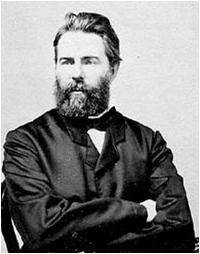
MelvilleHerman Melville‘s 1851 edition of “Moby-Dick” rests ahead this specimen, on a glass plinth, almost challenging the beast to resume the chase, to dive into the old book and confront Ahab’s obsession again — that of “wild vindictiveness” against Moby Dick for having reaped away the captain’s leg — to bear harpoons piercing its back, to smite the Pequod and drown its crew, and to spare only Ishmael so that he drifts on a coffin — carpentered for his ill-with-sweatings friend Queequeg — and survives to narrate how the whale defeated all.

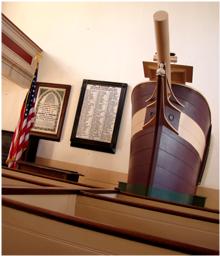
“Be ye also ready: for in such an hour as ye think not, the Son of man cometh,” is encrypted on the cenotaph of “Captain WM. Swain, Master of the Christopher Mitchell of Nantucket … [who] after fastning to a whale, was carried overboard by the line, and drowned [on] May 19th, 1844.” This dramatic epitaph on marble at the Seamen’s Bethel — built in 1832 and still upright a few steps away from the museum — is analogous to those that daunted Melville while attending services in the early 1840s.

In his romantic novel, Melville imagined the pulpit of the Seamen’s Bethel (photo © G. Paz-y-Miño C. 2010, below) as the bow of a whaler’s ship, from which Father Mapple sermonized (watch video), “Beloved shipmates “¦ what is [the] Chapellesson that the book of Jonah teaches? “¦ the sin was in his “¦ disobedience of the command of God “¦ by seeking to flee from him “¦ He [thought] that a ship “¦ will carry him into countries where God does not reign “¦ A dreadful storm [came] on, the ship [was] like to break “¦ And Jonah “¦ dropped into the sea “¦ seething into the yawning jaws awaiting him; and the whale [shot] “¦ his ivory teeth “¦ Jonah prayed unto the Lord out of the fish’s belly “¦ the whale vomited out Jonah upon the dry land.”

The potential fury of whales and the obsession of whalers with killing them are historic. The Essex, which left Nantucket in 1819, was wrecked a year later by a sperm whale. The survivors ate the corps of shipmates while sailing small whaleboats 3,000 miles back to South America, ironically avoiding the Marquesas Islands, only 1,200 miles west from the Essex’s sinking waters, where “cannibals could devour them.” And the museum displays panels with estimates of whale massacres during the 18th through 20th centuries: 1 million sperm whales, 384,000 blues, 275,000 humpbacks, 92,000 bowheads, and 10,000 North Atlantic rights.

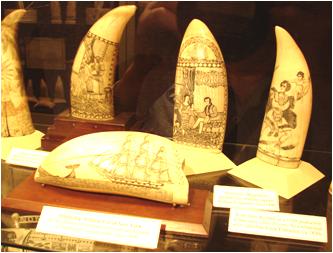
Whales were hunted for their oil, wax and baleen. Nothing was wasted. The collection of ornaments, utensils and capricious art on ivory, at the museum, accounts for that (photo © G. Paz-y-Miño C. 2010, below). Prosperity of the American colonies and the Industrial Revolution of the young republic (1820-1860) were fueled by the slaughtering of whales, and this ecocide must not be forgotten.

WhaleTeeth

Perhaps all cities should first be explored by visitors through the eyes of museums, and later be walked and valued for their details. The Whaling Museum of New Bedford is such a shepherd; it brings sight to the modern “Ishmaels” who can come to discover the shared ancestry between humans and whales or to understand the legendary madness connecting whalers to whales. — © 2010 by Guillermo Paz-y-Miño-C. all rights reserved

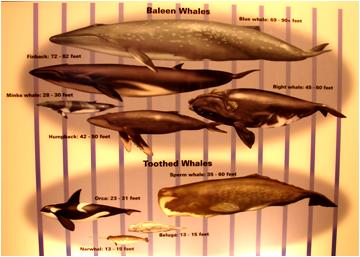
WhalesAtSmithsonianMuseum

(Above: the two major groups of whales  as depicted at the Smithsonian Museum of Natural History, Whashington DC, photo G. Paz-y-Miño C. 2010; click image to access site).

Ancient Whale Evolution Literacy

Ancient whale has shown a key step in the evolution in filter-feeding whale’s enormous mouths (illustration by C. Buell, click on image to access source at BBC Nature article).

Faith Healing versus Medical Science – Editorial The Standard Times – Sep 2, 2010

Faith Healing vs. Medical Science

[click on title to be redirected to The Standard Times]

Dr. Guillermo Paz-y-Miño C. — © 2010

Department of Biology, University of Massachusetts Dartmouth

“If a sense of disease produces suffering, and a sense of ease antidotes it, disease is mental. Hence the fact in Christian Science that the human mind alone suffers, and the divine mind alone heals it.”

ChurchThis metaphor belongs to Mary Baker Eddy (1821-1910), author of “Science and Health with Key to the Scriptures” (1875) and founder in 1879 of the Church of Christ, Scientist, whose modern, cathedral-like headquarters — the Mother Church (photo © G. Paz-y-Miño C. 2010, left), completed in 1904 — emerged in downtown Boston rivaling in architecture the Trinity Church, the Holy Cross Cathedral, and even the Massachusetts Statehouse.

During a three-year search for the “divine laws of life” within the Bible, Eddy compiled passages about healing and envisioned a cure method based on prayer, which by the end of the 1880s propagated among the students at her Massachusetts Metaphysical College, a short-lasting enterprise (1881-1889). Her charismatic personality seeded the Christian Science Journal (1883), the Christian Science Sentinel (1898), the Herald of Christian Science (1903), and the Christian Science Monitor (1908), currently a dynamic online news survivor of historic financial struggles.

OrganLike most spiritual therapies, Eddy’s “pray healing” faded, although the enormous Mother Church of Christ Scientist she inspired still breathes in the heart of Boston through a majestic golden pipe organ (photo © G. Paz-y-Miño C. 2010, left), which gives the impression of resounding even in silence.
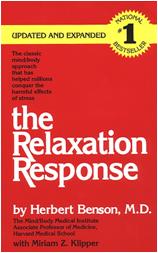
In fact, deity-mediated physical and mental well-being are inconsistent with modern medicine. However, the positive effects of the “relaxation response” — a mind-and-body state of calmness which is elicited during meditation and monotonous behavior like chanting or bead-praying — on the recovery from depression, anxiety, insomnia or pain seem biologically rooted and scientifically measurable.

The Institute for Mind Body Medicine at the Massachusetts General Hospital has sponsored the most compelling research on the relaxation response (RR). Cardiologist Herbert Benson described RR in 1974 as changes in metabolism, heart rate, respiration, blood pressure and brain chemistry triggered during the meditative state.

RelaxationResponoseBookRR counters the fight-or-flight response, conceptualized by Harvard physiologist Walter Cannon in 1915 as an animal’s ability to cope with danger via, not surprisingly, opposite mechanisms to RR. In essence, the fight-or-flight response excites stress response, while the relaxation response calms, thus bringing the organism to homeostasis.

Benson and his collaborators ignited three decades of investigations on RR which included the physiological changes that occur during RR, the cognitive-behavioral and psychological variables associated with it, and the diversity of meditation methods. Most recently, gene expression induced by RR has been the focus of Benson’s exploration. In all scenarios, Benson and his colleagues have been cautious to insert RR as another variable into the complex equation of mind-body health.

Indeed, good research often demystifies popular certainty. In a 2006 study of the therapeutic effects of intercessory prayer in 1,800 cardiac bypass patients, sponsored by the Templeton Foundation — famous for surpassing the Noble Prize by granting $1.5 million to explorers of life’s spiritual dimensions — Benson and his team reported a higher incidence of complications among patients who knew Christian devotees were praying for their recovery, in contrast to patients uncertain about receiving such prayers, who convalesced.

The data published in the American Heart Journal disappointed supporters of proximal or distant pray-mediated healing.

The Templeton Foundation, however, further committed $150,000 to study the effects of prayer on auditory and visual impairments in rural Mozambique, and religious studies professor Candy Brown, from Indiana University, embraced the task. In the September 2010 issue of the Southern Medical Journal, Brown and collaborators report 24 cases of improvement in hearing and/or vision after intercessory prayers.

The authors themselves confess the flaws of the study: unknown source of the impairments, unconfirmed diagnosis of ear or eye malfunction, patients’ cultural habituation to healers, no control group, and a sample size 75 times smaller than that of Benson’s. In sum, much enthusiasm and poor science, but the authors go on to state that prayer “may be a useful adjunct to standard medical care … in contexts where access to conventional treatment is limited.”

Benson’s research on RR has brought into scientific scrutiny the belief of pray healing and provided a rational explanation for the sense of joy, well-being and calmness induced by meditation and its equivalents.

Graphene

Graphene  (click picture for photo credit and information about graphene)

At times of nanotechnology medicine, where single-atom-thick sheets of carbon (graphene) can be injected into a body with the mission of cauterizing cancerous breast tissue if stimulated by laser (Nano Letters, 2010), or when vaccination can immunize an entire country and prevent human papillomavirus (HPV) from spreading among sexually active teenagers, or when evolutionary principles enlighten our understanding of disease and cure, pray healing cannot replace nor supplement, in urban or rural communities, scientific medicine. — © 2010 by Guillermo Paz-y-Miño-C. all rights reserved

EqualTimeToEvolution

In the interest of teaching “both sides,” I thought I’d give equal time to the theory of evolution…
Watch video about graphene (“The Story about Graphene” from the University of Manchester):

To Deny Evolution is To Deny History – Editorial The Standard Times – Aug 7, 2010

To Deny Evolution is To Deny History

[click on title to be redirected to The Standard Times]

Dr. Guillermo Paz-y-Miño C. — © 2010

Department of Biology, University of Massachusetts Dartmouth 

 History is evolution and evolution is history.

DarwinGPCCharles Darwin  (photo © left G. Paz-y-Miño C. 2010, British Museum of Natural History, London) felt enthralled when discovering the benefits of earthworms to archeology. In his 1881 book, The Formation of Vegetable Mould Through the Action of Worms,” he dedicated a chapter to “the part which worms have played in the burial of ancient buildings.” Darwinianly, he wrote —¦ archeologists are probably not aware how much they owe to worms for the preservation of “¦ ancient objects.”

Indeed, while tunneling in the dirt, earthworms soften the substrate and hide artifacts that otherwise would remain on the surface. Iron arrowheads, probably from the Battle of Shrewsbury in 1403, were, according to Darwin, preserved in this fashion by the aid of worms.

Superficial archeological ruins at Abinger (130-360s AD), Chedworth (350s AD), Brading (330s AD), and other vestiges of Roman occupation to Britannia have been concealed by the burring labor of earthworms. But Darwin clarified that —¦ the enormous beds of rubbish, several yards in thickness, which underlie many cities, such as Rome, Paris, and London “¦ have not been “¦ acted on by worms.”

As much as archeological information has been trapped underground — from earlier times located close to the surface to ancient epochs hidden deep — biological history is also preserved in the geological profile, from the Holocene (today) to the Cambrian (550 million years ago), when biodiversity fossilized vastly, and to the early Archaean (3.5 billion years ago), when colonial cyanobacteria carved rocks.

And as much as erosion disfigures the archeological record, the biological testimony is fragmentary to scientists. Both archaeological and biological treasures require ideal conditions for preservation. The majestic Roman Colosseum (photo © G. Paz-y-Miño C. 2010, below), for example, has battled gravity, rain and wind for two millennia.

Roman Colosseum

Similarly, human bones from the Upper Paleolithic still remained identifiable to paleoanthropologists after 35,000 years of entombment in Abri de Cro Magnon, in Southern France. Like the Roman Colosseum, the aged fossils had lost essential features, but they existed and were (are) real.

It is here, at the point of recalling the dawn of Rome and the death of life forms in the process of leaving progeny — like the Cro-Magnons — where human logic faces the test. Denying biological evolution parallels with repudiating history. The antecedents of the Roman Empire are connected to its people, whose prosperous culture, technological pride and understanding of government were linked, historically, to simpler beginnings of the human condition, when hunter-gatherers strategized daily survival.

HumanOriginsSmithsonianMuseum

Photo above from Human Origins Gallery at Smithsonian National Museum of Natural History (click on image to access site)

No rational citizen of the contemporary world would challenge the existence of ancient Rome, but 40 percent of Americans, 18 percent of the British, and 20 percent of Italians, among residents of 34 other countries where public acceptance of evolution has been polled (Science, 2006), think evolution is false. This discrepancy between wide acceptance of Roman history and selective rejection of life’s past resides in the extra scrutiny imposed on the latter by religion.

In the United States of America, negative attitudes toward evolution correlate with three variables: religious beliefs, pro-life beliefs and political ideology. Conservative Republicans accept evolution less than progressive liberals and independents (30 vs. 60 percent, respectively) and frequency of religious practices is associated negatively with acceptance of evolution (24 percent among weekly church-goers vs. 71 percent for seldom or never, Gallup Poll, 2007).

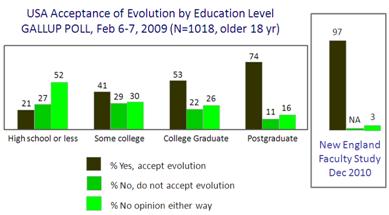
Only science education improves evolution literacy; in fact, public acceptance of evolution in the United States increases from the high-school level (21 percent), to the some-college (41 percent), college-graduate (53 percent) and post-graduate levels (74 percent), reaching the highest among university professors (97 percent) (see histogram below). Young Earth Creationists, who believe that humans were designed in the present form within the last 10,000 years, coincide with the views of the least educated population of adolescents in their teens.

Statistics Acceptance Evolution

The left part of the Figure above comes from The Gallup Poll (2009), the right part (New England Faculty Study 2010) corresponds to Paz-y-Miño C. and Espinosa (2010).

In a May 2010 assessment (click on image below to access complete study) of 35 universities and colleges in the progressive New England states, where public acceptance of evolution is the highest in the nation — only 59 percent — my laboratory documented that 97 percent of the faculty vs. 78 percent of the students accept evolution, and that 82 percent of the faculty vs. 58 percent of the students think that evolution is true. Notably, 91 percent of the professors admit to being “very concerned” or “somehow concerned” about the controversy of evolution vs. creationism and its implications for science education.

GPC study TWO

As much as accepting the reality of the Roman Empire, or Darwin’s observations of the burring effects of worms on archeological remains, or the authenticity of the 17,000-year-old paintings by Cro-Magnons in the caves of Altamira, La Pasiega or Lascaux, admitting the veracity of biological history is a civilization’s responsibility.

Otherwise, denying the legacy of evolution becomes equivalent to rejecting one’s kin or the deep DNA ancestry that connects us to worms and cyanobacteria; it is like capriciously ignoring the exquisite ruins of the Roman Colosseum which still stand, only 2,000 years young, on a 4.6 billion-year-old Earth. — © 2010 by Guillermo Paz-y-Miño-C. all rights reserved.

Related article: Why the Notion that “The Theory of Evolution is Not an Explanation for the Origin of Life” is Wrong

Roman Colosseum Outside View(Above: Roman Colosseum outside view, photo © G. Paz-y-Miño C. 2010)