EvoLiteracy News 04 03 2015

Atlanta Educators Convicted in School Cheating Scandal. Judge ordered them jailed immediately. From The New York Times.

Atlanta Educators Might Go to Jail photos Kent D Johnson

Donald Bullock, a former Atlanta testing coordinator, and Sharon Davis Williams, a former research team director, after judge Jerry W. Baxter ordered the educators jailed immediately. Photo by Kent D. Johnson.

As an educator –although, mostly college– this story is both distressing and sad for me since I support high standards in education, at the same time that consider public schools to be underfunded and in constant need of financial and public support. The historical sequels of neglect and segregation -in the region- might also explain the complexity of this case, but the evidence presented to the court seems unequivocal — GPC.

Alan Blinder, who writes for The New York Times, examines the “largest cheating scandal in the nation’s history, [in which] a jury convicted 11 educators —a mixture of Atlanta public school teachers, testing coordinators and administrators— for their roles in a standardized test cheating that tarnished a major school district’s reputation and raised broader questions about the role of high-stakes testing in American schools.” The defendants (11 of 12) were convicted of racketeering, a felony that carries up to 20 years in prison.

Judge Jerry W. Baxter ordered most of the educators jailed immediately, and they were led from the courtroom in handcuffs. “Defense lawyers, some of whom were clearly angered by Judge Baxter’s decision to jail the educators, immediately began planning appeals and said they were stunned by the verdicts,” reports journalist Alan Blinder in his NYT article. “I don’t like to send anybody to jail,” Judge Baxter said. “It’s not one of the things I get a kick out of. But they have made their bed, and they’re going to have to lie in it, and it starts today”… Read complete story in The New York Times. For a local perspective and updates since 2008, see report in The Atlanta Journal Constitution, for an international take see The Guardian.

“Little-Foot” older than “Lucy.” New technology dates skeleton 3.67 million years old. What does it mean for hominid evolution?
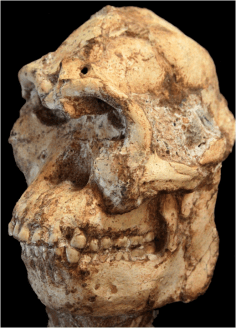
Little Foot Skull 2.67 Million Years Old

The skull extracted from the cave breccia. Photo by Jason Heaton. Click on image for higher resolution.

“Little Foot is a rare, nearly complete skeleton of Australopithecus first discovered 21 years ago in a cave at Sterkfontein, in central South Africa. The new date places Little Foot as an older relative of Lucy, a famous Australopithecus skeleton dated at 3.2 million years old that was found in Ethiopia. It is thought that Australopithecus is an evolutionary ancestor to humans that lived between 2 million and 4 million years ago.” Read Purdue University press release in EurekAlert! Or see the original article in the journal Nature.

The Little Foot skeleton represents Australopithecus prometheus, a species very different from its contemporary, Australopithecus afarensis (“Lucy”), and with more similarities to the Paranthropus lineage. The dating relied on a radioisotopic technique, which uses radioisotopes within several rock samples surrounding a fossil to date when the rocks and the fossil were first buried underground.

“…Australopithecus africanus and Paranthropus did not all have to have derived from Australopithecus afarensis [Lucy]… This new date [Little Foot’s 3.67 my] is a reminder that there could well have been many species of Australopithecus extending over a much wider area of Africa…”

The authors of the study, Granger et al. (total of 6 coauthors), who just published their results in Nature, summarize the work as follows: “The cave infills at Sterkfontein contain one of the richest assemblages of Australopithecus fossils in the world, including the nearly complete skeleton StW 573 (Little Foot) in its lower section, as well as early stone tolls in higher sections. However, the chronology of the site remains controversial due to the complex history of cave infilling. Much of the existing chronology based on U-PB and paleomagnetic stratigraphy has recently been called into question by the recognition that dated flowstones fill cavities formed within previously cemented breccias and therefore do not form a stratigraphic sequence. Earlier dating with cosmogenic nuclides suffered a high degree of uncertainty and has been questioned on grounds of sediment reworking. Here we use isochron burial dating with cosmogenic Al-26 and Be-10 to show that the breccia containing StW 573 did not undergo significant reworking, and that is was deposited 3.67 ± 0.16 My ago, far earlier than the 2.2 My flowstones found within it. The skeleton is thus coeval with early Australopithecus afarensis in eastern Africa. We also date the earlies stone tools at Sterkfontein to 2.18 ± 0.21 My ago, placing them in the Oldowan at a time similar to that found elsewhere in South Africa at Swartkans and Wonderwerk.” For complete study go to Nature.

EvoLiteracy News 04 01 2015

April Fools Day ImageHappy Wednesday, April 1st, everyone!

Today, my picks for EvoLiteracy News are summarized in the following questions: Do liberal politicians smile more sincerely (= genuine happiness) than conservative politicians (= apparent happiness)? Does growing up in a deprive-from-resources environment (poverty) affect human brain development? How do sexual and natural selection interact when driving the evolution of plumage-coloration in birds? Below are the answers. Plus, don’t forget to visit the Photography Page of Evolution Literacy, which includes images of wildlife, landscapes, museums, monuments and cities from many countries, go to EvoLiteracy Photos.

Liberal Politicians Smile Sincerely… Conservatives Not So Much. Conservatives report, but liberals display, greater happiness. Science Magazine.

President Obama vs Governor Palin SmilesWojcik et al. (total of 5 coauthors) summarize their study as follows: “Research suggesting that political conservatives are happier than political liberals has relied exclusively on self-report measures of subjective well-being. Wojcik et al. show that this finding is fully mediated by conservatives’ self-enhancing style of self-report and then describe three studies drawing from “big data” sources to assess liberal-conservative differences in happiness-related behavior. Relative to conservatives, liberals more frequently used positive emotional language in their speech and smiled more intensely and genuinely in photographs. The results were consistent across large samples of online survey takers, U.S. politicians, Twitter users, and LinkedIn users. Wojcik et al. findings illustrate the nuanced relationship between political ideology, self-enhancement, and happiness and illuminate the contradictory ways that happiness differences can manifest across behavior and self-reports.” See study in Science Magazine.

Poverty Does Affect Brain Development. Family income, parental education and brain structure in children and adolescents. Nature Neuroscience.

Brain ImageNoble et al. (total of 25 coauthors) write: “Socioeconomic disparities are associated with differences in cognitive development. We investigated relationships between socioeconomic factors and brain morphometry, independently of genetic ancestry, among a cohort of 1,000+ typically developing individuals between 3 and 20 years of age. Income was associated with brain surface area. Among children from lower income families, small differences in income were associated with relatively large differences in surface area, whereas, among children from higher income families, similar income increments were associated with smaller differences in surface area. These relationships were most prominent in [brain] regions supporting language, reading, executive functions and spatial skills; surface area mediated socioeconomic differences in certain neurocognitive abilities. These data imply that income relates most strongly to brain structure among the most disadvantaged children.” For access to complete article go to Nature Neuroscience.

Natural and sexual selection act on different axes [“directions”] of variation in avian plumage color. Science Advances.

Authors ,   summarize their research as follows: “The bright colors of birds are often attributed to sexual selection on males, but in many species both sexes are colorful and it has been long debated whether sexual selection can also explain this variation. Dunn et al. show that most evolutionary transitions in color have been toward similar plumage in both sexes, and the color of both sexes (for example, bright or dull) was associated with indices of natural selection (for example, habitat type), whereas sexual differences in color were primarily associated with indices of sexual selection on males (for example, polygyny [one male mating with several females] and large testes size). Debate about the evolution of bird coloration can be resolved by recognizing that both natural and sexual selection have been influential, but they have generally acted on two different axes [= “directions”]: sexual selection on an axis of sexual differences and natural selection on both sexes for the type of color (for example, bright or dull).” See complete article in Science Advances.

Birds of Paradise Nat Geo

Birds of Paradise — Photos by Tim Laman. Click on image to be redirected to ‘Birds of Paradise’ at NatGeo

Dunn et al. explain that “Darwin’s theory of sexual selection was based on his observations of the bright colors of males, which he thought were preferred by females and led to a mating advantage for more colorful males. Wallace, on the other hand, pointed out that in many species, females are as ‘gay and brilliant’ as the male, and he suggested that dichromatism [the “two colors,” one in males, the other in females] evolved as a consequence of nest predation favoring more cryptic females.” The authors “examined both male and female plumage color in relation to 10 indices of natural and sexual selection to test whether dichromatism was primarily due to sexual selection, as Darwin proposed, whereas the color of both sexes was primarily due to natural selection [Wallace’s proposal].”

The Answer Is Both: Dunn et al. concluded that “Both natural and sexual selection have influenced the evolution of bird coloration, but in many respects, they have acted on two different axes [ = “directions”]: sexual selection on an axis of sexual differences and natural selection on an axis of color (for example, dull or bright) in both sexes. Thus, debate about the causes of variation in bird coloration may be resolved by recognizing that natural and sexual selection have generally acted on two different axes.” Science Advances.

Colorful Birds

Note: Sexual dimorphism driven by sexual selection is a wide spread phenomenon, documented in the fossil record; below, Parasaurolophus (male and female), a hadrosaurid dinosaur from the end of the Cretaceous (Art by Pavel Riha). The topic ‘sexual selection’ was addressed extensively by Charles Darwin in ‘The Descent of Man, and Selection in Relation to Sex‘ (1871), and by Alfred R. Wallace in ‘Tropical Nature, and Other Essays‘ (1878).

Parasaurolophus Art by PavelRiha

Reviews of Evolution Stands Faith Up: Reflections on Evolution’s Wars.

“…Shot-gun marriages between evolution and faith have never worked, despite the tradition of pointing the barrel at evolution’s head. The truth is that evolution likes it single. Free, with no stoppers of thought or restrains on logic. And when lured unknowingly into the altar by those who see facts and fiction compatible, evolution has consistently stood belief up and walked away, sometimes run, toward its secular turf… [The] dream of arranging evolution’s wedding with belief will remain dormant for as long as evolution is awake.” Provocative, intriguing, a contemporary and concise analysis of the clashes between science and faith: In this book, Guillermo Paz-y-Miño-C examines the societal sequels in public education, the future of America’s science and academia of believing in a deity. For this evolutionary biologist, educator and public speaker, “science is [the only] refined device for resolving ordinary curiosity and a powerful liberator of superstition. He thinks of science as “the subsistence kit to defeat re-emerging fundamentalism” in the world. With a journalistic style in short, yet documented essays, Paz-y-Miño-C encourages the reader to question “faith healing,” the “silly” forecast of Armageddon on two occasions in 2012 (after postponing the first engagement), or the “wrongly called” The God Particle, which scrambles fiction with facts. He considers “belief” to be a “disruptor,” which delays and stops the correct comprehension and acceptance of evidence. He alerts us about the threats of rejecting science, our African and ape evolutionary ancestry, and the epidemic growth of anti-intellectualism among decision makers, whose interest in replacing “curiosity-driven science” with profitable laboratory-bench work to secure sales of “science products” will drive the “culture of discovery in America” to vanish. But this author also contrasts his inner “frustration in attempting to reverse, at least around [his] immediate circle of influence, such trend…” with essays in which his contagious passion for science emerges. In his prose, Paz-y-Miño-C ignites our imagination to “take off from the roof of the Boston Museum of Science and its Charles Hayden Planetarium, while flying in a helicopter that, after metamorphosing into a spaceship, leaves Earth to immerse us into galactic infinitude.” Or to hike among sea lions, while they rest on the Galapagos shores, and feel as Darwin did the magnificence of nature. Or to contemplate the night sky from the top of the largest volcano in the World, Mauna Kea, in Hawaii, and accept the fact that, one day in the distant future, all its telescopes —or their remains— will drift away on their carrier, the late “Big Island,” and sink in the Pacific when the summit of Mauna Kea succumbs to erosion, hence following the drowning fate of the Hawaiian Islands. This open-ended book assures: “Once embraced by all, this truly universal language —scientific rationalism/empiricism and evolution— shall lead us to a more cohesive understanding of nature and of our amazingly diverse human condition. Humanity’s ultimate challenge will be to collectively embrace reality, with no stoppers of thought or restrains on logic.” (Imprint: Novinka).

EvoLiteracy News 03 30 2015

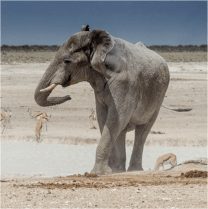
African Savannah Elephants Have Acute Spatial Memory. Study just published in the Proceedings of the Royal Society B.

African Savannah Elephant Photo Yathin Krishnappa

African Savannah Elephant Photo Yathin Krishnappa

Authors , etailed ‘spatial knowledge over large scales,’ enables elephants to minimize travel distance through highly directional movement when accessing water. Polansky et al.’s research illustrates emerging approaches for studying how cognition structures animal movement behaviour in different ecological and social contexts.” In fact, “little [was] known [before this study] about the role of spatial memory in large-scale movement behavior.” Animal Spatial Memory is crucial for survival since individuals and groups must find specific resources, like water or food, in patchy environments, which change seasonally. The study was conducted in the semi-arid Etosha National Park, Namibia. Read full open access article at Elephant Spatial Memory PRSB.

The main findings of the study can be summarized as follows: (1) Elephants have a remarkable spatial acuity when accessing point water sources, initiating highly directional movements to water at considerable distances from the waterhole. (2) The individuals studied [five-female- and five-male-radio-collared animals] overwhelmingly chose the nearest waterhole when moving to it in a directed manner across a range of scales, suggesting a cognitive-based mechanism for these movements. The factors leading to the cognitive decision making include: environmental spatio-temporal landscape features  (e.g. distribution of ephemeral waterholes and forage resources) and social organization (distribution of conspecifics that vary in social rank).

Polar Bears Are Increasingly Feeding on Bird Eggs. Climate change and the increasing impact of polar bears on bird populations. Frontiers in Ecology and Evolution.

Nest Predation by Polar Bears

Young polar bears raid a colony of barnacle geese, searching for eggs and newly hatched goslings in the Nordenskiöldkysten region of Spitsbergen, Norway. Image by Jouke Prop.

“Polar bears depend on sea ice for hunting seals. Longer ice-free seasons are hypothesized to force the bears to hunt for alternative terrestrial food, such as eggs from colonial breeding birds.” Prop et al. (a total of 16 authors) have “analyzed time-series of polar bear observations at four locations on Spitsbergen (Svalbard) and one in east Greenland.” Summer occurrence of polar bears has increased significantly since 1970/80s. “The shifts in polar bear occurrence coincides with trends for shorter sea ice seasons and less sea ice during the spring. Direct observations of nest predation show that polar bears may affect reproductive success of the barnacle goose, common eider and glaucous gull.” The authors suggest that “the increasing, earlier appearance of bears on land in summer reflects behavioral adaptations by a small segment of the population to cope with a reduced hunting range on sea ice. This exemplifies how behavioral adaptations may contribute to the cascading effects of climate change.” For complete story go to Frontiers in Ecology and Evolution.

A Biotic Game Design Project for Integrated Life Science and Engineering Education. PLoS Biology.

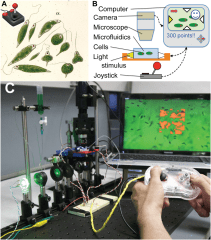
Biotic Game Design Project Integrated Life Science Engineering Education

A: Biotic games enable human players to interact with cells. B: Conceptual overview of a biotic game setup. C: Students built and played biotic games.

Authors Cira et al. (a total of 6 collaborators) summarize their work as follows” “we present the concept of a ‘biotic game design project’ to motivate student learning at the interface of life sciences and device engineering (as part of a cornerstone bioengineering devices course). We provide all course material and also present efforts in adapting the project’s complexity to serve other time frames, age groups, learning focuses, and budgets. Students self-reported that they found the biotic game project fun and motivating, resulting in increased effort. Hence this type of design project could generate excitement and educational impact similar to robotics and video games.” For article and materials go to PLoS Biology STEM.

The authors summarize their conclusions as follows: (1) Biotic games are promising in motivating integrated, hands-on learning at the interface of life science and engineering. (2) This concept could be adapted to various age groups and learning goals with the potential for wider future impacts on education.  (3) There is potential for integrating more creative and artistic aspects into STEM disciplines (Science, Technology, Engineering, Arts and Mathematics, STEAM) .

Game: Test Your Spatial Memory in this easy game (Click on Image).

Spatial Memory Game

This Pattern Memory game trains spatial recall including memory for visual patterns and location of objects. According to Memory-Improvement-Tips.com “These brain skills can help you remember where you left your keys or parked your car” (if that does not work, at least you will have fun playing the game). To begin, click the Small, Medium or Large links. This opens the game in a pop-up window. Wait for it to load, then click “START.” Good luck.


EvoLiteracy News 03 28 2015

Science, the universal language…

Happy Saturday everyone, here are a few of my favorite news, videos and science links about topics of broad interest, enjoy!

Earth’s tectonic plates skitter about, from Science Magazine.

“…Geoscientists have unveiled a computer model that maps the details of [Earth’s crust] tectonic dance in 1-million-year increments—practically a frame-by-frame recap of geologic time. It shows that the [tectonic] plates speed up, slow down, and move around in unexpectedly short bursts of activity…” Read full story in Science Magazine and watch the amazing video below. “The animation portrays the motion of continents (grey, yellow, orange and red) and oceanic plates (blue) since Pangea breakup from 200 million years ago.”


Liftoff! US, Russia Launch Historic One-Year Space Mission.

US Russia One Year Mission to ISS“An unprecedented one-year mission to the International Space Station [began] Friday (March 27). NASA astronaut Scott Kelly and Russian cosmonaut Mikhail Kornienko [did] launch toward the orbiting lab aboard a Russian Soyuz capsule, at 3:42 p.m. EDT (1942 GMT), from Baikonur Cosmodrome in Kazakshtan.” According to NASA, “…a crewed Mars mission could take 500 days or more; learning more about the potential problems astronauts could experience during a long mission is important [for planning  future missions to the Red Planet]…” See The Yearlong Space Station Mission: Full Coverage.

Below, Mars One introduction film (plus many other related videos).


Dynamic evolutionary change in post-Paleozoic echinoids and the importance of scale when interpreting changes in rates of evolution PNAS.

C exquisitus by Simon Coppard The Natural History Museum LondonFrom the cover of the Proceedings of the National Academy of Sciences. Authors Melanie J. Hopkins and Andrew B. Smith provide “…an example of a 265 million-year-old marine invertebrate [sea urchin] clade where evolutionary rates show a net increase over time. This is punctuated by intervals of high rates of morphological evolution, coinciding with major shifts in lifestyle and the evolution of new subclades. The study demonstrates the dynamic nature of evolutionary change within major clades.” For complete study go to PNAS.

Debate over Kin Selection generates yet another response to the controversial 2010-Nature article authored by Martin A. Nowak, Corina E. Tarnita & Edward O. Wilson. The new critique was published in PLoS Biology.

Acanthognathus teledectus Photo April Nobile

Acanthognathus Photo April Nobile

The latest rebuttal to the Nowak et al. (2010) article is titled “Relatedness, Conflict, and the Evolution of Eusociality,” authored by X. Liao, S. Rong & D. C Queller. The researchers summarize their work [a theoretical mathematical model] as follows: “The evolution of sterile worker castes in social insects has fascinated biologists ever since Darwin; how can selection favor a trait that decreases reproductive fitness? W. D. Hamilton solved this dilemma in the 1960s with a theory showing that reproductive altruism could evolve if it increased the worker’s inclusive fitness, which included effects that it had on increasing the fitness of its relatives. This solution to a crucial evolutionary problem, sometimes called kin selection, was challenged in a recent paper (Nowak et al. 2010). The paper generated much controversy, but no one has contested its new theoretical model of the evolution of eusociality, which appeared to overturn much of what was previously thought to be true from kin selection theory. Here we [Liao et al. 2015] examine this model in greater depth, showing that its apparently novel conclusions are overgeneralized from narrow and often inappropriate assumptions. Instead, this modeling strategy yields results that confirm important insights from kin selection and inclusive fitness, such as the importance of relatedness and the existence of conflicts in social insect colonies.” For complete open access to article go to PLoS Biology.

Learn more about the kin selection debate in Op Piece “Dehumanizing Academia by Dismantling the Humanities,” including the crossfire between Richard Dawkins and Edward O. Wilson.

Cartoon

Stuck The Landing cartoon Mars Curiosity Rover

EvoLiteracy News 03 24 2015

Unprecedented Letter: “The Natural History Museum” has posted on its website “An Open Letter to Museums from Members of the Scientific Community.” The letter states: “…We are deeply concerned by the links between museums of science and natural history with those who profit from fossil fuels or fund lobby groups that misrepresent climate science…”

David Koch Board of Directors SmithsonianThe text continues: “…We are concerned that the integrity of these institutions is compromised by association with special interests who obfuscate climate science, fight environmental regulation, oppose clean energy legislation, and seek to ease limits on industrial pollution… When some of the biggest contributors to climate change and funders of misinformation on climate science sponsor exhibitions in museums of science and natural history, they undermine public confidence in the validity of the institutions responsible for transmitting scientific knowledge.” To read the complete letter go to Open Letter. The Natural History Museum is inviting scientists to sign the letter. The organization states its mission as follows: “[To] affirm the truth of science.  By looking at the presentation of natural history, we demonstrate principles fundamental to scientific inquiry, principles such as the commonality of knowledge and the unavoidability of the unknown.  We inquire into what we see, how we see, and what remains excluded from our seeing. Through this inquiry, we act as museum anthropologists attuned to the social and political forces inseparable from the natural world.”

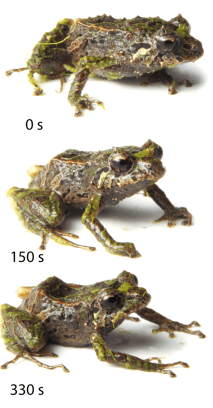
New species of frog can rapidly change skin texture from smooth to spiny. The “mutable rainfrog” (Pristimantis mutabilis), discovered in Ecuador, is not only cute but scientifically intriguing.

Mutable Rainfrog Ecuador Zoo J Linnean SocietyThe new amphibian species was discovered in the humid, mossy cloud forest habitat in Ecuador’s Reserva Las Gralarias, in the Andes. The study was just published in the Zoological Journal of the Linnean Society. The authors, Juan M. Guayasamin and four other collaborators, describe a “striking case of phenotypic plasticity” (= the frog overall appearance) in which the anuran has the ability to modify its skin texture within minutes, changing between two discrete character states: from presence to absence of tubercles. Interestingly, the “mutable frog” [note that the authors use this term to advertise the fast switch from one appearance to another] is not the only species with this trait; the biologists also describe a second sympatric frog (P. sobetes) with comparable characteristics. It is not clear, however, why these frogs can morpho-change their appearance, although environmental factors –including camouflage (the hypothesis favored by the authors since specimens resemble the mossy habitat in which they live), predators, sexual selection or an anatomical/physiological adaptation to the role of the skin in the animals’ biology– often shape the phenotype. The authors speculate that the so quick changes in the skin appearance “could involve allocation of more or less water to existing small structures (e.g. warts and tubercles),” but it is obvious that the process is not fully understood. Guayasamin and coauthors describe that “individuals of Pristimantis mutabilis presented a markedly tubercular skin texture when found on vegetation or hidden in moss during the night. Large tubercles were evident on the dorsum, upper and lower lips, upper eyelid, arms and legs.” And they add: “After frogs were captured, they all showed a sudden and drastic change in skin texture; all tubercles became reduced in size.” Amazing, indeed! For journalistic information on this story go to amphibians.org.

Amphibian was top predator. A species of crocodile-like amphibian was among Earth’s top predators more than 200 million years ago. The University of Edinburg.

Metoposaurus algarvensis Marc Boulay Cossima Productions

Model of Metoposaurus algarvensis. Credit: Marc Boulay, Cossima Productions

The research was just published in the Journal of Vertebrate Paleontology. as  A new species of Metoposaurus from the Late Triassic of Portugal and comments on the systematics and biogeography of metoposaurid temnospondyls. Brusatte et al. write in the summary of their research “Metoposaurids are a group of temnospondyl amphibians that filled crocodile-like predatory niches in fluvial and lacustrine environments during the Late Triassic. Metoposaurids are common in the Upper Triassic sediments of North Africa, Europe, India, and North America… We here erect Metoposaurus algarvensis, sp. nov., the first Metoposaurus species from the Iberian Peninsula, based on several new specimens from a Late Triassic bonebed in Algarve, southern Portugal… The new Portuguese bonebed provides further evidence that metoposaurids congregated in fluvial and lacustrine settings across their geographic range and often succumbed to mass death events…” For complete article go to Journal of Vertebrate Paleontology.

EvoLiteracy Photos: click on image below to visit Evolution Literacy Photos – Wildlife – Fossils – Landscapes – Museums – Monuments – Cities.

EvoLiteracy Wildlife News

EvoLiteracy News 03 23 2015

Is Autumn the neglected season in climate change research? Researchers at Boston University and the University of Connecticut think so! (03 2015).

Autumn leaves“…This neglect occurs despite the importance of autumn events, including leaf senescence, fruit ripening, bird and insect migration, and induction of hibernation and diapause. Changes in autumn phenology alter the reproductive capacity of individuals, exacerbate invasions, allow pathogen amplification and higher disease-transmission rates, reshuffle natural enemy–prey dynamics, shift the ecological dynamics among interacting species, and affect the net productivity of ecosystems…” The review article was published in the March issue of Trends in Ecology & Evolution Vol. 30 (3).

Watch 2:48 min video “Climate change: Earth’s giant game of Tetris – Joss Fong:”


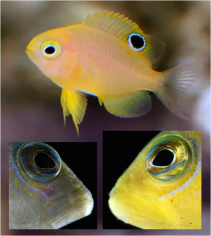
Coral-reef fish changes color to imitate other species and eat their progeny. Study just published in Current Biology (03 19 2015).

Colour-morphing reef fish Curr Biol 2015Researchers at the University of Cambridge have reported that “The dottyback changes its colour to match surrounding damselfish species, enabling it to counter the defences of its damselfish prey by disguising itself as a harmless part of their community, then swoop in to hunt their young… By changing colour to imitate local damselfish communities, dottybacks are able to overcome the predator avoidance behaviour in the juvenile fish they hunt.” Watch graphical abstract of research at Current Biology: Phenotypic Plasticity Confers Multiple Fitness Benefits to a Mimic.

Is the Human chin –its unique shape among the apes and other primates– an adaptation for chewing stress, speech, or a sexual ornament? Are chins spandrels —byproducts of selection operating elsewhere in the mandible or face? Are chins the product of genetic drift (some inbreeding among ancestral humans)? (03 17 2015).

Jaws Richard Kiel actor Bond Movies TWO

Richard Kiel in the role of “Jaws”

The Journal of Human Evolution has an article addressing theses questions. The findings can be summarized as follows: “Quantitative measures that capture the degree of chin expression were gathered from a sample of 123 primate taxa, and evolutionary rates associated with these measures were reconstructed in the primate phylogeny. The evolutionary rate associated with these measures was reconstructed to be far higher along the Homo tip (∼77 times greater than the primate background rate of evolution) than elsewhere in the primate phylogeny.” The results suggest that the human-chin morphology  is an exceptionally derived trait relative to other primates and a product of selection. — Note: the large chin in actor Richard Kiel was actually product of a syndrome called acromegaly.

Golden retrievers genetically predisposed to  cancer. Research has applications to understanding human cancer. From the cover of PLoS Genetics (02 02 2015).

Golden Retriver PLoS Genetics 2015PLoS Genetics summarizes Tonomura et al.’s work as follows: “Dogs are not only ‘man’s best friend’ for their loyalty, they are also the geneticist’s best friend. The artificial breed structure has created genetically isolated groups of dogs, with differential predisposition to diseases they share with us. This facilitates mapping of diseases relevant also to humans. Golden retrievers are predisposed to various cancers, including B-cell lymphoma and hemangiosarcoma. The genetic risk factors for these diseases in humans are still being elucidated. Surprisingly, golden retrievers have two nearby genetic loci with haplotypes predisposing to both diseases.” The complete article is available open access at PLoS Genetics.

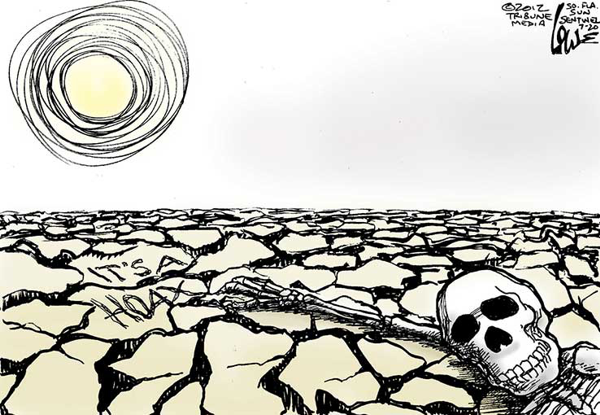
Cartoon: Climate Change is a Hoax

Climate Change is a Hoax cartoon

EvoLiteracy News 03 19 2015

US Senator Ted Cruz Distorts NASA’s Mission Budget. This report, appeared first in FactCheck.org and refers to Republican Senator Ted Cruz, who chairs the Senate Subcommittee on Space, Science, and Competitiveness (03 18 2015).

Earth Art from Space Close Up imageFactCheck.Org summarizes both Sen. Cruz remarks vs. NASA’s mission and vision:  Sen. Cruz, March 12, 2015: As we begin the process of putting together a roadmap for the future of NASA, there is one vital question that this committee should examine: Should NASA focus primarily inwards, or outwards beyond lower Earth orbit. Since the end of the last administration we have seen a disproportionate increase in the amount of federal funds that have been allocated to the earth science program at the expense of and in comparison to exploration and space operations, planetary science, heliophysics and astrophysics, which I believe are all rooted in exploration and should be central to the core mission of NASA. … I am concerned that NASA in the current environment has lost its full focus on that core mission. NASA, 1964: The fundamental objective of the Geophysics and Astronomy Program is to increase our knowledge and understanding of the space environment of the Earth, the Sun and its relationships to the Earth, the geodetic properties of the Earth, and the fundamental physical nature of the Universe. Knowledge of these areas is basic, not only to our understanding of the problems of survival and navigation in space, but also to the improvement of our ability to make technological advances in other fields. The understanding of the Earth’s atmosphere is important for advancement of weather forecasting, for solution of spacecraft reentry problems and for study of the atmospheres of other planets. For complete report go to FactCheck.org Cruz Distorts NASA’s Mission, Budget.

The Subcommittee on Space, Science and Competitiveness “has responsibility for science, technology, engineering, and math research and development and policy; standards and measurement; and civil space policy. The Subcommittee conducts oversight on the National Science Foundation, the National Aeronautics and Space Administration, the National Institute of Standards and Technology, the Office of Science and Technology Policy, and the National Technical Information Service. Advancements in science and technology are vital to the nation’s continued economic security, innovation, and competitiveness.”

Extraordinary diversity of visual opsin genes in dragonflies. This article was just published and featured on the cover of the Proceedings of the National Academy of Sciences (03 17 2015).

Dragonfly PNAS 03 17 2015The authors highlight the significance of their study as follows: “Human color vision is tri-chromatic, with three opsins expressed in cone photoreceptors that are sensitive in the red, green, and blue region of the spectrum. As theories predict, such tri- or tetra-chromacy with three or four opsin genes is common among mammals, birds, and other animals, including insects. However, we discovered that dragonflies possess as many as 15–33 opsin genes that have evolved through dynamic gene multiplications and losses within the lineage of dragonflies. These opsin genes are differentially expressed between adult and larva, as well as between dorsal and ventral regions of adult compound eyes, which plausibly underpin the versatile behavioral and ecological adaptations of actively flying adults to aerial lifestyle and sedentary larvae to aquatic lifestyle.” See source PNAS Vol. 112 (11).

UK mapped out by genetic ancestry. Finest-scale DNA survey of any country reveals historical migrations (03 18 2015).

UK Genetic Diversity Nature March 18 2015

A map of the United Kingdom shows how individuals cluster based on their genetics, with a striking relationship to the geography of the country. Source Stephen Leslie, Nature Magazine.

“The analysis — which shows a snapshot of clusters of genetic variation in the late 1800s, when people were less likely to migrate far from their region of birth — reflects historical waves of migration by different populations into the island…  [A] statistical model lumped participants into 17 groups based only on their DNA, and these groupings matched geography. People across central and southern England fell into the largest group, but many groupings were more isolated, such as the split between Devonians and Cornish in Britain’s southwest. People who trace their ancestry to the Orkney Islands, off the northeast coast of Scotland, fell into three distinct categories.” Source Nature  http://dx.doi.org/10.1038/nature14230.

Darwin’s puzzle… again evolution was, is true. Ancient proteins resolve the evolutionary history of some South American ungulates. Camel or elephant? Actually, this extinct South American mammal called Macrauchenia is most closely related to horses! (03 18 2015).

Toxodon Illustration

Toxodon – Illustration by Peter Schouten “Biggest, Fiercest, Strangest” W. Norton Publishers

The study was published in the journal Nature: “…Toxodon and Macrauchenia form a monophyletic group whose sister taxon is not Afrotheria or any of its constituent clades as recently claimed, but instead crown Perissodactyla (horses, tapirs, and rhinoceroses). These results are consistent with the origin of at least some South American native ungulates from ‘condylarths’, a paraphyletic assembly of archaic placentals. With ongoing improvements in instrumentation and analytical procedures, proteomics may produce a revolution in systematics such as that achieved by genomics, but with the possibility of reaching much further back in time.” See source Nature doi:10.1038/nature14249.

Macrauchenia Illustration

Macrauchenia – Illustration by Peter Schouten “Biggest, Fiercest, Strangest” W. Norton Publishers