Dehumanizing Academia by Dismantling the Humanities

Dr. Guillermo Paz-y-Miño-C — © 2014

New England Science Public – An Initiative for the Public Understanding of Science – on Twitter @EvoLiteracy@gpazymino

Dehumanizing Academia

[click on subtitle to be redirected to The Standard Times]

“…our history and future survival as prosperous civilizations will depend on the integration of what we discover about ourselves via science, about our bodies, brains and cultures, and on what we internalize from such discoveries via the humanities, the sentinels of knowledge in society…”

Edward O Wilson BBC2 Evolution Literacy Paz-y-Mino-C

Harvard Professor Edward O. Wilson during the interview posted online by BBC2’s Newsnight

In his latest book (2014), “The Meaning of Human Existence,” Harvard Professor Edward O. Wilson, 85, makes an unwise remark: he calls Oxford Professor Richard Dawkins, 73, an “eloquent science journalist.” If Wilson’s intention had been to plea for higher standards in contemporary media reporting, then Dawkins’ exquisite communication skills, proficiency in science, sharp intellect, and always controversial presence (in the right journalistic sense), would have made him a robust role model for investigative journalism. But Wilson aimed at demeaning Dawkins by invoking the character of a profession, one that has given coverage to Wilson’s career during half a century.

The Guardian (U.K.) titled the Wilson vs. Dawkins exchange a “biological warfare.” Perhaps by now the reader realizes how journalistically treasured are these scuffles. But The Guardian’s story itself fed on a previous BBC2’s Newsnight interview, where Wilson reiterated his judgment about Dawkins. Via Twitter, Dawkins responded by reaching out to his one million followers: “anybody who thinks I’m a journalist, who reports what other scientists think –as Wilson described Dawkins’ work— is invited to readThe Extended Phenotype.” The latter, published in 1982, is a follow up to the famous “The Selfish Gene” of 1976; both outstanding scientific contributions to theoretical biology.

Richard Dawkins Evolution Literacy Paz-y-Mino-CBefore going any further, it is indeed imprudent to use the term “science journalist” as a dishonor, to discredit a colleague, and to inattentively belittle a vital occupation.

The Wilson-Dawkins crossfire was triggered by Dawkins’ review of Wilson’s earlier book “The Social Conquest of Earth” of 2012. In it, Wilson drifted away from a well established concept in biology, called Kin Selection, which helps understand why organisms that cooperate with close relatives, more than with strangers, can improve survival and reproduction, thus leaving descendants who carry the traits that make them social and altruistic. The evolution of high sociality, cooperation, altruism and intelligence in the human animal are often explained under kin selection theory (natural selection ultimately favoring kin).

Kin selection is an experimentally documented phenomenon, supported by most evolutionary biologists, to the point that when Wilson and collaborators wrote an article for Nature, in 2010 (which became part of a contentious chapter in “The Social Conquest of Earth”), challenging the kin selection principle and suggesting that high cooperation and altruism can still evolve regardless of kinship, 137 world scientists authored and signed a debunk-letter-to-the-Wilson’s position, which Nature published the following year. [Note that in a paper published in PLoS Biology, March 23, 2015, authors Liao, Rong and Queller completely dismiss the Wilson’s team proposal of 2010; in fact, Liao et al. state that “all… apparently novel conclusions –in the Nature’s 2010 article– are essentially false”].

E O Wilson Books Evolution Literacy Paz-y-Mino-CIn the 2010 paper, Wilson and associates acknowledged that kin selection could still work, but that an alternative scenario based on a combination of individual and group selection, not necessarily closely related members, results in a mathematically sounder model than the “elderly” –ossified– kin selection. The same assertion appeared in Wilson’s “The Social Conquest of Earth,” about which Dawkins –after borrowing words attributed to American poet and satirist Dorothy Parker— declared: “this is not a book to be tossed lightly aside. It should be thrown with great force.” And sincere regret (Dawkins’ emphasis).

“…Creationists, of course, grew excited about the scientists’ disagreement. Not so fast. Evolution is true regardless of the dispute over kin selection…”

Creationists, of course, grew excited about the scientists’ disagreement. Not so fast. Evolution is true regardless of the dispute over kin selection [note that researchers are constantly reexamining hypotheses and paradigms, for example, see discussion about Standard Evolutionary Theory SET versus Extended Evolutionary Synthesis EES in Nature]. And both Wilson and Dawkins, as evolutionary biologists, are secular, openly and vigorously opposed to creationism, including Theistic Evolution, Creation Science, Intelligent Design, and Evolutionary Creation; all represent belief-based views of reality, which impose a Creator or Designer in the background of causality. Wilson and Dawkins have categorically stated that there is no scientific evidence in support of any style of creationism.

“…[the] American universities… seem committed to turning off the humanities, dismantling the social sciences, and replacing them with for-profit, translational research to generate goods for patents and commercialization…”

Unfortunately, the message Wilson sought to convey in “The Meaning of Human Existence” was eclipsed by the exchange with Dawkins; Ed threw unnecessary punches, while Richard diverted them back with customary power; a fight with no winner. And Wilson’s book is crucially important to raise awareness about the current dehumanization of academia at American universities, which seem committed to turning off the humanities (philosophy, history, archeology, anthropology, arts, law, literature and linguistics), dismantling the social sciences, and replacing them with for-profit, translational research to generate goods for patents and commercialization; a path leading to the extinction of curiosity-driven science and risk-taking ideas, which have modernized fundamental scientific work: wisdom driven.

In closing, Wilson makes an excellent connection between human evolution and the humanities. He reasons that our history and future survival as prosperous civilizations will depend on the integration of what we discover about ourselves via science, about our bodies, brains and cultures, and on what we internalize from such discoveries via the humanities, the sentinels of knowledge in society (including journalism, my emphasis). And he envisions the relevant humanities under no faith: “the best way to live in this real world is to free ourselves of demons and tribal gods.” — © 2014 by Guillermo Paz-y-Miño-C. all rights reserved.

Related Articles

Fragmentary Truths and the Intellectual Imbalance in Academia

The Incompatibility Hypothesis: Evolution vs Supernatural Causation

Bill Nye defeats Ken Ham at Creation Museum

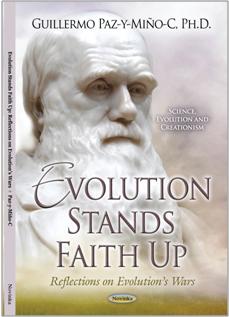
Evolution Stands Faith Up: Reflections on Evolution’s Wars

On Francis Collins’ and Karl Giberson “The Language of Science and Faith”

New Book: Why does Evolution Matter? The Importance of Understanding Evolution

Why does Evolution Matter? The Importance of Understanding Evolution

This historical documentation of the scientific discussions that took place in the Galapagos, 178 years after Charles Darwin visited the islands, attests to the legacy of a Voyage that transformed Darwin’s own understanding of nature; the discoveries that awakened humanity to accept the mutability of species, and later face the reality of evolution by means of natural selection. Evolution is true, it has always been. And this book adds powerful evidence in its support, from a social, environmental, molecular and public health perspectives…

Why Evolution Matters Book - Evolution LiteracyCambridge Scholars has just released (October 1, 2014) the book “Why does Evolution Matter? The Importance of Understanding Evolution,” edited by Dr. Gabriel Trueba, from the Microbiology Institute at University San Francisco of Quito (USFQ), in Ecuador. The volume is conceptualized in four sections (Evolution and Society, Environmental Change, Molecular Evolution, Evolution and Public Health) and includes twelve chapters written by international researchers.

Most of the chapters summarize the keynote addresses presented by the authors at the Galapagos III World Evolution Summit, which was organized by USFQ and its Galapagos Institute for the Arts and Sciences (GAIAS), in June 2013. “This historical documentation [the book] of the scientific discussions that took place in the Galapagos, 178 years after Charles Darwin visited the islands [September 1835], attests to the legacy of a Voyage that transformed Darwin’s own understanding of nature; the discoveries that awakened humanity to accept the mutability of species, and later face the reality of evolution by means of natural selection. Evolution is true, it has always been. And this book adds powerful evidence in its support, from a social, environmental, molecular and public health perspectives… An ideal compilation of material for a broad audience, particularly researchers in academia, and those seeking a volume for a graduate seminar on evolutionary topics.”

Under the scope “Why Does Evolution Matter,” the 200-attendee Galapagos III World Evolution Summit took place at the Charles Darwin Center in Puerto Baquerizo Moreno, San Cristobal Island. At the Summit, USFQ and GAIAS launched officially the Lynn Margulis Center for Evolutionary Biology and showcased the Galapagos Science Center, an impressive research facility at the USFQ Galapagos campus. — © 2014 Evolution Literacy all rights reserved.

Related Readings:

Editing Darwin to Reach the Almost Unreachable Reader
Paz-y-Miño-C., G. & Espinosa A. 2013. Galapagos III world evolution summit: why evolution matters. Evolution: Education and Outreach, 6:28. [PDF]. Open Access.
Unforgettable Galapagos, a Summit, and Why Evolution Matters
Galapagos Evolution Conference Adds to Understanding Part II
Darwin Day Awaits Designation by U.S. Congress


Editing Darwin to Reach the Almost Unreachable Reader

Editing Darwin to Reach the Almost Unreachable Reader

Dr. Guillermo Paz-y-Miño-C — © 2014

New England Science Public – An Initiative for the Public Understanding of Science – on Twitter @EvoLiteracy@gpazymino

…If we possessed a perfect pedigree of mankind, a genealogical arrangement of the [ethnicities]… would afford the best classification of the various languages… [If] all extinct languages, and all intermediate and slowly changing dialects, had to be included, such an arrangement would… be the only possible one.

In 1859, Charles Darwin wrote, so Darwinianly, the passage above in “On the Origin of Species by Means of Natural Selection, or the Preservation of Favoured Races in the Struggle for Life.” He envisioned the roots and evolution of languages via common ancestry, a process of gradual modification, from simple to diversified variants over time. In modern terms: an evolutionary phenomenon, not only factual for organisms that communicate complexly with one another, but also a feature detectable in non-human animal cultures (when sophisticated cognition allows culture), vocalizations and signals inherited through learning rather than by means of exclusive genetic programming.

The_Readable_Darwin_Evolution_Literacy_Paz-y-Mino-CPerhaps Darwin envisioned –as I wish to think— that his own Victorian writing style of the 1800s would change, drift comparably to a dialect, and in the future require a “translator” to bring up to date the Darwinian message. And this is what my valued colleague, Jan A. Pechenik, Professor of Biology at Tufts University, has done. In his 2014 “The Readable Darwin: The Origin of Species, as Edited for Modern Readers,” Jan takes the challenge to adapt the century-and-a-half-old book for a contemporary audience. And he does it in a unique manner: rather than abridging the text as, for example, in Richard Dawkins’ 2008 elegant audio-book narration of the first edition of The Origin; or expanding it, as in David Quammen’s 2008 illustrated volume, which includes hundreds of historic images, Pechenik sharpens the text, edits it to make it legible in current American English by, I suspect, primarily our youth.

Pechenik knows that in the Era of Vast Intellectual Emptiness, ours, when communication is not only restricted to the 140 characters of a tweet, but to the out-of- grammar, rebelliousness to syntax, or no spelling-rules revered by the blogging industry, persuading the public to treasure Darwin is almost impossible. Pechenik relies, however, on his college-instructor intuition, his patience and responsibility as educator, to be confident that some minds can be rescued, and that “…[this] wonderful reminder of the incredible diversity of life on [our] planet Darwin’s book  and honest argument [for evolution] based on evidence and logical thinking…” cannot continue to be rarely appreciated under the excuse that allegorical writing, the Victorian style, is unattractive to those whose neurons operate only when plugged into electrical appliances.

You care for nothing but shooting, dogs, and rat-catching, and you will be a disgrace to yourself and all your family” reads the opening quote to Pechenik’s preface in “The Readable Darwin.”

…A rebuke attributed to Darwin’s father when struggling to reason with the juvenile Charles, whose uncertainty to pursue an honorable occupation –either medicine or the clergy, as he attempted first in Edinburgh, 1825-1827, and later in Cambridge, 1827-1831, respectively— became a family concern. Thus Pechenik knows how to relate to the standard career-undecided college student, how to invite him/her to accept Darwin and fall in love with Charles’ story, his voyage on board of the Beagle (1831-1836), and his forever important contribution to universal knowledge and human history.

In “The Readable Darwin,” Pechenik edits The Origin under the recommendations of his own “Short Guide to Writing About Biology” (eight edition, 2012). He eliminates the copious prepositions (much common among Victorians), polishes the “Wimpy Verb Syndrome” (i.e. the use of multiple verbs to refer to a single action), warns us that examples are about to be generously listed, rather than appearing unannounced in long paragraphs; incorporates definitions of terms (not often given by Darwin), and reorders the sentences to convey the message straightforwardly. And Pechenik succeeds at editing Darwin without disrupting the beauty of the prose or distorting the message. To accomplish this, Pechenik recurs to his reflective understanding of Darwin, to his solid background in evolutionary biology and textbook-writing skills.

Each of the eight chapters edited in “The Readable Darwin” starts with an explanatory mini introduction to: Variation Under Domestication (Chapter 1), Variation in Nature (Chapter 2), The Struggle for Existence (Chapter 3), Natural Selection, or the Survival of the Fittest (Chapter 4), Laws of Variation (Chapter 5), Difficulties with the Theory (Chapter 6), Miscellaneous Objections to the Theory of Natural Selection (Chapter 7), and Instinct (Chapter 8). About one hundred color images illustrate the chapters (note that Darwin’s Origin had only one visual, a roughly sketched evolutionary tree), footnotes, online resources, links to videos, and a list of classic and modern references.

Illustration_Origin_of_Species_Evolution_Literacy_Paz-y-Mino-C

The only illustration in Darwin’s On The Origin of Species (1859) was a roughly sketched evolutionary tree

I find of particular value the section Key Issues to Talk and Write About at the end of the chapters, where the reader, or an instructor using the book for proper college education, is confronted with testing queries and themes to essay about. This exposes the rigorous mind of Pechenik, the Professor, who now, after assisting the bookworm to enjoy the digested text, wants to know if some actual retention of content took place, if critical thinking can be exercised once each chapter has been handled to the reader-learner in a gracious format. But Pechenik goes beyond that: in Appendix A: Other Books by Charles Darwin, he overwhelms us with descriptions of fifteen additional books and four monographs authored by Darwin between 1839 and 1881, thus broadcasting that Darwin’s giving to science was monumental.

The Readable Darwin” is suitable for all audiences, particularly college instructors, undergraduate and graduate students, and I eagerly await for the second book in which Pechenik will present us with the remaining seven edited chapters of the 1872 sixth edition of The Origin. I emphatically recommend Pechenik’s work to those in administrative positions in academia, and to creationists who reject the reality of evolution; both audiences need rigorous schooling in matters of evolution — © 2014 by Guillermo Paz-y-Miño-C. all rights reserved.

Related Articles:

On the Wrongly Called “The God Particle”

Evolution Stands Faith Up: Reflections on Evolution’s Wars

On Francis Collins’ and Karl Giberson “The Language of Science and Faith”

Reviews of Book Evolution Stands Faith Up – Reflections on Evolution’s Wars

Book_Evolution_Stands_Faith_Up_G_Paz-y-Mino-C

Paz-y-Miño-C  marvels at the intricacy and diversity of life, and how it came about through natural selection over hundreds and hundreds of millions of years, and is clearly frustrated by the unwillingness of so many to see the beauty and majesty in this view of the world and all that it explains

This is a delightful collection of essays about, as the author puts it, “evolution and its wars against superstition.” Professor Paz-y-Miño-C does not try to teach evolutionary thinking in this book, or explain Darwin’s ideas in any way. But he is a firm believer in evolutionary processes, and you can easily feel his frustration at the victory of inherent belief over evidence-based thinking in our society. He would like to see decisions made on the basis of facts, not unsupported opinion. Indeed, he abhors and fears irrational thinking, especially “the views of those who see evil in truth and menace in the realities discovered by science.” He marvels at the intricacy and diversity of life, and how it came about through natural selection over hundreds and hundreds of millions of years, and is clearly frustrated by the unwillingness of so many to see the beauty and majesty in this view of the world and all that it explains. He is clearly an educator at heart, and a proponent of “curiosity-driven research, critical thinking inside and outside the classroom, and the passion for exploring the truth just because we wanted to seek it.” It makes me want to take one of his courses. He dreams of a world in which science becomes the backbone of political candidates, and voters are literate enough to thoughtfully assess what they are saying, and is rightly concerned by the decline in U.S. educational standards and expectations, particularly with regard to the teaching of science and mathematics, and especially our failure to teach scientific thinking skills to our students.

The book is an easy read, at under 100 pages. From essay to essay, each of which is only a few pages long, the author breezes past an amazing variety of topics, from the decline in American educational standards and student performance, to what we know about human origins, to the decline in society’s respect for science and its role in guiding political decisions, to the wish that science would guide debates among political candidates on environmental and other issues of key importance, to pressing conservation issues in the Galapagos, to the reluctance of the American voter to elect an atheist to public office, to the relationship between prayer healing and the scientific basis for the benefits of our natural Relaxation Response, to the incompatibility between the idea of Noah’s ark and the well-documented consequences of inbreeding. His thoughts about our educational system particularly hit home with me. Children at all levels should be learning how to ask good questions, how to design rigorous experiments, and how to evaluate and present information, learning what science actually is and how it is done rather than only memorizing facts and learning lab and computer techniques. As Professor Paz-y-Miño-C clearly understands, there is a strong creative element in doing science that few students, unfortunately, get to see.

As he continues to make his plea for public recognition of the value of basic research, his writing is often lovely and poetic, as in his passage about the Mother Church of Christian Science in Boston, which “still breathes…through a majestic golden pipe organ, which gives the impression of resounding even in silence.” The author clearly reads widely; interspersed throughout the book we see quotes from, and allusions to, Darwin, de Tocqueville, various Nobel laureates, C.S. Lewis, George Santayana, Melville, Goldilocks, Mary Baker Eddy, Giordano Bruno, Galileo, Noah’s ark, Christopher Columbus, Vasco da Gama, the Incas, the Ecuadorian painter Oswaldo Guayasamin, Jared Diamond, Lucy the Australopithecus, Stalin, the 1925 Scopes Trial in Tennessee, and Democritus of Abdera, who coined the term “atom” more than 2,000 years ago. And he takes us to so many places, including Mauna Kea in Hawaii, the Boston Museum of Science, Noah’s Ark, The New Bedford Whaling Museum, and conferences in Lisbon, Switzerland, and Denver Colorado.

The final essay in the volume is about National Darwin Day (Feb 12), something I had not heard about before but that was apparently proposed in 2013 by representative Rush Holt from NJ to honor Darwin’s birth, and as a way of “celebrating the achievements of reason, science, and the advancement of human knowledge.” Some of the responses to Mr. Holt’s bill —reported verbatim in Evolution Stands Faith Up— are remarkable, and not in an encouraging way. Many people do indeed celebrate Darwin Day around the world (http://darwinday.org/), but it unfortunately has yet to become a national holiday in the U.S. As the authors says, “It is impossible to honor knowledge when a nation’s admiration for it vanishes…” – Jan A. Pechenik, PhD, Professor of Biology, Tufts University, United States.

Another Strong Defender of Evolution Rises: with [Evolution Stands Faith Up], Dr. Paz-y-Miño-C establishes himself as a clear, lucid, and refreshingly candid fighter of creationism and defender of evolution

Many biologists and scientists in general would probably agree that the struggle against creationism as an alternative to science is a war that must be waged. However, we all know it is a difficult fight. Hence, most of us are content sitting on the sidelines, doing our own work, watching others engage this important and often thankless debate. After all, how does one produce a coherent, logical, and intelligent argument against an opponent whose very aim is to create confusion, to deny reality, and to promote ignorance? Few among us have the audacity. Dawkins might be the best-known opponent of creationism, but there are many strong and clear voices in the choir. With this book, Dr. Paz-y-Miño-C establishes himself as a clear, lucid, and refreshingly candid fighter of creationism and defender of evolution.

The book is a series of essays, previously published in various venues. In each essay, Paz-y-Miño-C adds his own personal experiences as they relate to an important topic. Sometimes, Paz-y-Miño-C deals with a current issue; often he starts with his own personal experiences, and occasionally highlights his own research about creationists’ misconceptions. In every case, he produces a short, and very readable essay that debunks creationist beliefs in a style that is not necessarily confrontational (the tome’s title notwithstanding), but rather directs us to consider problems in the creationists’ agenda using their own logic against themselves, and urges us to draw our own conclusions.

The essays are written clearly and are very readable. Many chapters begin with a quotation, but I was disappointed that in many cases the source of the quotation is not given [Note: the reviewer refers to excerpts from each essay, which are quoted at the beginning of each chapter and belong to the author, except when indicated otherwise]. Every essay ends with a clear message.

The book would definitely be an asset to anyone interested in the debate, and might easily be incorporated into a course in evolution, science and society, and/or philosophy of science. – G.A.L., PhD, Evolutionary Biologist, Canada.

When Paz-y-Miño-C cuts to the core of an argument, he does it with the flare of a true artist

I am delighted that some of Paz-y-Miño-C’s finest essays and editorials have been collected in a single volume. He is a prolific essayist and I have enjoyed reading his work over the last two decades. In the tradition of Richard Dawkins he does not pull any punches, but when he cuts to the core of an argument, he does it with the flare of a true artist. Too many of our colleagues work so hard to appear open minded that their brains seem to have fallen out. When they teach our students that they can pick and choose when to be logical, critical thinkers, they are modeling the type of reasoning that leads to the politics of convenience and its bridesmaids: racism, sexism, and the whole host of xenophobias. When the emperor has no clothes, I want to be standing in the back row with Guillermo, pointing a finger and having a good laugh. – Stan Braude, PhD, Professor of Practice in Biology, Washington University in St. Louis, United States.

For Scientists and Readers Seeking Analysis of the Evolution Wars and Science Illiteracy

“Science is just a refined device for resolving ordinary curiosity and a powerful liberator of superstition. It stands alone in its secular turf”.With this thought-provoking statement in the preface, Guillermo Paz-y-Miño-C hints at what will fascinate the reader in his recent book Evolution Stands Faith Up: Reflections on Evolution Wars. The author immerses us in a broad range of topics with a common theme: why science is critical for our well being and how “belief,” as a “disruptor,” delays and stops the correct comprehension and acceptance of evidence.

All chapters provide useful information and enjoyment. Several descriptions take us to stunning sites while bringing evolution to life (e.g. Unforgettable Galapagos, a Summit, and Why Evolution Matters; Conservation Behavior in the Galapagos; Denying Rome, the Exquisite Colosseum and Evolution; Mauna Kea Telescopes to Sink in the Pacific; All History is Black History); others, alert us about the dangers of pseudoscience or belief in the supernatural (e.g Faith Healing vs. Medical Science; Wrong at Forecasting Armageddon; Rejection of Science Threatens to Be Epidemic; Evolution Stands Faith Up: On Francis Collins’ & Karl Giberson’s “The Language of Science and Faith”).

As reader and researcher, I was captivated when being transported, by the author’s narratives, to natural history museums, animal collections and cities (e.g. Boston’s Charles Hayden Planetarium; A Stationary Ark on the Isle of Jersey; On Whales and a Whaling Museum; Lisbon’s Lesson: Honor the Value of Discovery). I found it concerning to learn that, although Americans Want Candidates to Debate Science, our science standards cause our high school students to be uncompetitive in the world (e.g. Massachusetts Gets an A- in Science Standards), and that high religiosity is common among the New England Faculty and Educators of Prospective Teachers (e.g. New England Professors Accept Evolution, but They are Religious).

I must confess my favorite chapter is On the Wrongly Called The God Particle. I admired how the author takes us in an easy-to-follow journey through the discovery of the Higgs Boson in 2012. Without overwhelming the reader with technical details, the message is clear “The Higgs is a sub atomic particle, a boson, and a crucial one to understand the properties of other elementary particles, for example, why some have mass and others, like the photons (components of light) don’t. Without mass, no atoms would exist, no galaxies or stars, no solar systems or planets with life, and no brains capable of thinking about it.”

I would use this book in a college course on science writing, or possibly in science journalism. And recommend it to scientists and readers seeking a great combination of content, style and sharpness in the analysis of the “evolution wars” and “science illiteracy.” – Avelina Espinosa, PhD, Professor of Biology, Roger Williams University, United States.

Paz-y-Miño-C has a marvelously eloquent style of writing, full of inspiring metaphors and lateral observations

This is an inspiring, readable collection of 21 essays of reflective value to everyone. You can dip into any of these well-crafted and thoughtful essays at leisure without concern for order. The layout of each essay is appealing, beginning with a quote extracted from the essay, which summarizes the key insight, and finishing with a list of suggested readings and resources. The essays, mainly written within the past 4 years, are taken largely from the author’s contributions to local newspapers and his online blog, Evolution Literacy.

The author is an evolutionary biologist and an atheist who originally immigrated to the U.S. as a graduate student from Ecuador. His preface to the book provides a rationale for these essays arising from his training as a scientist and the need to address the breadth of irrational thinking around us. Notably, he points to the vain attempt by many to try and accommodate scientific rationalism with supernatural beliefs. They are simply incompatible. To emphasize this point, his first essay, from which the title of this set of essays is taken, is based on his critical book review in Amazon.com of “The Language of Science and Faith” by Francis Collins (former head of the Human Genome Project) and Karl Giberson. Francis Collins, a widely respected genetic researcher but devout Christian, demonstrates a cognitive dissonance between one’s scientific skills and the emotional need for an ineffable, “spiritual” connection to something greater outside of oneself. This latter sense of connection with the natural world devolves into an inborn tendency to take mental shortcuts and default to “unseen” supernatural causes, a common impediment to critical thinking.

The essays address a broad range of topics, including faith healing, astronomy, physics, nature, archaeology, the curiosity-driven urge to discover, and the serious threat from the arrogant ignorant who equate opinion with knowledge, especially those in positions of power to further corrode education. As the author counsels, “Escort out of office those who see fiction and facts compatible, or worship ignorance-based opinions as rightful views of equitable value to the empirical truth.”

The author has a marvelously eloquent style of writing, full of inspiring metaphors and lateral observations that reinforce connections to the foundations of scientific inquiry and to biological evolution in particular. These thoughtful essays are accessible to the general public and an inspiration to all of us who should write an occasional essay for our local newspaper or an online blog to help clear the fog in our own communities and arm our neighbors against theistic anti-science, medical quackery and other irrational nonsense. – Greg M. Stott, PhD, Geoscientist with the Ontario Geological Survey, Canada.

For information go to Evolution Stands Faith Up: Reflections on Evolution’s Wars by NOVA Publishers, New York Soft Cover

Find it at Barnes & Noble, Amazon.comAmazon UK


Fragmentary Truths and the Intellectual Imbalance in Academia

Fragmentary Truths and the Intellectual Imbalance in Academia

Dr. Guillermo Paz-y-Miño-C — © 2014

Department of Biology, University of Massachusetts Dartmouth

[click on title to be redirected to The Standard Times]

“…If we ought to quote E.O. Wilson in the context of what is good for science and science education, then we must look at his unyielding journey in support to fundamental research and long-standing concerns about the future of academia. Although open to dialog with spiritualists, Wilson has never endorsed creationism under the principle of Consilience, nor sponsored profit at the expense of quality schooling…” 

Some months ago, an administrator ventured to school me by asserting: “E.O. Wilson is known for his books in popular science, but his area of research is ants.” I will return to this fragmentary truth after documenting what can be done, following Harvard Professor Edward Osborne Wilson’s example, to make outreach to students —our public— via proper science education.


Above, Professor Edward O. Wilson, painting by Jennie Summerall

When I arrived at UMass Dartmouth in 2007, the evolution wars were at their peak. Although Intelligent Design had been defeated in the 2005 Dover, Pa., trial for violating the rules of science by “invoking and permitting supernatural causation” in matters of evolution and for “failing to gain acceptance in the scientific community,” the 21st century anti-science crusade had just began. Current legislation constraining the teaching of evolution reigns in 12 states.

According to Intelligent Design, evolution could not explain holistically the origin of the natural world or the emergence of intricate molecular pathways essential to life, nor the immense phylogenetic differentiation of biological diversity and, instead, proposed an “intelligent agent,” a designer, as the ultimate architect of nature.

During the process of ripping Intelligent Design apart, earlier variants of creationism resuscitated —mostly in media-driven discussions, which I never considered harmless since they reflected the quiescent mind of the public— and newly emerged as, allegedly, better alternatives to Intelligent Design. I discuss them in my 2013 book “Evolution Stands Faith Up: Reflections on Evolution’s Wars:”

Among the former were Theistic Evolution and Creation Science, creationism in principle and practice (God the maker of the universe, always present in the fore- or background of causality); among the latter was BioLogos (2000s), which aimed at merging Christianity with science by proposing a “model for divinely guided evolution” that required “no intrusions from the outside for its account of God’s creative process, except for the origin of the natural laws guiding the process.”

Supporters of BioLogos suggested that “once life arose, evolution and natural selection permitted the development of biological diversity and complexity,” including humans. After evolution got underway, “no special supernatural intervention was required” (quotes from “The Language of Science and Faith” 2011, co-authored by Karl Giberson and Francis Collins —the latter Director of the National Institutes of Health). In essence, the Creator was done, but remained in touch for eternity! This is, of course, inconsistent with everything we know about reality.

As an evolutionary biologist and university professor, I considered a duty to properly educate my students and prepare them to examine, by themselves, the anti-science cultural pollutants that aim at “zombieing” their minds, “corpseing” their innate spirit of inquiry, and perpetuating societal confusion around empirical discoveries.

New England has the highest acceptance of evolution in the U.S., only 59 percent. Back in 2008, when I first polled the UMass Dartmouth campus, our biology graduates used to join the workforce with an acceptance level evolution of 65 percent; the freshman —right out of high school— were at 52 percent. A year later, in May 2009, after I restructured the core biology courses with an evolutionary perspective, acceptance of evolution jumped to 82 percent among the youngest undergrads. Today, 95 percent of graduating bio-majors accept evolution at UMass Dartmouth, the highest score ever reported for college students in the U.S., and comparable to 97 percent of the New England faculty.

Evolution literacy matters: It correlates with understanding climate change, support for stem-cell research, vaccines, alternative sources of energy, respect for education and human rights.

And this brings me back to my allusion to Professor E.O. Wilson. Indeed, he had (still does) a celebrated career in the study of Hymenoptera (ants, wasps and bees). But there is high complexity in Wilson’s contribution to theoretical science, far beyond “ants” (which vastness has been revealed by his passionate disciples).

Forgive my professorial account: Concepts such as Island Biogeography (1967), the still controversial Sociobiology (1975), Biophilia (1984), Biodiversity (1988), Consilience (1998), “The Creation” in the context of what nature can do to assemble life (2006), are among Wilson’s seminal proposals. But he also co-founded “evolutionary biology” in 1960, in an attempt to address “the intellectual imbalance of biology at Harvard,” and his fears of seeing ecology and evolution “being outgunned, outfunded, and outnumbered” by alternative fields of investigation, as he narrates in “Letters to A Young Scientist” (2013).

If we ought to quote Wilson in the context of what is good for science and science education, then we must look at his unyielding journey in support to fundamental research and long-standing concerns about the future of academia. Although open to dialog with spiritualists, E.O. Wilson has never endorsed creationism under the principle of Consilience, nor sponsored profit at the expense of quality schooling.

Bill Nye defeats Ken Ham at Creation Museum

Bill Nye defeats Ken Ham at Creation Museum

Dr. Guillermo Paz-y-Miño-C — © 2014

Department of Biology, University of Massachusetts Dartmouth

[click on title to be redirected to The Standard Times]

“…It [takes] only a reasonable citizen, literate in science and evolution, with the courage to walk into the darkness of the Creation Museum, to illuminate the pervasive remnants of obscurantism...”


It can be of great consequence to defeat creationism at selected battles, although not all fights should be fought and not all impostors enjoy “equal time” debating science under the illusion that a dialog between nonsense and facts will educate the public.

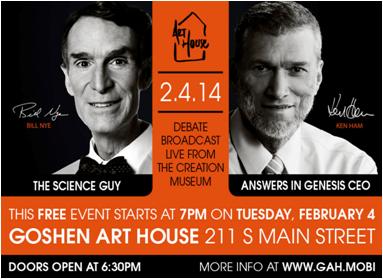
But extraordinary circumstances do emerge: the draftsman of the Creation Museum, spiritualist Ken Ham, challenged Bill Nye, The Science Guy, to a duel. And Ham’s mistake was twofold, imagining that Bill Nye will not accept and, worse, organizing the clash at the preacher’s den, on February 4, 2014.

Nye won the debate months in advance, perhaps years. His most recent and highly publicized advocacy for science literacy, awareness about climate change and support to education follow two decades of media exposure: from “The Science Guy” in the early 1990s, where elementary science was featured, to “The Eyes of Nye” in the mid 2000s, which questioned pseudoscience and educated viewers about addiction, antibiotics, nuclear waste, and cloning, to “100 Greatest Discoveries” and “The Greatest Inventions” for the Discovery Channel (both about technology and innovation), to “Stuff Happens” for Planet Green (pro-environment) and the latest “Solving For X” which highlights the value of algebra in children’s schooling.

Bill Nye Evolution Literacy Debate

With enough credentials to describe himself as a “reasonable man” and “a patriot” concerned about the United States imminent drift toward “producing a generation of students who do not believe in science,” Nye began his opening debate-statement by thanking the organizers for the invitation to “this facility,” the Creation Museum in Petersburg, Kentucky. Indeed, proper science museums are accredited by reputable organizations (i.e. American Alliance of Museums; see 2013 List of Accredited Museums), but the enterprise envisioned by Ken Ham, president/CEO and founder of Answers in Genesis and the Creation Museum, aims at smuggling pseudoscience via the façade of an educational institution —two million visitors since 2007.

The ultimate point in the debate was an old one, the ever-lasting conflict between science, represented by evolution, and supernatural causation epitomized by Biblical Creationism. In essence, an easy wrestling scuffle for science in today’s world —but not in the US, as pointed out by Nye, a unique nation in its opposition to evolution. Ham referred to the Old and New Testaments as “the book” —with which Bill Nye ought to be aware— containing “the evidence” for Origins, and for all beginnings, the universe, life, consciousness, morality; the list was long. Frightening!

Nye took the path of explaining to Kentuckians how a cultural sense of scientific curiosity, innovation based on discovery, and love for exploring the realities of nature are the foundations of economic development and prosperity; the “things that matter” in a competitive world. “Mr. Ham, do you have a creation model that could help us predict something?” Of course, no answer, except for the recurrent reference to Genesis as the justification for empty arguments; however, the frustration resides not in the incoherent view of the cosmos by an individual who capriciously rejects facts, but on the impact that educational malpractice can have on students being encouraged to believe that the Earth is 6,000 years old, and that “because no one was there to witness evolution,” as portrayed by Ham, scripture suffices to explain the eons.

Riding Dinosaurs in Eden

“…because no one was there to witness evolution, as portrayed by Ham, scripture suffices to explain the eons…”

Despite opposition to the debate by science celebrities and secular leaders, who ridiculed Bill Nye for lacking the “biology credentials” to confront an unpredictable, chaotic opponent in his turf, or for being “just an engineer with a Bachelors degree from Cornell (1977)” and holder of —almost meaningless for the critics— three honorary doctorates (Johns Hopkins University 2008, Goucher College 2000, Rensselaer Polytechnic 1999), or for not even resembling a “Navy-SEAL-Team-6-like-guy” toughened to take down a major target (yes, that contemptible was the blogging before the debate), The Science Guy overcame all significant resistance, and his persona and intellect prevailed. It took only a reasonable citizen, literate in science and evolution, with the courage to walk into the darkness of the Creation Museum, to illuminate the pervasive remnants of obscurantism.

Judge for yourselves, the debate is available online (click here). Here are some statistics: 800 ticket-buyers in the audience, 70 media organizations, 10,000 churches, schools and colleges hosting a free-live stream (likely for Ham’s supporters), 750,000 viewers in YouTube within twenty four hours after the video was posted, and one of the top topics on Twitter. What was the major blow, if any? Well, 92% of 36,000 responders to a Christian Today poll declared Nye the winner.

The big picture, however, is not the outcome of a debate, but that only 40% of Americans accept the reality of evolution. And not trusting science, in matters of science, can be suicidal in a world where our evolutionary background is the foundation of all our endeavors. — © 2014 by Guillermo Paz-y-Miño-C. all rights reserved.

Related Links:

BOOK: Evolution Stands Faith Up: Reflections on Evolution’s Wars

STUDY: Attitudes Toward Evolution at New England Colleges and Universities, United States

BOOK CHAPTER: The Ever-lasting Conflict Evolution-and-Science versus Religiosity

Scientific Article: Why People Do Not Accept Evolution?

Back to Evolution Literacy website

On the Wrongly Called The God Particle

[click HERE to be redirected to The Standard Times]

Dr. Guillermo Paz-y-Miño-C — © 2012

New England Science Public

[A book-review format of this article is available at Amazon.com]

“…without mass, no atoms would exist, no galaxies or stars, no solar systems or planets with life, and no brains capable of thinking about it…”

Computer-generated image of a proton-proton collision recorded with the CMS detector at CERN (2012). The data is consistent with the decay of a Higgs-like-boson into photons (dashed yellow lines and green towers). Alternatively, the data could also be explained by background processes consistent with the Standard Model (image credit CMSCERN © 2012).

Nobel laureate Leon Lederman affirms that the title of his 1993 book “The God Particle: If the Universe is the Answer, What is the Question?” offended two groups: those who believe in God and those who do not. But this is another astute –and a posteriori— marketing pronouncement. If true, Lederman and coauthor Dick Teresi, a science writer, would have disappointed 95 percent of all Americans (the 80 percent of believers and the 15 percent of seculars), the book’s initial and major target audience.

     As particle physicist, Lederman’s intention with such an unfortunate and misleading heading –here I don’t only blame the publishers for scrambling science with the supernatural to secure sales— was to precisely reach the populous obsessed with science fiction, more than with science facts, and discuss the potential existence of the Higgs boson (a subatomic particle), which experimental demonstration, as predicted for decades, could bring major understanding to the essence of matter.

This past 4th of July, the European Organization for Nuclear Research, CERN, celebrated with its own “fireworks,” or highly energetic particle collisions, the discovery of a Higgs-like boson generated at the Large Hadron Collider (LHC), a magnificent underground instrument built to study the fundamental structuring blocks of all things.

I visited CERN, last year, located nearby Geneva, at the Swiss-Franco border. Its 17-mile circular accelerator speeds up, in opposite directions, subatomic “hadrons,” either hydrogen nuclei or lead ions, which gain energy after consecutive laps. At the instant of collision, scientists recreate the conditions immediately after the Big Bang, resembling the first events in the existence of our 14 billion-year-old universe. CERN is shockingly impressive; its amazing technology and scale of engineering caused me profound joy.

Square Galileo Galilei and THE GLOBE (Visitors Interpretation Center) at the European Organization for Nuclear Research, CERN, nearby Geneva — Swiss-Franco border (photos G. Paz-y-Miño-C — © 2011).

Hadron collisions produce short-lasting minuscule particles difficult to detect, and the Higgs boson has been indeed elusive. Its existence was postulated in 1964, in separate articles published in Physical Review Letters by Robert Brout and Francois Englert, Peter Higgs (alone), Gerald Guralnik, Richard Hagen and Tom Kibble. But CERN seems to have found it or, as cautiously announced, “measured the products of its decay,” thus inferring its existence.

  ATLAS control room at the European Organization for Nuclear Research, CERN (photo G. Paz-y-Miño-C — © 2011).

To help us imagine this day of discovery, or presumption that the Higgs boson is real, in his 1990s book Lederman traces back the history of particle physics to 2,600 years ago; sparkled by the Greek philosopher Thales of Miletus, who wondered about the simplest forms of matter, continuing with Democritus of Abdera (c 400 BP), who not only coined the term atom (“uncuttable”) but declared that “…nothing exists except for atoms and empty space; everything else is opinion,” and ending with the 1993 cancellation, by the US Congress, of the Superconducting Super Collider project to be built in Waxahachie, Texas, and which would have surpassed the LHC at CERN with a 54-mile-diameter particle accelerator.

Greek Philosopher Democritus of Abdera (460-370 BP) “…nothing exists except for atoms and empty space; everything else is opinion…”

What are Higgs bosons? Remember that atoms consist of positively charged protons and electrically neutral neutrons, both occurring at a nucleus. Electrons cloud around the nucleus and are negatively charged. The entire atom package is kept together by electromagnetic forces. If a nucleus of hydrogen –the simplest known element which is essentially a proton— is accelerated and rammed against another proton an explosion occurs, which liberates subatomic particles. Physicists rely on a body of scientific knowledge, called the Standard Model, to theorize and explore experimentally –currently at CERN— the properties of such subatomic particles.

About 60 of these particles have been hypothesized and/or documented to exist, and scientists classify them as bosons, hadrons and fermions (for technical terminology visit CERN’s Glossary). The Higgs is a boson and a crucial one to understand the properties of other elementary particles, for example, why some have mass and others, like the photons (components of light) don’t. Without mass, no atoms would exist, no galaxies or stars, no solar systems or planets with life, and no brains capable of thinking about it. (Note, however, that Higgs-like particles are expected to account for only a fraction of the total mass of the universe). CERN asserts that the characterization of Higgs will provide “the final missing ingredient in the Standard Model” and guide us in the comprehension of the forces acting at the microscopic core of nature.

Elementary subatomic particles (top: bosons, hadrons, fermions) and their interactions (bottom); source Public Domain.

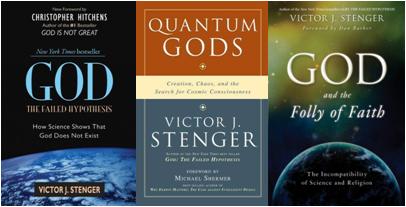
As for Lederman’s book (I belong to the 15 percent of seculars who detest its heading and insertions of subliminal mysticism into the facts), the prose offers an enjoyable ride, rich in historicity, sarcastic humor –rare for a physicist— and fantasizing dialogs with Democritus, Lederman’s imaginary physics peer. And to poise Lederman’s enlightenment about particle physics and its ramifications to modern cosmology with the views of one of his contemporary elementary-particles colleagues, I recommend reading Victor Stenger’s “God: The Failed Hypothesis” (2008), “Quantum Gods” (2009), and the latest “God And the Folly of Faith” (2012). – © 2012 by Guillermo Paz-y-Miño-C. all rights reserved.

Above, some of the books authored by Dr. Victor Stenger: “God: The Failed Hypothesis” (2008), “Quantum Gods” (2009), and “God And the Folly of Faith” (2012).

New England Professors Accept Evolution, But They Are Religious – Editorial The Standard Times – Jan 15, 2011

Why Accepting Evolution Matters

…New England professors accept evolution, but they are religious…

[click on title to be redirected to The Standard Times]

Dr. Guillermo Paz-y-Miño C. — © 2011

Department of Biology, University of Massachusetts Dartmouth 

People do not “believe” in evolution; we either accept it, or doubt about it, or reject it. But the reality of the evolutionary process continues regardless of our cognitive awareness or position about it. Evolution is true.

Together with my collaborator, Dr. Avelina Espinosa, professor at Roger Williams University in Rhode Island, we have uncovered the patterns of acceptance of evolution among university professors in New England, and the results are both fascinating and startling.

A cultural assumption has been that scholars are supportive of science and remain distant from belief-based perspectives regarding the natural world. Is this factual?

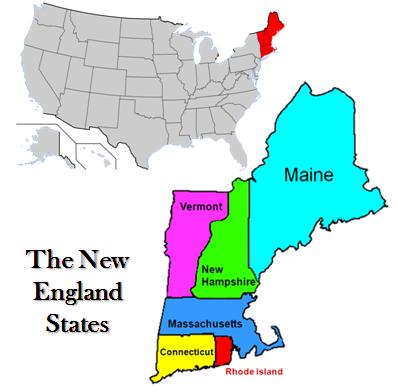
We surveyed 244 faculty — 90 percent Ph.D. holders in 40 disciplines at 35 colleges and universities widely distributed geographically in Connecticut, Maine, Massachusetts, New Hampshire, Rhode Island and Vermont. Our study was recently published online in Evolution, Education and Outreach, and the hard-copy report will appear in the March 2011 issue of the journal.

NewEnglandStatesInTheUSA

Why New England? The first shocking fact that triggered our interest in studying the Northeast of the United States was that, back in 2005, the Pew Research Center for the People and the Press had documented that only 59 percent of New Englanders accept evolution, the highest score nationwide, and that the overall regional acceptance of evolution in the United States was even more distressing: 57 percent in the Northwest, 45 percent in the Midwest, and 38 percent in the South.

More alarmingly, in 2006, the United States ranked 33rd among 34 other countries where acceptance of evolution was assessed, in contrast to Iceland, Denmark, Sweden, France, Japan and the United Kingdom, top in the list, where 75 to 85 percent of adults accept evolution (Science, 2006).

Our study revealed that 91 percent of the New England professors were very or somehow concerned about the controversy of evolution versus creationism versus “intelligent design” and its implications for science education. In fact, 96 percent of them supported the exclusive teaching of evolution in science classes and a 4 percent minority favored equal time to evolution and creationism (the latter declared unconstitutional by the Supreme Court in 1987). And 92 percent of the faculty perceived intelligent design as not scientific and as proposed to counter evolution, or as doctrine consistent with creationism.

NewEnglandFaculty_IntelligentDesign 

Percentage of New England faculty (Fac) versus college students from public secular (Pub), private secular (Priv), and religious (Rel) institutions who consider one of the following statements to be consistent with intelligent design (ID): (A) ID is not scientific but has been proposed to counter evolution based on false claims; (B) ID is religious doctrine consistent with creationism; (C) no opinion; (D) ID is a scientific alternative to evolution and of equal scientific validity among scientists; (E) ID is a scientific theory about the origin and evolution of life on Earth.

Although 92 percent of the professors thought that evolution relies on common ancestry — or that organisms can be traced back in time to ancestors that reproduced successfully and left descendants — one in every four faculty did not know that humans are apes, or relatives of primates. Worse, 30 percent of the faculty were Lamarckian, or believed in the inheritance of acquired traits during an organism’s lifetime, like longer necks, larger brains, or resistance to parasites, which are passed on to the progeny, a hypothesis rejected a century ago.

NewEnglandFaculty_DefineEvolutionAs

Percentage of New England faculty (Fac) versus college students from public secular (Pub), private secular (Priv), and religious (Rel) institutions who consider the following definitions of evolution to be either true (black bars) or false (color bars): (A) gradual process by which the universe changes, it includes the origin of life, its diversification and the synergistic phenomena resulting from the interaction between life and the environment; (B) directional process by which unicellular organisms, like bacteria, turn into multicellular organisms, like sponges, which later turn into fish, amphibians, reptiles, birds, mammals, and ultimately humans, the pinnacle of evolution; (C) gradual process by which monkeys such as chimpanzees, turn into humans; (D) random process by which life originates, changes, and ends accidentally in complex organisms such as humans; and (E) gradual process by which organisms acquire traits during their lifetimes, such as longer necks, larger brains, resistance to parasites, and then pass on these traits to their descendants.

We asked the professors if faith in God is necessary for morality, if religion is important in their lives, and if they pray. Only 5 percent agreed with the need of a God to secure proper social behavior, but 30 percent considered religion to be very important in their daily existence, and 17 percent confessed to pray daily.

The one-third of the faculty who thought that religion is important in their lives was comparable to the 33 percent of American scientists who admit to believe in God (Pew Research Center, 2009), but differed from the 12 percent of “professional evolutionary scientists” — members of the North American, European, United Kingdom, and other countries’ National Academies of Sciences (American Scientist, 2007) — and particularly the 7 percent of members of the United States National Academy of Sciences who believe in a personal God (Nature, 1998).

Indeed, most international scientists and the elite of the United States researchers are not religious.

NewEnglandFaculty_AcceptEvolutionOpenly

Percentage of New England faculty (Fac) versus college students from public secular (Pub), private secular (Priv), and religious (Rel) institutions who believe one of the following statements describes them best: (A) I accept evolution and express it openly regardless of others’ opinions; (B) no opinion; and (C) I accept evolution but do not discuss it openly to avoid conflicts with friends and family.

Why does acceptance of evolution matter? Because public acceptance of evolution in the United States (about 40 percent) correlates with support to: (1) proper science education in public schools; (2) science and technology as essential components of development and prosperity; and (3) rationalism and freedom of thought, all indisputable ingredients for a thriving society.

And it also matters because only the highly educated university professors of New England — hopefully of the nation — have levels of acceptance of evolution (97 percent according to our study) comparable to or higher than the ordinary public in other industrialized countries of Northern and Western Europe.

Because attitudes toward evolution correlated positively with understanding of science and negatively with religiosity and political ideology, aspects examined in our study, we concluded that science education combined with vigorous public debate should suffice to increase acceptance of naturalistic rationalism and decrease the negative impact of creationism and intelligent design on collective evolution literacy. — © 2011 by Guillermo Paz-y-Miño-C. all rights reserved

For original scientific article (New England Faculty and College Students Differ in Their Views  About Evolution, Creationism, Intelligent Design, and Religiosity), published in Evolution Education & Outreach, click on [PDF]

*          *          *

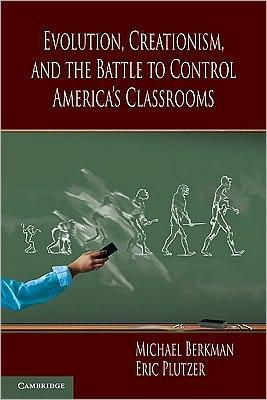
Recommended Book: Evolution, Creationism, And The Battle To Control America’s Classrooms, by Michael Berkman & Eric Plutzer click on book for link

EvolutionCreationism_Book_Berkman_Plutzer_2010

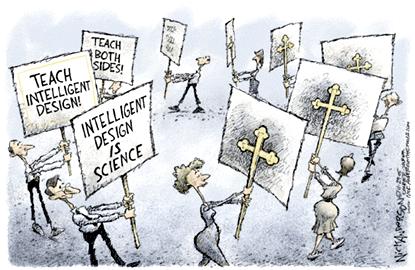
Cartoon: Intelligent Design as Science…

IntelligentDesignAsScience

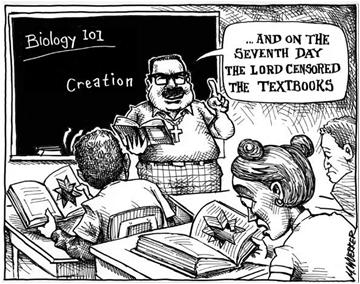
Cartoon: Biology 101… The Lord Censored Textbooks

TheLordCensoredTextbooks

“Theory of Evolution” versus “Concept of Evolution”

By Guillermo Paz-y-Miño C. & Avelina Espinosa — © 2011

Excerpt from “On the Theory of Evolution versus the Concept of Evolution” published in Evolution Education and Outreach

“…It is important to make a distinction between the theory of evolution and the concept of evolution, but without compromising logic…

As scientific theory (Greek theoria), evolution provides naturalistic explanations of empirical observations, it organizes them in a comprehensive system with central and auxiliary hypotheses.

From the epistemological perspective (Greek episteme, epistemology = theoryof knowledge), the theory of evolution encompasses the nature and scope of knowledge about the phenomenon of evolution (=what really happens), including the chronological discoveries by naturalists and scientists during the development of our cumulative understanding of how evolution works.

Scholars call the latter “theory of evolution,” whose epistemological beginning is attributed to the mid and late 1800s, and to Charles Darwin (1809-1882) and Alfred R. Wallace (1823-1913) as main contributors to the conceptualization of evolution at the mechanistic level (=natural selection).

Charles Darwin and Alfred Wallace

Charles Darwin and Alfred Wallace co-discovered the mechanism of natural selection

But the phenomenon of evolution is ongoing, precedes Darwin and Wallace in billions of years, and it shall continue, with comparable magnitude, in time and space.

The concept of evolution, therefore, is about the occurrence of evolution (i.e., the aggregation of matter, the emergence of organic compounds from simpler molecules, the formation of self-replicating macro-molecules, the encasing of chemical reactions within the boundaries of lipid-layered membranes, the formation of cells and their reproduction and differentiation, and the diversification of uni- and multi-cellular life) and it helps us understand and represent cognitively—via mental symbolism and abstraction— the reality of evolution.

Our understanding of evolution improves with new discoveries, but the reality of evolution continues to exist regardless of our awareness and level of understanding of it…” — © 2011 by Guillermo Paz-y-Miño-C. & Avelina Espinosa all rights reserved

For original scientific article (On the Theory of Evolution versus the Concept of Evolution), published in Evolution Education & Outreach, click on [PDF]

Related article: Why the Notion that “The Theory of Evolution is Not an Explanation for the Origin of Life” is Wrong.

Recommended Book: Why Evolution is True by Jerry A. Coyne click on book for link

BookWhyEvolutionIsTrue