Can We Forecast the Fall of Today’s Empires?
[click on title to be redirected to The Standard Times]
Dr. Guillermo Paz-y-Miño C. — © 2010
Department of Biology, University of Massachusetts Dartmouth
History reminds us that empires can supplant one another…
 The Inca Empire (1430s-1530s) relied on an ingenious system of numeric recording, the quipus, or serial knots tied in colored threads made of hair from South American camelids, and used by accountants — the Quipucamayucs — to convey information on the calendar, trade, tributes and census, to other quipu-literate authorities who decoded the “talking knots” or used them in arithmetic operations (See photo from Khipu Database Project at Harvard University).
Messages encoded in ropes were carried by Chasquis, or runners, who delivered quipus from Cuzco, the capital of the Tawantinsuyu — the Inca Empire — to its four Andean provinces. The network of Inca roads impressed the conquistadores, including Francisco Pizarro, who mobilized his 168 men and a few horses through the highland trails to reach Cajamarca — nowadays Peru — and, in 1532, captured and later killed the last of the Sapa Incas, Atahualpa, whose 80,000 troops succumbed to the military superiority of the Spaniards.
Ironically, smallpox was the major executor of the Amerindians, next to the brutality of the conquest and Christianization crusade to suppress and replace with Catholicism not only the Inca god, the Sun — at least a real star venerated for nourishing maize and tuber fields — but any trace of cultural identity, including the quipu, the chasquis and the sound of their pututos — large conch shells used as horn-trumpets to announce the arrival of a message — and the Quechua language.
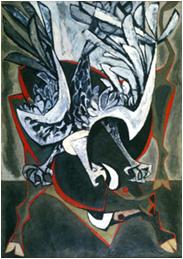 In “Of Rage and Redemption: The Art of Oswaldo Guayasamin (1919-1999),” the Ecuadorian painter depicts an Andean condor subduing a Spanish bull, shockingly illustrating how Inca descendants still wear the scars of the European invasion to their land. The Inca civilization collapsed in the 1530s, and 500 years of misery shadowed the survival of Indian villages in the Andes of Ecuador, Peru, Bolivia, Chile and Argentina.
Besides diseases, oppression, imposed ignorance to secure dominance, and neglect after war, what factors drive the decline of sociopolitical assemblages? What processes make civilizations emerge?
In two fascinating books, “Guns, Germs and Steel” (1997) and “Collapse” (2005), Jared Diamond, professor at the University of California Los Angeles, theorized how warfare, immunity or susceptibility to pathogens, and technology have driven the evolution of archaic societies, and how depletion of resources determined the breakdown of prosperous communities.

But the sequential steps of societal evolution had not been explored quantitatively.
Using evolutionary biology, researchers from the University of Tokyo, University College London and University of Auckland, New Zealand, have plotted models of societal organization onto linguistic diversification trees of 84 Austronesian (Southeast Asian and Pacific) groups (Nature, 2010).
Thomas Currie and his collaborators have demonstrated that political complexity during island colonization, from Taiwan to Western Polynesia and Southeast Asia, raised gradually — and predictably. It raised from leaderless societies to simple chiefdoms (one leader), complex chiefdoms (one leader over another) and states (hierarchical leadership), rarely skipping in-between levels of organization.
Collapses, however, did occur in jumps, from state to simple chiefdoms or leaderless levels, or from complex chiefdoms to unorganized aggregations.
Currie and co-authors think that their statistical analyses “move us beyond purely verbal arguments” about “history’s broadest pattern” of societal growth and breakdowns, and offer a model for deeper digging into the predictability of cultural change.
 If the encounter between the Tawantinsuyu and the conquistadores led inevitably to the disintegration of the Incas — due to the technological disparity between the New and Old Worlds — and if the European economies of the 15th to 17th centuries, like Spain, Portugal and France, later lost predominance when facing the emergence of England (18th to 19th centuries), can we forecast the fall of today’s empires?
(Left – Francisco De Orellana ca. 1511-1546, Spanish conquistador and explorer of the Amazon; photo © G. Paz-y-Miño C. 2009, Guapulo, Ecuador)
Would market rivalry alone push aside prevalent systems and replace them inescapably with competitors? Would human capital immersed in technological skillfulness suffice to substitute the wealthy illiterate societies?
Empires can indeed supplant one another. And the example of the quipu versus the European bookkeeping systems illustrates how the clashing of technologies can freeze in time a “clever-practical system of information storing,” the quipu, and replace it with a more efficient written mathematical notation.
But the vicious stamping of the Iberian bull over the Andean culture was atrocious. — © 2010 by Guillermo Paz-y-Miño-C. all rights reserved
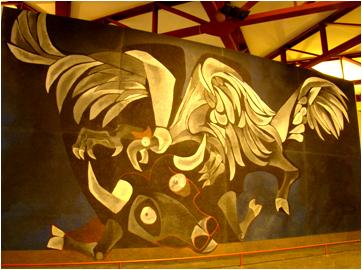
Mural ‘Bull and Condor’ at Guayasamin’s “The Chapel of Man” photo © G. Paz-y-Miño C. 2010, Quito, Ecuador.


 Dr. Guillermo Paz-y-Miño C. contributes with editorials on science, technology and the environment to periodicals, newspapers, newsletters and specialized science magazines. He conducts research on the patterns of acceptance of evolution by college students and university professors in the United States, particularly in New England. He considers it crucial to communicate science to the public and promote science and evolution literacy. He is an Assistant Professor of Biology and Evolutionary Biology at the University of Massachusetts Dartmouth (

 If atheists and agnostics are highly educated, would Americans elect them as their leaders? Apparently not; according to a



 lesson that the book of Jonah teaches? “¦ the sin was in his “¦ disobedience of the command of God “¦ by seeking to flee from him “¦ He [thought] that a ship “¦ will carry him into countries where God does not reign “¦ A dreadful storm [came] on, the ship [was] like to break “¦ And Jonah “¦ dropped into the sea “¦ seething into the yawning jaws awaiting him; and the whale [shot] “¦ his ivory teeth “¦ Jonah prayed unto the Lord out of the fish’s belly “¦ the whale vomited out Jonah upon the dry land.”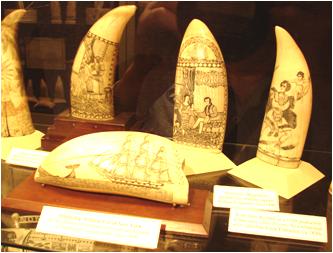
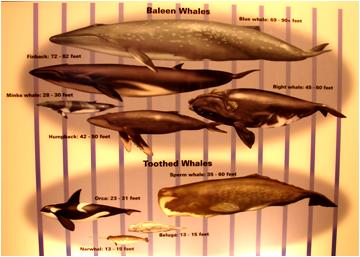
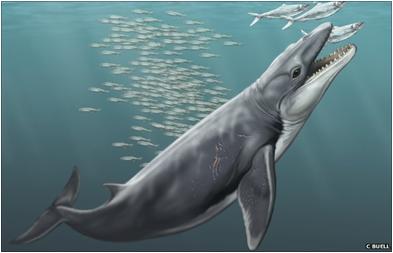
 This metaphor belongs to
  Like most spiritual therapies, Eddy’s “pray healing” faded, although the enormous Mother Church of Christ Scientist she inspired still breathes in the heart of Boston through a majestic golden pipe organ (photo © G. Paz-y-Miño C. 2010, left), which gives the impression of resounding even in silence.
 RR counters the fight-or-flight response, conceptualized by Harvard physiologist

 Charles Darwin



 (Above: Roman Colosseum outside view, photo © G. Paz-y-Miño C. 2010)
 Evolution Literacy
You must be logged in to post a comment.