2015 Nobel Prize in Chemistry Goes to Curiosity-Based Research

By Guillermo Paz-y-Miño-C PhD — © 2015

New England Science Public – An Initiative for the Public Understanding of Science – on Twitter @gpazymino@EvoLiteracy – Facebook – ResearchGateAcademia.edu

Nobel Prize in Chemistry Goes to Curiosity-Based Research

[click on subtitle to be redirected to The Standard Times]

“…Mutations are essential to evolutionary change; they provide the genetic variability that lineages of organisms need to persist over the eons. At the same time, evolution has equipped our cells with repairing mechanisms to fix, edit DNA errors that can be detrimental…”

If completely stretched into a single, long molecular chain, the DNA of a human cell would measure about two meters. During our lifetimes, our bodies would replicate enough DNA that, theoretically, it could be extended from Earth to the Sun, and back, 250 times. Ample opportunities to accumulate 37 trillion mutations while re-copying the genetic material.

D - DNA Repair image by Tom Ellenberger

DNA-repair, image by Tom Ellenberger, Washington University in St. Louis.

Yet, evolution has equipped our cells with repairing mechanisms to fix, edit such DNA errors. And this year’s Nobel Prize in Chemistry has been awarded to Tomas Lindahl (Sweden), Aziz Sancar (Turkey) and Paul Modrich (US) precisely for discovering and characterizing –independently— these processes.

What I admire most in these investigators is their obsessive pursue of knowledge during a vigorous exploration of the intimacy of our inner molecules. As Modrich puts it “curiosity-based research is so important; you never know where it is going to lead.” And it did lead them from almost extraneous observations of the harmful effects of UV-light on the DNA of bacteria to –four decades later— its applications to our current understanding of cancer, neuro-degenerative disorders and ageing. Another lesson for today’s academic administrators infatuated with worshiping the science-for-profit model.

All began in the 1920s when American geneticist Hermann Muller (Nobel Laureate in Physiology or Medicine, 1946) found that X-rays could harm bacterial cells. By the 1940s, it was known to scientists that UV-light also had mutagenic effects on most cells. Interestingly, despite radiation-induced damage in bacteria, laboratory colonies continued to persist, which led researchers to infer that these organisms had repair-mechanisms to reinstate the internal chemistry. In 1944, DNA was recognized as the material of heredity and UV-light as a deteriorating agent of its structure.

“…What I admire most in these investigators is their obsessive pursue of knowledge during a vigorous exploration of the intimacy of our inner molecules… [Their] story only grows in beauty…”

The first breakthrough in DNA-repair mechanisms was unexpected: Albert Kelner (US) discovered that, in response to UV-induced cellular damage, bacterial enzymes could reverse the process by using –surprisingly— light, and capturing its energy-particles (photons), which excite electrons in the enzymes’ functional parts, thus jump-starting their repairing engines. The process was termed photo-reactivation and the enzymes photolyases. The story only grows in beauty.

Keep in mind that DNA is built of four “bases,” called adenine A, guanine G, cytosine C and thymine T. Under ordinary circumstances, A always pairs with T, and G with C, hence forming the steps of the DNA’s double helix, which is usually depicted as a staircase. In 19741976, Tomas Lindahl studied a frequent mutation in which G, rather than pairing with C (as G-C), had, as partner, the base U (uracil), a constituent of other molecules in the cell. Why? C and U are very similar, but when C loses some of its parts, due to predictable chemical contingencies, it can resemble U more closely. Thus DNA would temporarily accept the pairing G-U, but the cell would fix it by enzymatically chopping off U and restoring the correct coupling G-C. And Lindahl mapped, so elegantly, this entire process, which was labeled single-base excision repair. Later, it became part of the cell’s toolbox for DNA repair mechanisms, of which numerous have been described.

A - Base Excision Repair

Illustration: Johan Jarnestad – The Royal Swedish Academy of Sciences (click to enlarge).

In a separate study, Aziz Sancar experimentally manipulated with UV-light-induced mutations and characterized how the cell could fix errors via an alternative pathway, termed multiple-base excision repair, which included cutting off several bases, not only one, as described by Lindahl. Sancar knew that UV-light could make T behave strangely and pair with its homologue (T-T), rather than with A, as it normally does (T-A).

Let us imagine two parallel rows of DNA sequence in which the top one is G,C,T,T,C,G. Its complementary, bottom, pairing (following the rule A-T and G-C) would be C,G,A,A,G,C. However, UV-light damage can induce the Ts on the top row to pair with each other, as T-T, rather than with their corresponding As in the bottom, as T-A and T-A. Thus creating a bump loop on the top row (T-T), leaving the As in the bottom unpaired.

In 1983, Sancar plotted the entire mechanism of repair of the T-T mutation, which included multiple enzymes responsible for accurately cutting and restoring 12 bases in the top row of DNA, five prior and five post T-T. An amazing work.

B - Nucleotide Excision Repair

Illustration: Johan Jarnestad – The Royal Swedish Academy of Sciences (click to enlarge).

By 1989, Paul Modrich had unveiled a third mechanism, which involved the fixing of DNA sequence mismatches, which randomly emerge during cell divisions. A process called DNA mismatch repair. It included even larger stretches (beyond 12 bases) of folded DNA, which specific enzymes would cut and restore to the correct sequence (watch VIDEO).

C - Mismatch Repair

Illustration: Johan Jarnestad – The Royal Swedish Academy of Sciences (click to enlarge).

What is the value of curiosity-driven research? Because cancer, neuro-degeneration and ageing start with DNA damage, almost all we understand about them –including drug treatment— relies on the basic science of DNA repair mechanisms. — © 2015 by Evolution Literacy all rights reserved.

E - DNA Repair cartoon

DNA Repair during evolution… Image from public domain Google Images

Suggested Readings:

Historical paper by Tomas Lindahl published in Nature 1993: Instability and decay of the primary structure of DNA.

Press Release from the Royal Swedish Academy of Sciences: the 2015 Nobel Prize in Chemistry

Scientific Background on the 2015 Nobel Prize in Chemistry: Mechanistic Studies of DNA Repair, compiled by the Class for Chemistry of the Royal Swedish Academy of Sciences.

Popular Science Background: DNA Repair – Providing Chemical Stability for Life.

History of the Nobel Prize in Chemistry 1901 – 2015.

*  *  *  *  *     *  *  *  *  *     *  *  *  *  *

Evolution Stands Faith Up: Reflections on Evolution’s Wars By NOVA Publishers, New York Soft Cover. Find it at Barnes & Noble, Amazon.comAmazon UK.

Paz-y-Mino-C_Book_Cover_Evolution_Stands_Faith_Up_JPEG

“This is an inspiring, readable collection of essays of reflective value to everyone. Paz-y-Miño-C points to the vain attempt by many to try and accommodate scientific rationalism with supernatural beliefs. They are simply incompatible. The author has a marvelously eloquent style of writing, full of inspiring metaphors and lateral observations that reinforce connections to the foundations of scientific inquiry and to biological evolution in particular. These thoughtful essays… are inspiring… [and] help clear the fog in our communities and arm our neighbors [with arguments] against theistic anti-science, medical quackery and other irrational nonsense.” – Greg M. Stott, PhD, Geoscientist with the Ontario Geological Survey, Canada.

“Paz-y-Miño-C doesn’t ask the reader to ‘believe’ in evolution. He provides overwhelming evidence, clearly written, that shows how scientific inquiry leads to important and practical results, while superstition and faith lead nowhere. Although we may not be able to reason someone out of what they were never reasoned into, the author presents a roadmap for those whose minds are open to discover the wonders and beauty of science.” – Herb Silverman, PhD, author of Candidate Without a Prayer: An Autobiography of a Jewish Atheist in the Bible Belt.

“Too many of our colleagues work so hard to appear open minded that their brains seem to have fallen out. When they teach our students that they can pick and choose when to be logical, critical thinkers, they are modeling the type of reasoning that leads to the politics of convenience and its bridesmaids: racism, sexism, and the whole host of xenophobias. Paz-y-Miño-C is a prolific essayist, he does not pull any punches, but when he cuts to the core of an argument, he does it with the flare of a true artist.” – Stan Braude, PhD, Professor of Practice in Biology, Washington University in St. Louis, USA.
EvoLiteracy News 10 06 2015

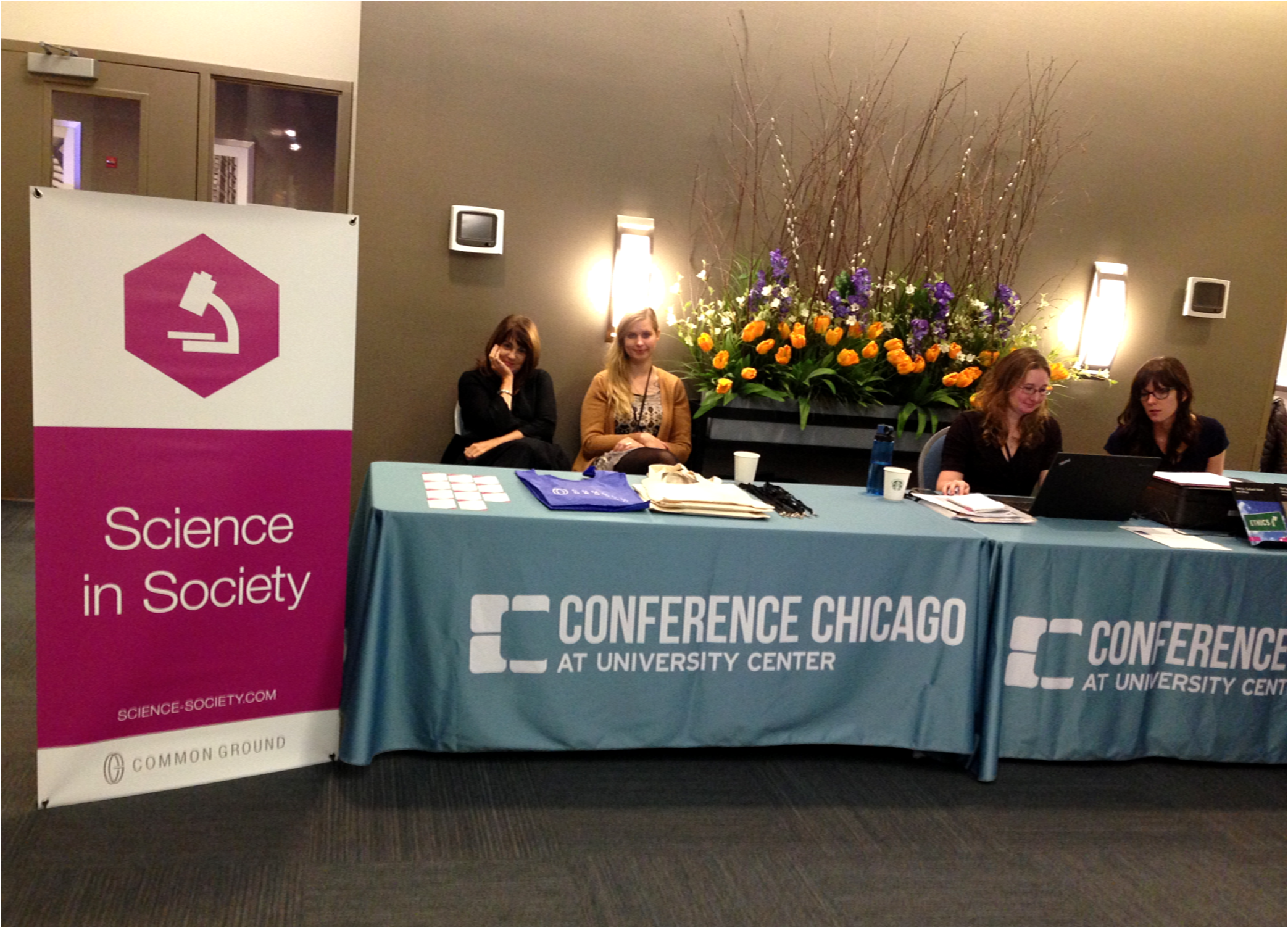
I just returned from Chicago after attending the VII International Conference on Science in Society (October 1-2, 2015), an annual event organized by Common Ground (publishers) at the University Center Chicago. The program included theme presentations, workshop sessions, colloquium, poster session and garden conversation. About 70 scholars attended, from 20 countries.

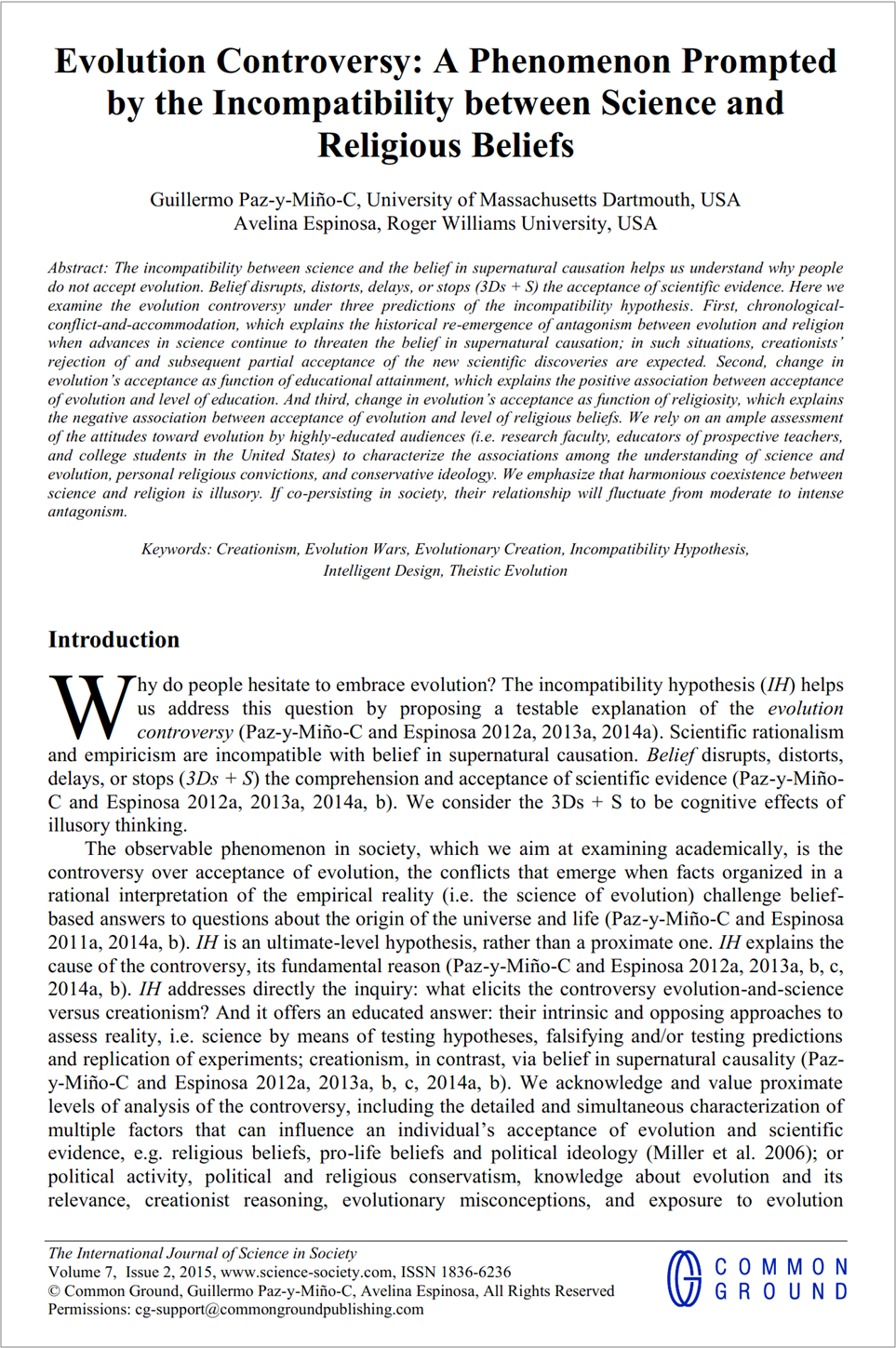
Common Ground is the publisher of the International Journal of Science in Society. We published a paper in it a few months ago (Evolution Controversy: A Phenomenon Prompted by the Incompatibility Between Science and Religious Beliefs), which served as the theme for our presentation/workshop.

Each of three parallel workshop sessions was attended by about 20 people. I enjoyed our session (The Values of Science) very much, perhaps precisely due to the size of the meeting, the diversity of scholars participating (i.e. sociologists, chemists, anthropologists, philosophers, physicists, biologists, educators, media specialists), and the interdisciplinary format of the discussions.

At the meeting, we were informed that The Science in Society Community, including the conference and the journal, had joined with their sister community Interdisciplinary Social Sciences. –  GPC

The entire program is available here. Our workshop session included:

The Values of Science

Anti-scientism and Its Impact on the Relationship between Science and Religion: The Role of Science in a Postmodern Society. Dr. Mohamed Almisbkawy, Department of Philosophy, British University in Egypt, Fayoum University, Cairo, Egypt. Overview: The clash between classic science and religion was due to the similarly in their internal structures. Science has overcome this nature of scientific system by shifting from scientism to anti-scientism.

Evolution Controversy: A Phenomenon Prompted by the Incompatibility between Science and Religious Beliefs. Dr. Guillermo Paz-y-Miño-C, New England Center for the Public Understanding of Science and New England Science Public, Roger Williams University, Bristol, USA. Dr. Avelina Espinosa, New England Center for the Public Understanding of Science and New England Science Public, Roger Williams University, Bristol, USA. Overview: This paper explores the evolution controversy under three predictions of the incompatibility hypothesis.

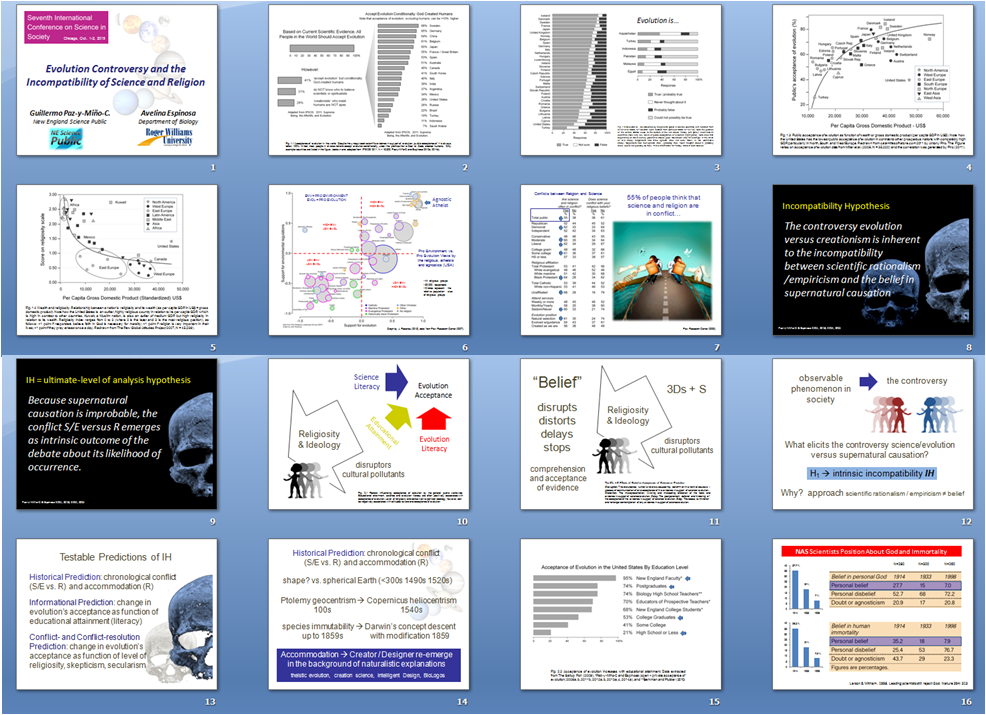
Chicago Sci Soc Presentation - G-Paz-y-Mino-C Oct 1 2015

Some of the images used in our presentation at the VII International Conference on Science in Society, Chicago, October 1-2, 2015. We discussed in detail the Incompatibility Hypothesis.

Formally Trained Science Communicators: A Solution to the Unreasonable Expectations Placed on Lay People and Professional Scientists. Dr. Teresa Branch-Smith, Department of Philosophy, University of Waterloo, Waterloo, Canada. Jay Michaud, Department of Philosophy, University of Waterloo, Waterloo, Canada. Overview: We need to formally train science communicators to facilitate the transmission of knowledge from scientists to people because it requires expertise that neither group should be expected to acquire independently.

Chicago Science in Society Oct 1-2 2015

Our hostesses and organizers of the VII International Conference on Science in Society at The University Center Chicago, October 1-2, 2015.


*   *   *   *   *          *   *   *   *   *          *   *   *   *   *

Suggested Reading:

Just Published: Evolution Controversy and the Incompatibility of Science and Religion

Cover Int Journal Science Society Paz-y-Mino-C and Espinosa 2015

Click on image to be redirected to the International Journal of Science in Society

Published in The International Journal of Science in Society — Paz-y-Miño-C & Espinosa (2015). Evolution Controversy: A Phenomenon Prompted by the Incompatibility between Science and Religious Beliefs. Int. J. Sci. Soc. 7(2). ISSN 1836-6236. -May 14, 2015.

The complete article, which includes 23-pages, 11 figures and 59 references, can be downloaded —for free— from the International Journal of Science in Society. Click on the image (left) to go to the journal website to download the PDF.

A media-friendly summary can be read HERE.

College Educated But Deeply In Debt For An Overpriced Degree

By Guillermo Paz-y-Miño-C PhD — © 2015

New England Science Public – An Initiative for the Public Understanding of Science – on Twitter @gpazymino@EvoLiteracy – Facebook  ResearchGateAcademia.edu

College Educated, But Deeply In Debt For An Overpriced Degree

[click on subtitle to be redirected to The Standard Times]

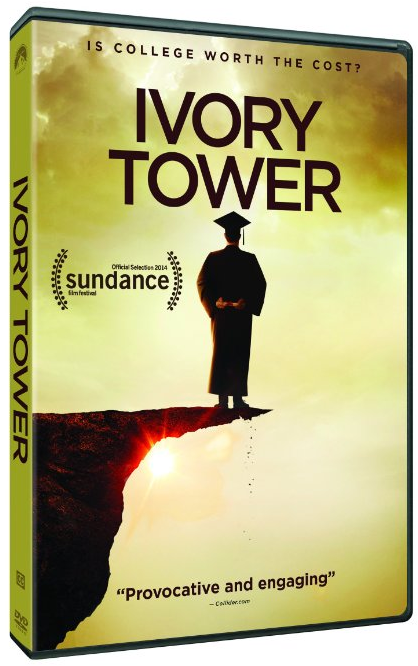
Ivory Tower 2015

“The breakdown of the Ivory Tower is figurative in the architectonic sense, but not in the intellectual. Education does not need to be cheap, just affordable, sincere. Not vibrant entertainment.” – GPC

“…The race among higher-ed campuses to capture the funds available to students for education is self inflicted, a textbook example of out of control free market competition, in which education is a commodity, rather than a priceless investment in culture, the ultimate possession of a nation…”

The current for-profit model of higher education in America is destined to crash. Its failure will injure primarily the students, today’s borrowers of $1.19 trillion. What for? Mostly tuition and collateral life expenses in exchange for an overpriced degree.

During the past three decades the cost of college has grown 1,120 percent, doubling health care (600 percent), and more than quintupling the expenses of food (200 percent higher since 1978). A reality aired in Ivory Tower, the 2014 documentary by Andrew Rossi on how “the very concept of the institution of higher-learning is about to be broken.”

Price Increases Since 1978 Ivory Tower Evolution Literacy

Source: Ivory Tower 2014 – Documentary by Andrew Rossi

“…education is expensive and its alternative, ignorance, would be more damaging in the long term…”

If the quality of higher education had improved parallel to its fees, then the argument for an overcharged college certificate would be unsound. Now, education is expensive and its alternative, ignorance, would be more damaging in the long term. But, how expensive should education be to justify its actual cost?

Total Debt Balance 2015 Evolution Literacy

By 2015, the total debt balance in the U.S. reached $11.85 trillion; 69 percent of it corresponded to mortgages; 10 percent to student loans; and the remaining amount to auto, credit cards, and revolving loans. Note how from 2003 to 2015 student loans (red bars) grew significantly in respect to other types of loans. Image source: Quarterly Report on Household Debt and Credit, May 2015.

The race among higher-ed campuses to capture the funds available to students for education is self inflicted, a textbook example of out of control free market competition, in which education is a commodity, rather than a priceless investment in culture, the ultimate possession of a nation.

About 40 million Americans are borrowers of student loans, two million of them currently owing at least $100,000. But the situation is complex and a distinction must be made between undergraduate and graduate student loans.

Ivory Tower Evolution Literacy 2015“…the assumption has been that post-graduate degree holders shall be reliable payers, and not flock toward debt-forgiveness programs. A risky supposition…” 

Sixty percent of the $1.19 trillion debt belongs to the undergraduate students. The technicality here is that the remaining 40 percent of the balance corresponds to 14 percent of the borrowers, who are graduate students. Thus, the per capita obligation is much higher for the latter. In either case, the responsibility to pay back is substantial, although the assumption has been that post-graduate degree holders shall be reliable payers, and not flock toward debt-forgiveness programs. A risky supposition considering that since 2007, when such initiatives started, additional rescue plans emerged, including President Obama’s 2012 Pay As You Earn.

The forgiveness paths facilitate government agencies, nonprofit organizations, and the private sector to hire debt-borrowers to work for a reduced salary and, in return, benefit society by taking public-service roles during a prearranged period. Other alternatives, like the President’s debt relief law, include the capping of monthly payments at 10-15 percent of the borrower’s discretionary income, thus lessening the stress while carrying the loan over time.

“…the national student debt is… a time bomb… comparable to the mortgage transactions of the 2000s, which benefitted financiers but turned unmanageable for home-owners wannabes…”

Despite these damage control policies, the national student debt is, in foresight, a time bomb. Its societal sequels will unveil in a few years. As The Wall Street Journal characterizes it: “offering unlimited loans to students, with the prospect of forgiveness, creates a moral hazard by allowing borrowers to amass debts they have little hope or intention of repaying, all while enriching institutions and leaving taxpayers to pick up the tab.” Sounds comparable to the mortgage transactions of the 2000s, which benefitted financiers but turned unmanageable for home-owners wannabes.

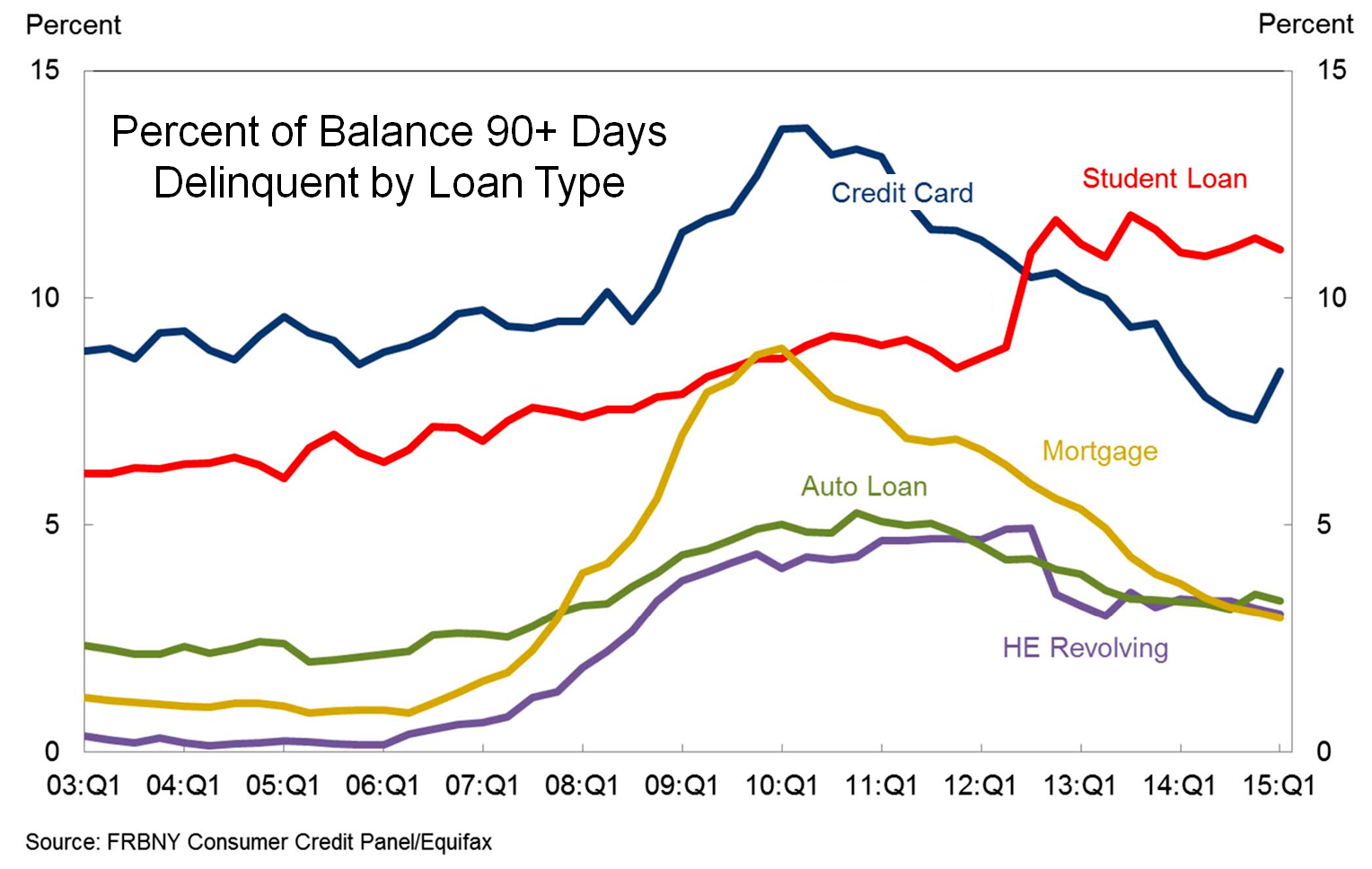
Percent of Balance Delinquent by Loan Type 2015

By 2015, student loans reached the highest percent of balance 90+ days delinquency in contrast to credit card, mortgage, auto loan and revolving loans. In essence, 10+ percent of student borrowers were not repaying. Image source: Quarterly Report on Household Debt and Credit, May 2015.

And this situation is central to the looming collapse of our country’s higher education, the repercussion of handling colleges and universities like corporations. Statistics from the New America Education Policy Program —which uses information from the U.S. Department of Education’s National Postsecondary Student Aid Studies— are telling:

In 2004, the typical borrower (combined graduate and undergraduate) owed $40,000 upon graduation (undergrads $20,000). In 2012, the latest data processed by NAEPP, the standard student borrower owed $57,000 (undergrads $25,000). These are median values, which convey fractional information: one in every ten borrowers owed $153,000 once graduated.

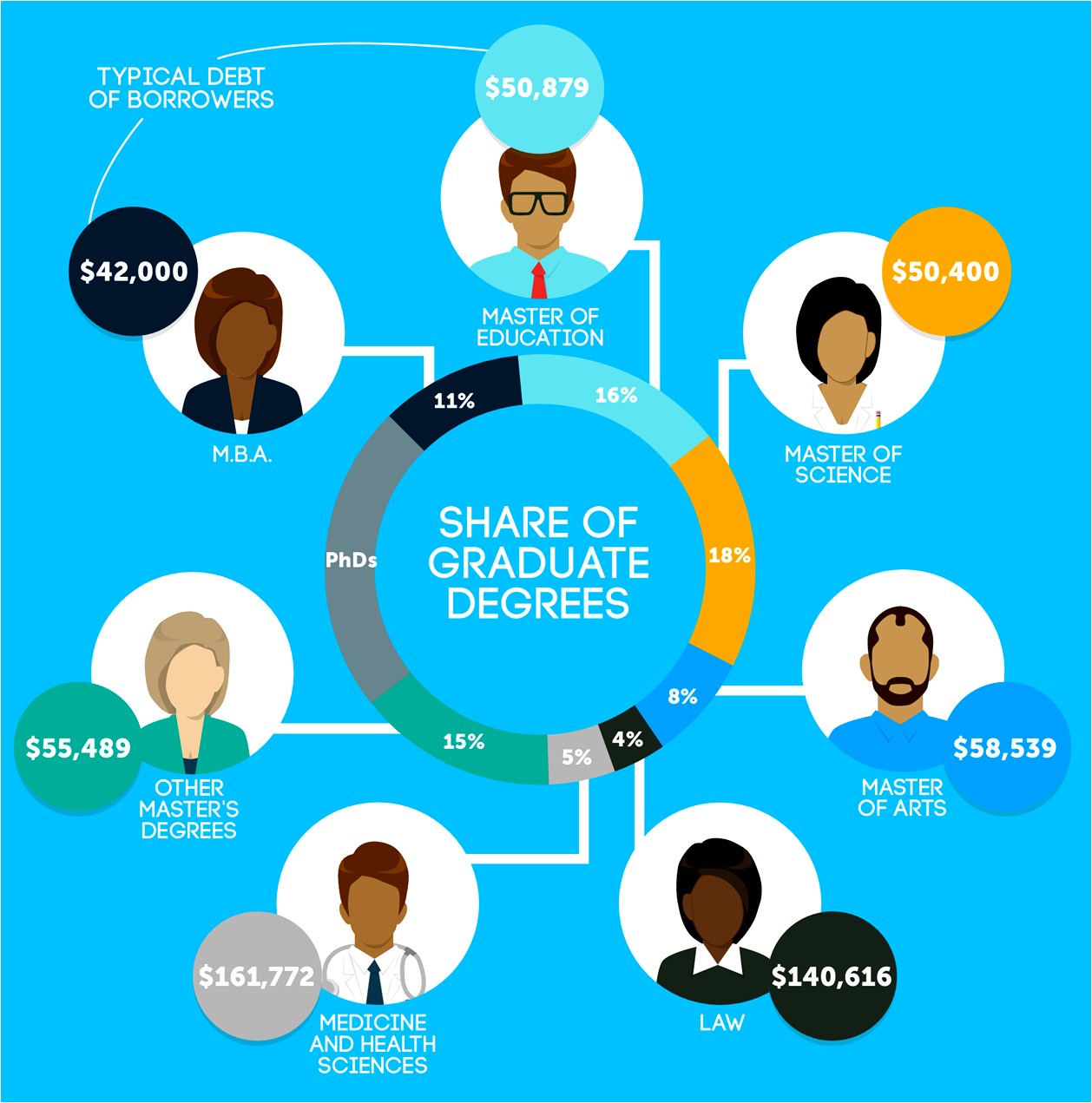
These figures varied according to field of expertise and as per typical borrower: $161,000 among those graduating from the medical and health sciences, $140,000 from law school, $58,000 from a master of arts program, $50,000 from a master of science or education, and $42,000 from a master in business administration.

Share of Graduate Degrees NAEPP 2014 Evolution Literacy

Typical debt of borrowers (share of graduate degrees). Source: New America Education Policy Program, March 2014.

Among the in-debt, the typical monthly payment, at a 6 percent interest rate and 15-year repayment term, was: $1,365 among graduates from the medical and health sciences, $1,187 from law school, $494 from the arts, $429 from science or education, and $354 from business administration (values adjusted to 2012).

“…The present generation of student borrowers is fated to limited socio-economic mobility, to be trapped in an unsustainable system in which, as customers, they demand satisfaction…”

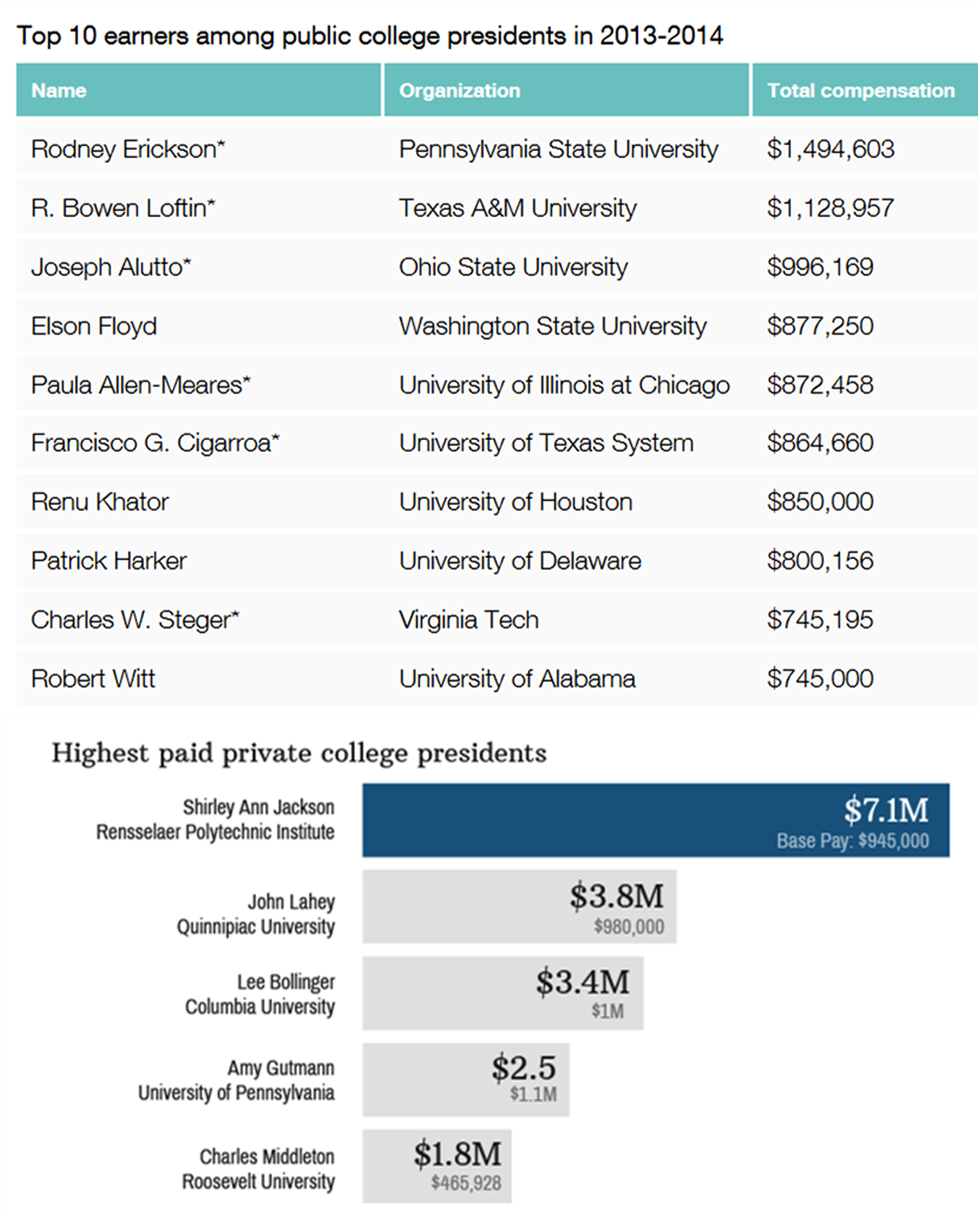
On the administrators’ side, in contrast, the finances have been blooming. The top ten U.S. public college presidents‘ earned, in 2013-2014, from $1.5 million to $745,000, while their top five counterparts at private colleges made from $7.1 to $1.8 million in 2012.

Highest Paid Presidents Public Private Colleges US Evolution Literacy

Top: highest paid Presidents at public colleges in the United States. — Bottom: highest paid Presidents at private colleges (smaller numbers in histogram = base pay salaries). Data from The Chronicles of Higher Education (see summarized list in Business Insider).

The breakdown of the Ivory Tower is figurative in the architectonic sense, but not in the intellectual. The present generation of student borrowers is fated to limited socio-economic mobility, to be trapped in an unsustainable system in which, as customers, they demand satisfaction, rather than proper schooling.

Education does not need to be cheap, just affordable, sincere. Not vibrant entertainment.

— © 2015 by Evolution Literacy all rights reserved.

Student Debt by Donkey Hotey

Illustration by Donkey Hotey

Related Articles:

Imminent Collapse of Basic Science Under For-profit Model

Dehumanizing Academia by Dismantling the Humanities

Fragmentary Truths and the Intellectual Imbalance in Academia

Evolution Illiteracy at America’s Colleges and Universities

Massachusetts Gets an A- in Science Standards

*  *  *  *  *     *  *  *  *  *     *  *  *  *  *

Evolution Stands Faith Up: Reflections on Evolution’s Wars By NOVA Publishers, New York Soft Cover. Find it at Barnes & Noble, Amazon.comAmazon UK.

Paz-y-Mino-C_Book_Cover_Evolution_Stands_Faith_Up_JPEG

“This is an inspiring, readable collection of essays of reflective value to everyone. Paz-y-Miño-C points to the vain attempt by many to try and accommodate scientific rationalism with supernatural beliefs. They are simply incompatible. The author has a marvelously eloquent style of writing, full of inspiring metaphors and lateral observations that reinforce connections to the foundations of scientific inquiry and to biological evolution in particular. These thoughtful essays… are inspiring… [and] help clear the fog in our communities and arm our neighbors [with arguments] against theistic anti-science, medical quackery and other irrational nonsense.” – Greg M. Stott, PhD, Geoscientist with the Ontario Geological Survey, Canada.

“Paz-y-Miño-C doesn’t ask the reader to ‘believe’ in evolution. He provides overwhelming evidence, clearly written, that shows how scientific inquiry leads to important and practical results, while superstition and faith lead nowhere. Although we may not be able to reason someone out of what they were never reasoned into, the author presents a roadmap for those whose minds are open to discover the wonders and beauty of science.” – Herb Silverman, PhD, author of Candidate Without a Prayer: An Autobiography of a Jewish Atheist in the Bible Belt.

“Too many of our colleagues work so hard to appear open minded that their brains seem to have fallen out. When they teach our students that they can pick and choose when to be logical, critical thinkers, they are modeling the type of reasoning that leads to the politics of convenience and its bridesmaids: racism, sexism, and the whole host of xenophobias. Paz-y-Miño-C is a prolific essayist, he does not pull any punches, but when he cuts to the core of an argument, he does it with the flare of a true artist.” – Stan Braude, PhD, Professor of Practice in Biology, Washington University in St. Louis, USA.
Lucy’s Pride 3.2 million years later

Lucy’s Pride, an open-minded Australopithecus, as it was casual 3.2 million years ago. We finally evolved, or did we?

— © 2015 by Evolution Literacy all rights reserved

Lucy's Pride Australopithecus afarensis - Photo G-Paz-y-Mino-C 2015

Related Postings:

Evolution Controversy and the Incompatibility of Science and Religion

Evolution Wars: Another EpisodeEvolution Wars: Episode II

*  *  *  *  *     *  *  *  *  *     *  *  *  *  *

Just Published: Evolution Controversy and the Incompatibility of Science and Religion

Cover Int Journal Science Society Paz-y-Mino-C and Espinosa 2015

Click on image to be redirected to the International Journal of Science in Society

Published in The International Journal of Science in Society — Paz-y-Miño-C & Espinosa (2015). Evolution Controversy: A Phenomenon Prompted by the Incompatibility between Science and Religious Beliefs. Int. J. Sci. Soc. 7(2). ISSN 1836-6236. -May 14, 2015.

The complete article, which includes 23-pages, 11 figures and 59 references, can be downloaded —for free— from the International Journal of Science in Society. Click on the image (left) to go to the journal website to download the PDF.

A media-friendly summary can be read HERE.

 *  *  *  *  *     *  *  *  *  *     *  *  *  *  *

Evolution Stands Faith Up: Reflections on Evolution’s Wars By NOVA Publishers, New York Soft Cover. Find it at Barnes & Noble, Amazon.comAmazon UK.

Paz-y-Mino-C_Book_Cover_Evolution_Stands_Faith_Up_JPEG“The sweet spot of this collection of essays is the interface of science, history and literacy. Paz-y-Miño-C is, in essence, a champion of rationalism and a passionate defender of literacy standards. His essays deftly weave hard survey data and memorable turns of phrase with evocative imagery… While the essays in this collection are vast in coverage —from climate change to energy policy, stem cell research, vaccinations and, especially, evolution— a clear underlying theme emerges: [the author’s] goal is no less than to counter, through the lens of history and the majesty of rationalism, social forces that sanction ignorance, celebrate denial and… continue to diminish our global status in the fields of science and technology.” Jeff Podos, PhD, Professor of Biology, University of Massachusetts Amherst, USA.
“Paz-y-Miño-C  is a firm believer in evolutionary processes. He would like to see decisions made on the basis of facts, not unsupported opinion. He abhors and fears irrational thinking, especially ‘the views of those who see evil in truth and menace in the realities discovered by science.’ He marvels at the intricacy and diversity of life, and how it came about through natural selection… and is clearly frustrated by the unwillingness of so many to see the beauty and majesty in this view of the world and all that it explains.” – Jan A. Pechenik, PhD, Professor of Biology, Tufts University, USA, author of The Readable Darwin: The Origin of Species, as Edited for Modern Readers.

Evolution Wars: Another Episode

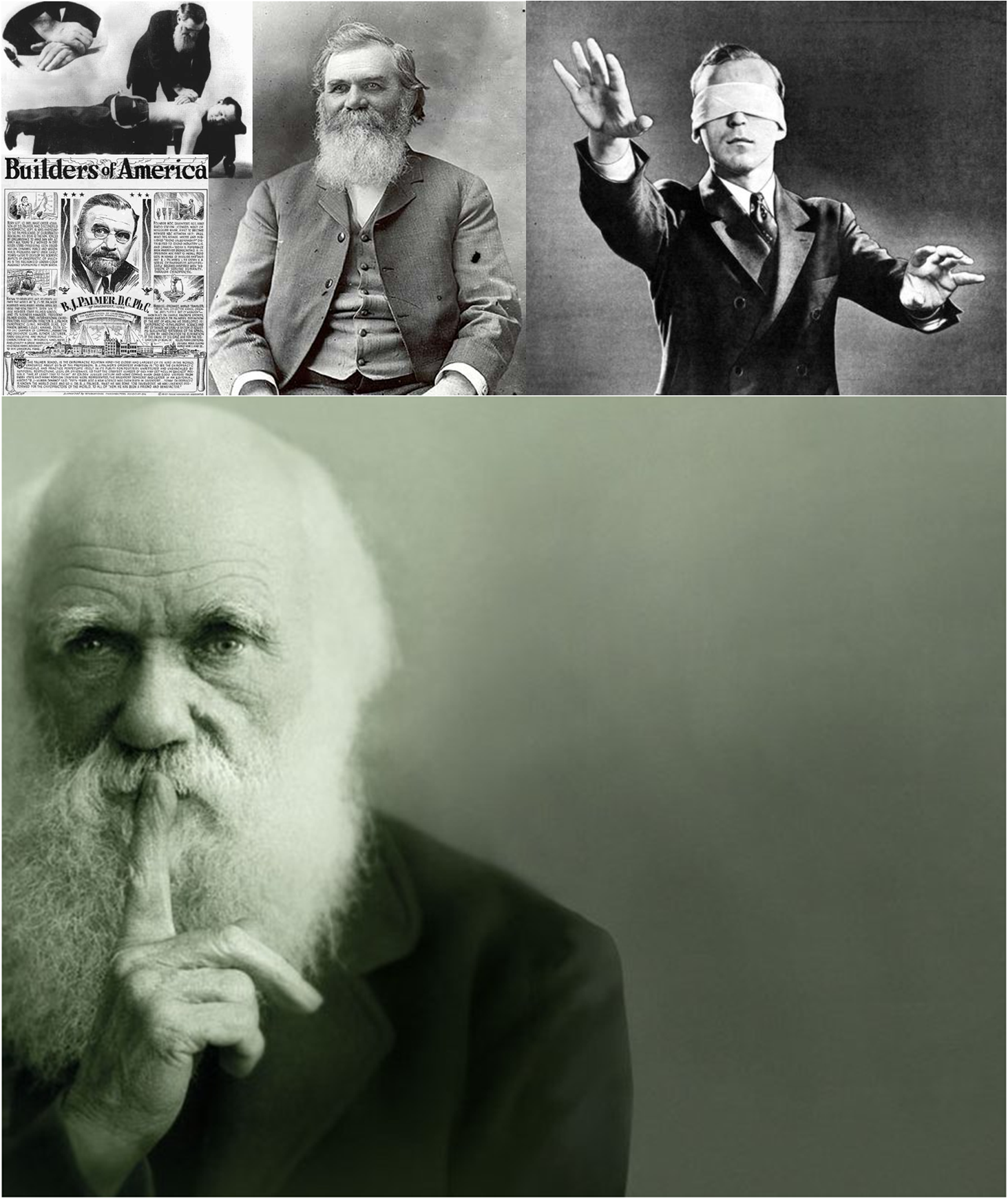
• Para-creationists attack the 2011-2012 Paz-y-Miño-C & Espinosa research on acceptance of evolution • Pro-theism-in-science authors invoke The Clergy Letter Project, rather than pure and proper science education, to improve the acceptance of evolution — Trends in Evolution Wars © 2015  

Wrong Way Signal“Suggesting that agnosticism and atheism are belief systems –as Rice et al. do– is like calling NASA a ‘cult’… But Rice et al. go beyond that: they invoke The Clergy Letter Project, rather than pure and proper science education, to improve the acceptance of evolution” — say Guillermo Paz-y-Miño-C & Avelina Espinosa 

• First Red Flag: Justin W. Rice et al. (2015) suggest that the Paz-y-Miño-C and Espinosa research (2011a, 2012a) on acceptance of evolution in New England (sample of science and education faculty at 35 colleges and universities) is invalid. Yet, Rice et al. conduct a comparable study, at a single institution in the Midwest of the country, and generate analogous results.

Red Flag Justin W Rice et al 2015 Evolution Wars Debunk II• Second Red Flag: Rice et al. find that “theistic views have a pervasive influence on knowledge and acceptance of evolution,” and that agnostic/atheist faculty hold the highest rates of knowing and accepting evolution (another replication of the Paz-y-Miño-C and Espinosa research). Yet, Rice et al. bend over backwards, ignore their own data, and proceed to invoke The Clergy Letter Project to endorse theistic evolution in the science class (= creationism in principle, distant creationism, God in the background of evolution), rather than purely secular science education as an obvious choice to securing proper science schooling.

• Third Red Flag: After disregarding other scholars’ studies, Rice et al. present themselves as a more reliable source in the field of acceptance of evolution by highly educated audiences. Yet, Rice et al.’s writing is restricted to proximate, quantitative descriptions of acceptance of evolution. No hypothesis-testing approach, no ultimate causation explanations for the evolution controversy are offered in their paper. These authors’ mission is to sponsor ‘faith’ in science education and campaign for matrimony between science and religion. A Type-I error, conceptual fallacy in their approach.

By Guillermo Paz-y-Miño-C & Avelina Espinosa © 2015 — “Back in 2010 when Justin W. Rice et al. suddenly criticized our research on acceptance of evolution, we became suspicious that these authors –whom we have never met at international conferences– had a more sinister motive to attack our scholarly work than simply pointing at academic disagreements. We inferred that our 2009a,b papers in Evolution Education and Outreach (EEO) had taken Rice et al. by surprise, and that the quintet of authors targeted us for having published in an area that became of their interest. But that was not our only misgiving: Rice et al. –we speculated– did single us out due to our openly secular approach to examining the evolution controversy, which contrasted with Rice et al.’s pro-faith theistic-observance of evolution (God in the background of causality: creationism in principle, distant creationism). And, as shown below, we were correct in our suspicion…” — READ COMPLETE STORY Evolution Wars: Debunk II Evolution Literacy © 2015.

DD Palmer - Blindfolded - Darwin - Evolution Literacy Debunk II to Justin W Rice et al

“Suggesting that agnosticism and atheism are belief systems –as Rice et al. do– is like calling NASA a ‘cult’… But Rice et al. go beyond that: they invoke The Clergy Letter Project, rather than pure and proper science education, to improve the acceptance of evolution” — say Guillermo Paz-y-Miño-C & Avelina Espinosa

READ COMPLETE STORY Evolution Wars: Debunk II Evolution Literacy © 2015

*   *   *   *   *          *   *   *   *   *          *   *   *   *   *

Suggested Reading:

Just Published: Evolution Controversy and the Incompatibility of Science and Religion

Cover Int Journal Science Society Paz-y-Mino-C and Espinosa 2015

Click on image to be redirected to the International Journal of Science in Society

Published in The International Journal of Science in Society — Paz-y-Miño-C & Espinosa (2015). Evolution Controversy: A Phenomenon Prompted by the Incompatibility between Science and Religious Beliefs. Int. J. Sci. Soc. 7(2). ISSN 1836-6236. -May 14, 2015.

The complete article, which includes 23-pages, 11 figures and 59 references, can be downloaded —for free— from the International Journal of Science in Society. Click on the image (left) to go to the journal website to download the PDF.

A media-friendly summary can be read HERE.

Evolution Controversy and the Incompatibility of Science and Religion

Published in The International Journal of Science in Society — Paz-y-Miño-C & Espinosa (2015). Evolution Controversy: A Phenomenon Prompted by the Incompatibility between Science and Religious Beliefs. Int. J. Sci. Soc. 7(2). ISSN 1836-6236. -May 14, 2015.

Why do people hesitate to embrace evolution? What triggers the controversy evolution-and-science versus creationism? What factors characterize the evolution wars? Will the conflict evolution-and-science versus religiosity ever end? In a latest study published in the International Journal of Science in Society, Guillermo Paz-y-Miño-C and Avelina Espinosa address these questions under the conceptual framework of the Incompatibility Hypothesis, which the authors have proposed  — EvoLiteracy.

In previous publications, ranging from 2009 to 2014, Paz-y-Miño-C & Espinosa have formally examined the Incompatibility Hypothesis (IH), a conceptual, theoretical framework to explain the foundations of the “evolution wars,” as well as the societal struggles between science and faith. In their most recent article, published in The Int. J. Sci. Soc. Vol. 7 No. 2 (May 14, 2015), the authors state:

Evolution Controversy Int J Sci Soc May 14 2015 Paz-y-Mino-C Espinosa

Click on image to enlarge

“The observable phenomenon in society, which we aim at examining academically, is the controversy over acceptance of evolution, the conflicts that emerge when facts organized in a rational interpretation of the empirical reality (i.e. the science of evolution) challenge belief-based answers to questions about the origin of the universe and life. [The incompatibility proposal] IH is an ultimate-level [of analysis] hypothesis, rather than a proximate one. IH explains the cause of the controversy, its fundamental reason. IH addresses directly the inquiry: what elicits the controversy evolution-and-science versus creationism? And it offers an educated answer: their intrinsic and opposing approaches to assess reality, i.e. science by means of testing hypotheses, falsifying and/or testing predictions and replication of experiments; creationism, in contrast, via belief in supernatural causality.”

The authors acknowledge and value alternative approaches to examining the evolution controversy, which they consider “proximate levels of analysis of the [societal conflicts], including the detailed and simultaneous characterization of multiple factors that can influence an individual’s acceptance of evolution and scientific evidence, e.g. religious beliefs, pro-life beliefs and political ideology; or political activity, political and religious conservatism, knowledge about evolution and its relevance, creationist reasoning, evolutionary misconceptions, and exposure to evolution; or religious affiliation, frequency of attendance to religious services, college academic level, exposure to evolution in high school, and college major.” The authors themselves have examined some of these variables in their research, however, they highlight that “from a research program perspective, the proximate-level studies, or descriptions of the evolution controversy, are auxiliary in essence, while IH [plays the role of] a central hypothesis, as a guiding ultimate level of [scrutiny].”

Here is the abstract of the 2015 study:

“The incompatibility between science and the belief in supernatural causation helps us understand why people do not accept evolution. Belief disrupts, distorts, delays or stops (3Ds + S) the acceptance of scientific evidence. Here we examine the evolution controversy under three predictions of the incompatibility hypothesis:

Cover Int Journal Science Society Paz-y-Mino-C and Espinosa 2015

Click on image to be redirected to the International Journal of Science in Society

(1) Chronological-conflict-and-accommodation, which explains the historical re-emergence of antagonism between evolution and religion when advances in science continue to threaten the belief in supernatural causation; in such situations, creationists’ rejection of and subsequent partial acceptance of the new scientific discoveries are expected.

(2) Change in evolution’s acceptance as function of educational attainment, which explains the positive association between acceptance of evolution and level of education.

And (3) change in evolution’s acceptance as function of religiosity, which explains the negative association between acceptance of evolution and level of religious beliefs.

We rely on an ample assessment of the attitudes toward evolution by highly-educated audiences (i.e. research faculty, educators of prospective teachers, and college students in the United States) to characterize the associations among understanding of science and evolution, personal religious convictions, and conservative ideology. We emphasize that harmonious coexistence between science and religion is illusory. If co-persisting in society, their relationship will fluctuate from moderate to intense antagonism.”

The complete article, which includes 23-pages, 11 figures and 59 references, can be downloaded —for free— from the International Journal of Science in Society. Click on the images below to enlarge, or go to the journal website to download the PDF.

Figures Evolution Controversy Paz-y-Mino-C and Espinosa IJSS 2015

Suggested Readings where The Incompatibility Hypothesis is discussed:

BOOK small format - Measuring the Evolution Controversy 2016Book: Paz-y-Miño-C., G & Espinosa, A. 2016. Measuring the Evolution Controversy: A Numerical Analysis of Acceptance of Evolution at America’s Colleges and Universities. Cambridge Scholars Publishing, Newcastle, United Kingdom. ISBN (10): 1-4438-9042-1, ISBN (13): 978-1-4438-9042-7. The publisher has made available a “VIEW EXTRACT” (in PDF), which includes the first 30-pages of the book: Cover, Table of Contents, Acknowledgments, Preface, Chapter ONE and the beginning of Chapter TWO. For PDF of color illustrations go to Image Resources of Didactic Relevance. — Mini Reviews: “Isaac Newton is said to have been a seriously religious man. Yet it is primarily due to Newton’s influence that science, unable to test propositions concerning the supernatural, focuses instead on finding natural causes for natural phenomena. Thus science is not a “belief,” but rather an epistemology aimed at understanding the natural world. In their welcome book, Paz-y-Miño-C and Espinosa succinctly draw the distinction between real science and the religiously-inspired belief in supernatural explanations for natural phenomena—including the origin and history of life. Why does the resistance to evolution persist in this modern day and age? The great contribution of “Measuring the Evolution Controversy” is the rich content of data and analysis that asks detailed questions about the social, economic and political backgrounds of those who tend to reject evolution versus those who accept evolution as science. The authors deftly analyze their data drawn from institutions of higher learning in the United States and particularly New England—which stands as a microcosm of the rest of the country, and indeed elsewhere in the world. It is their scientific approach to these issues which makes this book stand out as a uniquely original contribution.” Dr. Niles Eldredge, Curator Emeritus of Paleontology at The American Museum of Natural History, New York. — “Pro-science activists and educators constantly bemoan the resistance to the teaching of evolution in the United States. All of us have anecdotes about encounters with the public, parents and students who are misinformed by their churches, Religious-Right groups, and creationist organizations. Paz-y-Miño-C and Espinosa present hard data that support the anecdotal evidence. They also show that although anti-evolutionism typically begins with religion, it is a multi-faceted problem that intersects with political and cultural ideologies. Gathered through careful research over a period of years, their data will enable scientists and defenders of science education to comprehend the roots of the evolution controversy and counteract resistance to evolution more strategically and effectively.” Dr. Barbara Forrest, Co-author with Paul R. Gross of Creationism’s Trojan Horse: The Wedge of Intelligent Design (2007), and expert witness for plaintiffs, Kitzmiller et al. v. Dover Area School District (2005).

Journal Book Covers Incompatibility Science Religion - VERTICAL

Click on image to enlarge

Book-Chapter: Paz-y-Miño-C., G. & Espinosa A. 2014a. The Incompatibility Hypothesis: Evolution vs. Supernatural Causation. Pp. 3-16. [PDF] In G. Trueba (Ed.) Why Does Evolution Matter? The Importance of Understanding Evolution. Cambridge Scholars Publishing, Newcastle, United Kingdom. ISBN (10): 1-4438-6518-4, ISBN (13): 978-1-4438-6518-0.

Scientific Article: Paz-y-Miño-C, G. & Espinosa A. 2014b. Acceptance of Evolution by America’s Educators of Prospective Teachers: the disturbing reality of evolution illiteracy at colleges and universities. New England Science Public: Series Evolution Vol. 2, No. 1. [PDF] The complete 92-page study includes 23 figures, statistics, 34 maps, 12 tables, and a companion slide show ‘Image Resources’ for science journalists, researchers and educators. The supplementary materials include 15s figures and 25s tables. This article has been featured in the Richard Dawkins Foundation Newsletter and website. RDF has also posted a note in its Facebook page.

Book-Chapter: Paz-y-Miño-C., G. & Espinosa A. 2013a. The Everlasting Conflict Evolution-and-Science versus Religiosity. pp. 73-97 [PDF]. In G. Simpson & S. Payne (eds) Religion and Ethics NOVA Publishers, New York. Download OPEN ACCESS at NOVA.

Scientific Article: Paz-y-Miño-C., G. & Espinosa A. 2013b. Galapagos III world evolution summit: why evolution matters. Evolution: Education and Outreach, 6:28. [PDF]. Open Access.

Scientific Article: Paz-y-Miño-C, G. & Espinosa A. 2013c. Attitudes toward evolution at New England colleges and universities, United States. New England Science Public: Series Evolution 1: 1-32. [PDF]. Read commentaries in Happy Birthday Charles Darwin – The Boston Globe and Basic Knowledge of Darwin’s Theory Lost in Some Classes – The Boston Globe Metro. The Standard Times of New Bedford published the note Evolution Misunderstood By Students, Faculty.

Scientific Article: Paz-y-Miño-C, G. & Espinosa, A. 2012a. Introduction: Why People Do Not Accept Evolution: Using Protistan Diversity to Promote Evolution Literacy. Journal of Eukaryotic Microbiology 59:101-104. [PDF].

Public Talks, Interviews, and Discussions where The Incompatibility Hypothesis is addressed:

Interview by the Richard Dawkins Foundation for Reason and Science (April 1, 2014) where both the book Evolution Stands Faith Up: Reflections on Evolution’s Wars, and the Incompatibility Hypothesis is discussed.

Disproof Atheism Society, Boston University (February 2014).

Atheists Alliance of America 2013, National Convention in Boston (watch and/or DOWNLOAD VIDEO from the AAA website).

Atheists Alliance of America 2013 (watch video in YouTube posted on September 2, 2013).


Other Scientific Publications Related to Acceptance of Evolution in the US and the World:

Paz-y-Miño-C, G. & Espinosa A. 2012b. Educators of prospective teachers hesitate to embrace evolution due to deficient understanding of science/evolution and high religiosity. Evolution: Education and Outreach 5:139-162. [PDF]. Follow a discussion on this study in The Chronicle of Higher Education.

Paz-y-Miño-C, G., Espinosa A. & Bai, C. 2011a. The Jackprot Simulation couples mutation rate with natural selection to illustrate how protein evolution is not random. Evolution: Education and Outreach 4:502-514 [PDF] Visit The Jackprot Simulation website to access computer program and tutorials.

Paz-y-Miño-C, G. & Espinosa A. 2011b. On the theory of evolution versus the concept of evolution: three observations. Evolution: Education and Outreach 4:308–312 [PDF].

Paz-y-Miño-C, G. & Espinosa A. 2011c. New England faculty and college students differ in their views about evolution, creationism, intelligent design, and religiosity. Evolution: Education and Outreach 4:323–342 [PDF].

Paz-y-Miño-C, G. & Espinosa, A. 2010. Integrating horizontal gene transfer and common descent to depict evolution and contrast it with “common design.” J. Eukaryotic Microbiology 57: 11-18 [PDF].

Paz-y-Miño-C, G. & Espinosa, A. 2009a. Acceptance of evolution increases with student academic level: a comparison between a secular and a religious college. Evolution: Education & Outreach 2:655–675 [PDF].

Paz-y-Miño-C, G. & A. Espinosa. 2009b. Assessment of biology majors’ versus non-majors’ views on evolution, creationism and intelligent design. Evolution Education and Outreach 2: 75-83 [PDF].

Related Readings:

Book: Paz-y-Miño-C., G. 2013. Evolution Stands Faith Up: Reflections on Evolution’s Wars. NOVA Publishers, New York.

Popular media article: Paz-y-Miño-C, G. & Espinosa A. 2012c. Atheists’ knowledge about science and evolution. Secular World 8(1): 33-36 [PDF].

*  *  *  *  *     *  *  *  *  *     *  *  *  *  *

Evolution Stands Faith Up: Reflections on Evolution’s Wars By NOVA Publishers, New York Soft Cover. Find it at Barnes & Noble, Amazon.comAmazon UK.

Paz-y-Mino-C_Book_Cover_Evolution_Stands_Faith_Up_JPEG“The sweet spot of this collection of essays is the interface of science, history and literacy. Paz-y-Miño-C is, in essence, a champion of rationalism and a passionate defender of literacy standards. His essays deftly weave hard survey data and memorable turns of phrase with evocative imagery… While the essays in this collection are vast in coverage —from climate change to energy policy, stem cell research, vaccinations and, especially, evolution— a clear underlying theme emerges: [the author’s] goal is no less than to counter, through the lens of history and the majesty of rationalism, social forces that sanction ignorance, celebrate denial and… continue to diminish our global status in the fields of science and technology.” Jeff Podos, PhD, Professor of Biology, University of Massachusetts Amherst, USA.

“Paz-y-Miño-C  is a firm believer in evolutionary processes. He would like to see decisions made on the basis of facts, not unsupported opinion. He abhors and fears irrational thinking, especially ‘the views of those who see evil in truth and menace in the realities discovered by science.’ He marvels at the intricacy and diversity of life, and how it came about through natural selection… and is clearly frustrated by the unwillingness of so many to see the beauty and majesty in this view of the world and all that it explains.” – Jan A. Pechenik, PhD, Professor of Biology, Tufts University, USA, author of The Readable Darwin: The Origin of Species, as Edited for Modern Readers.
EvoLiteracy News 4 29 2015

Today’s EvoLiteracy News include: First, the discovery of a vegetarian T. rex- phylogenetic relative from Chile. Second, “bird accent” [vocalization] variation as function of elevation, a study of mountain chickadees. And, third, an extensive map documentation of seismic risks in North America. The special treat includes a superb video reconstruction of Hubble’s cosmic images, with links to historical photos in celebration of the telescope’s 25th anniversary. Enjoy! — GPC.

Was T. rex cousin a vegetarian? Plant-eating theropod Chilesaurus from the Late Jurassic period of Chile. Nature.

Chilesaurus diegosuarezi Illustration by Gabriel Lío

Chilesaurus diegosuarezi Illustration by Gabriel Lío – Nature Magazine

A phylogenetic relative of Tyrannosaurus rex, recently discovered in Chile, fed on plants about 140 million years ago, in the Late Jurassic. Novas et al. (total 10 coauthors) summarize their study as follows: “Theropod dinosaurs were the dominant predators in most Mesozoic era terrestrial ecosystems. Early theropod evolution is currently interpreted as the diversification of various carnivorous and cursorial taxa, whereas the acquisition of herbivorism, together with the secondary loss of cursorial adaptations, occurred much later among advanced coelurosaurian theropods. A new, bizarre herbivorous basal tetanuran from the Upper Jurassic of Chile challenges this conception. The new dinosaur was discovered at Aysen, a fossil locality in the Upper Jurassic Toqui Formation of southern Chile (General Carrera Lake). The site yielded abundant and exquisitely preserved three-dimensional skeletons of small archosaurs. Several articulated individuals of Chilesaurus at different ontogenetic stages have been collected, as well as less abundant basal crocodyliforms, and fragmentary remains of sauropod dinosaurs (diplodocids and titanosaurians).” For complete article go to Nature.

Mountain chickadees from different elevations sing different songs.   Can “bird accents” change with elevation? Royal Society Open Science.

Mountain Chickadee Image by Tringa Photography

Mountain Chickadee Image by Tringa Photography

Authors    summarize their research as follows: “Song in songbirds is widely thought to function in mate choice and male–male competition. Song is also phenotypically plastic and typically learned from local adults; therefore, it varies across geographical space and can serve as a cue for an individual’s location of origin, with females commonly preferring males from their respective location. Geographical variation in song dialect may reflect acoustic adaptation to different environments and/or serve as a signal of local adaptation. In montane environments, environmental differences can occur over an elevation gradient, favouring local adaptations across small spatial scales. [Branch and] tested whether food caching mountain chickadees, known to exhibit elevation-related differences in food caching intensity, spatial memory and the hippocampus, also sing different dialects despite continuous distribution and close proximity. Male songs were collected from high and low elevations at two different mountains (separated by 35 km) to test whether song differs between elevations and/or between adjacent populations at each mountain. Song structure varied significantly between high and low elevation adjacent populations from the same mountain and between populations from different mountains at the same elevations, despite a continuous distribution across each mountain slope. These results suggest that elevation-related differences in song structure in chickadees might serve as a signal for local adaptation.” For complete research go to Royal Society Open Science.

2014 Update of the United States National Seismic Hazard Maps. Research just released by the US Geological Society.

Seismic Map of the US - USGS

2014 Update of the US National Seismic Hazard Maps – Click on USGS or map for access to complete report

Petersen et al. (total 17 coauthors) summarize their research as follows: “The national seismic hazard maps for the conterminous United States have been updated to account for new methods, models, and data that have been obtained since the 2008 maps were released (Petersen and others, 2008). The input models are improved from those implemented in 2008 by using new ground motion models that have incorporated about twice as many earthquake strong ground shaking data and by incorporating many additional scientific studies that indicate broader ranges of earthquake source and ground motion models. These time-independent maps are shown for 2-percent and 10-percent probability of exceedance in 50 years for peak horizontal ground acceleration as well as 5-hertz and 1-hertz spectral accelerations with 5-percent damping on a uniform firm rock site condition (760 meters per second shear wave velocity in the upper 30 m, VS30). In this report, the 2014 updated maps are compared with the 2008 version of the maps and indicate changes of plus or minus 20 percent over wide areas, with larger changes locally, caused by the modifications to the seismic source and ground motion inputs. ” For complete report and maps go to USGS.

Video:

Celebrating the Hubble Telescope 25th Anniversary with an amazing video released by NASA: “This visualization provides a three-dimensional perspective on Hubble’s 25th anniversary image of the nebula Gum 29 with the star cluster Westerlund 2 at its core. The flight traverses the foreground stars and approaches the lower left rim of the nebula Gum 29. Passing through the wispy darker clouds on the near side, the journey reveals bright gas illuminated by the intense radiation of the newly formed stars of cluster Westerlund 2. Within the nebula, several pillars of dark, dense gas are being shaped by the energetic light and strong stellar winds from the brilliant cluster of thousands of stars. Note that the visualization is intended to be a scientifically reasonable interpretation and that distances within the model are significantly compressed.


Also, you can read the interesting article “How the Hubble Telescope cheated death,” published in Nature, plus the “Top 10 Hubble Images.”

EvoLiteracy News 04 03 2015

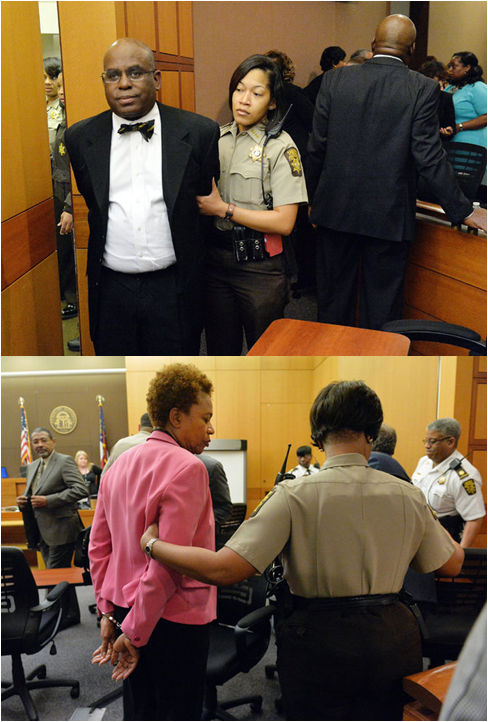
Atlanta Educators Convicted in School Cheating Scandal. Judge ordered them jailed immediately. From The New York Times.

Atlanta Educators Might Go to Jail photos Kent D Johnson

Donald Bullock, a former Atlanta testing coordinator, and Sharon Davis Williams, a former research team director, after judge Jerry W. Baxter ordered the educators jailed immediately. Photo by Kent D. Johnson.

As an educator –although, mostly college– this story is both distressing and sad for me since I support high standards in education, at the same time that consider public schools to be underfunded and in constant need of financial and public support. The historical sequels of neglect and segregation -in the region- might also explain the complexity of this case, but the evidence presented to the court seems unequivocal — GPC.

Alan Blinder, who writes for The New York Times, examines the “largest cheating scandal in the nation’s history, [in which] a jury convicted 11 educators —a mixture of Atlanta public school teachers, testing coordinators and administrators— for their roles in a standardized test cheating that tarnished a major school district’s reputation and raised broader questions about the role of high-stakes testing in American schools.” The defendants (11 of 12) were convicted of racketeering, a felony that carries up to 20 years in prison.

Judge Jerry W. Baxter ordered most of the educators jailed immediately, and they were led from the courtroom in handcuffs. “Defense lawyers, some of whom were clearly angered by Judge Baxter’s decision to jail the educators, immediately began planning appeals and said they were stunned by the verdicts,” reports journalist Alan Blinder in his NYT article. “I don’t like to send anybody to jail,” Judge Baxter said. “It’s not one of the things I get a kick out of. But they have made their bed, and they’re going to have to lie in it, and it starts today”… Read complete story in The New York Times. For a local perspective and updates since 2008, see report in The Atlanta Journal Constitution, for an international take see The Guardian.

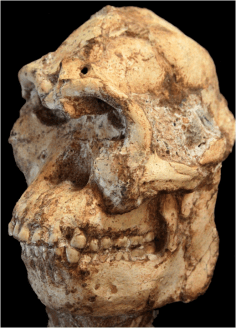
“Little-Foot” older than “Lucy.” New technology dates skeleton 3.67 million years old. What does it mean for hominid evolution?

Little Foot Skull 2.67 Million Years Old

The skull extracted from the cave breccia. Photo by Jason Heaton. Click on image for higher resolution.

“Little Foot is a rare, nearly complete skeleton of Australopithecus first discovered 21 years ago in a cave at Sterkfontein, in central South Africa. The new date places Little Foot as an older relative of Lucy, a famous Australopithecus skeleton dated at 3.2 million years old that was found in Ethiopia. It is thought that Australopithecus is an evolutionary ancestor to humans that lived between 2 million and 4 million years ago.” Read Purdue University press release in EurekAlert! Or see the original article in the journal Nature.

The Little Foot skeleton represents Australopithecus prometheus, a species very different from its contemporary, Australopithecus afarensis (“Lucy”), and with more similarities to the Paranthropus lineage. The dating relied on a radioisotopic technique, which uses radioisotopes within several rock samples surrounding a fossil to date when the rocks and the fossil were first buried underground.

“…Australopithecus africanus and Paranthropus did not all have to have derived from Australopithecus afarensis [Lucy]… This new date [Little Foot’s 3.67 my] is a reminder that there could well have been many species of Australopithecus extending over a much wider area of Africa…”

The authors of the study, Granger et al. (total of 6 coauthors), who just published their results in Nature, summarize the work as follows: “The cave infills at Sterkfontein contain one of the richest assemblages of Australopithecus fossils in the world, including the nearly complete skeleton StW 573 (Little Foot) in its lower section, as well as early stone tolls in higher sections. However, the chronology of the site remains controversial due to the complex history of cave infilling. Much of the existing chronology based on U-PB and paleomagnetic stratigraphy has recently been called into question by the recognition that dated flowstones fill cavities formed within previously cemented breccias and therefore do not form a stratigraphic sequence. Earlier dating with cosmogenic nuclides suffered a high degree of uncertainty and has been questioned on grounds of sediment reworking. Here we use isochron burial dating with cosmogenic Al-26 and Be-10 to show that the breccia containing StW 573 did not undergo significant reworking, and that is was deposited 3.67 ± 0.16 My ago, far earlier than the 2.2 My flowstones found within it. The skeleton is thus coeval with early Australopithecus afarensis in eastern Africa. We also date the earlies stone tools at Sterkfontein to 2.18 ± 0.21 My ago, placing them in the Oldowan at a time similar to that found elsewhere in South Africa at Swartkans and Wonderwerk.” For complete study go to Nature.

EvoLiteracy News 03 28 2015

Science, the universal language…

Happy Saturday everyone, here are a few of my favorite news, videos and science links about topics of broad interest, enjoy!

Earth’s tectonic plates skitter about, from Science Magazine.

“…Geoscientists have unveiled a computer model that maps the details of [Earth’s crust] tectonic dance in 1-million-year increments—practically a frame-by-frame recap of geologic time. It shows that the [tectonic] plates speed up, slow down, and move around in unexpectedly short bursts of activity…” Read full story in Science Magazine and watch the amazing video below. “The animation portrays the motion of continents (grey, yellow, orange and red) and oceanic plates (blue) since Pangea breakup from 200 million years ago.”


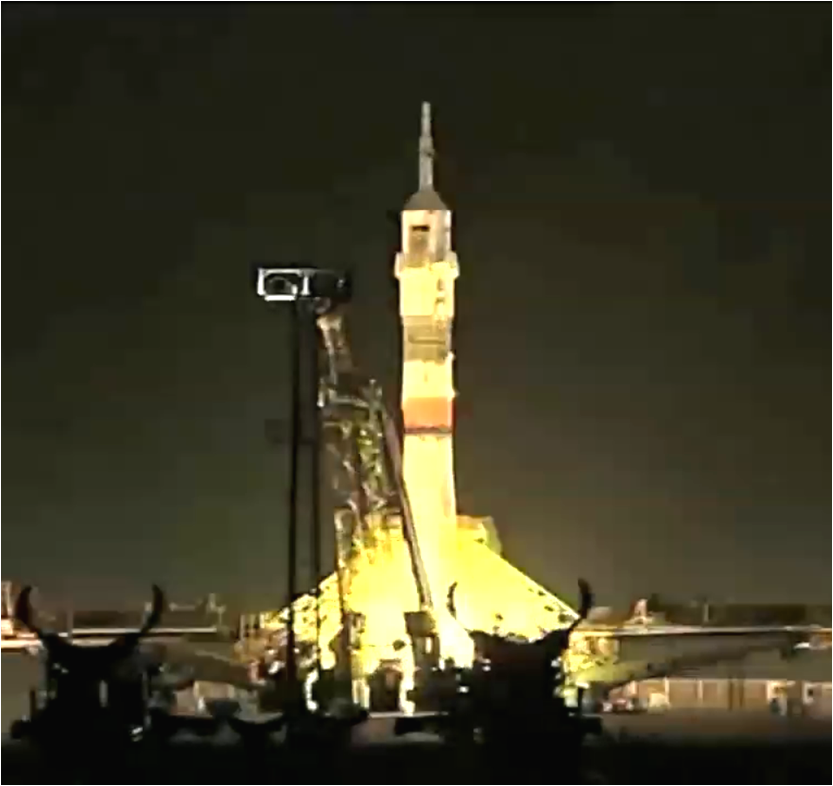
Liftoff! US, Russia Launch Historic One-Year Space Mission.

US Russia One Year Mission to ISS“An unprecedented one-year mission to the International Space Station [began] Friday (March 27). NASA astronaut Scott Kelly and Russian cosmonaut Mikhail Kornienko [did] launch toward the orbiting lab aboard a Russian Soyuz capsule, at 3:42 p.m. EDT (1942 GMT), from Baikonur Cosmodrome in Kazakshtan.” According to NASA, “…a crewed Mars mission could take 500 days or more; learning more about the potential problems astronauts could experience during a long mission is important [for planning  future missions to the Red Planet]…” See The Yearlong Space Station Mission: Full Coverage.

Below, Mars One introduction film (plus many other related videos).

http://www.youtube.com/watch?v=n4tgkyUBkbY


Dynamic evolutionary change in post-Paleozoic echinoids and the importance of scale when interpreting changes in rates of evolution PNAS.

C exquisitus by Simon Coppard The Natural History Museum LondonFrom the cover of the Proceedings of the National Academy of Sciences. Authors Melanie J. Hopkins and Andrew B. Smith provide “…an example of a 265 million-year-old marine invertebrate [sea urchin] clade where evolutionary rates show a net increase over time. This is punctuated by intervals of high rates of morphological evolution, coinciding with major shifts in lifestyle and the evolution of new subclades. The study demonstrates the dynamic nature of evolutionary change within major clades.” For complete study go to PNAS.

Debate over Kin Selection generates yet another response to the controversial 2010-Nature article authored by Martin A. Nowak, Corina E. Tarnita & Edward O. Wilson. The new critique was published in PLoS Biology.

Acanthognathus teledectus Photo April Nobile

Acanthognathus Photo April Nobile

The latest rebuttal to the Nowak et al. (2010) article is titled “Relatedness, Conflict, and the Evolution of Eusociality,” authored by X. Liao, S. Rong & D. C Queller. The researchers summarize their work [a theoretical mathematical model] as follows: “The evolution of sterile worker castes in social insects has fascinated biologists ever since Darwin; how can selection favor a trait that decreases reproductive fitness? W. D. Hamilton solved this dilemma in the 1960s with a theory showing that reproductive altruism could evolve if it increased the worker’s inclusive fitness, which included effects that it had on increasing the fitness of its relatives. This solution to a crucial evolutionary problem, sometimes called kin selection, was challenged in a recent paper (Nowak et al. 2010). The paper generated much controversy, but no one has contested its new theoretical model of the evolution of eusociality, which appeared to overturn much of what was previously thought to be true from kin selection theory. Here we [Liao et al. 2015] examine this model in greater depth, showing that its apparently novel conclusions are overgeneralized from narrow and often inappropriate assumptions. Instead, this modeling strategy yields results that confirm important insights from kin selection and inclusive fitness, such as the importance of relatedness and the existence of conflicts in social insect colonies.” For complete open access to article go to PLoS Biology.

Learn more about the kin selection debate in Op Piece “Dehumanizing Academia by Dismantling the Humanities,” including the crossfire between Richard Dawkins and Edward O. Wilson.

Cartoon

Stuck The Landing cartoon Mars Curiosity Rover

Antivaxxers and the Educated-Public-Herd Effect

By Guillermo Paz-y-Miño-C PhD — © 2015 with updates during 2016, 2017.

New England Science Public – An Initiative for the Public Understanding of Science – on Twitter @EvoLiteracy@gpazyminoResearchGateAcademia.edu

Antivaxxers will only Succumb to Educated Public

[click on subtitle to be redirected to The Standard Times]

“…It is a risky bet… to attempt to replicate the antivaxxer-meme and infect the populous with the reckless idea that we should refuse, as a matter of self-determination and individual freedom principles, to ‘put unnatural substances [vaccines] in our bodies,’ or, worse, continue to link vaccinations to ‘mental retardation and autism in children,’ a fabricated story long ago debunked by science… [The] anti-science gang will only succumb to a robust ‘educated-public-herd effect.’”

Anti-vaccination views can spread quite infectiously in society, mimicking the contagious nature of pathogens. But a “culturally immune” community —here I mean aware of the fundamentals about how vaccines work— can remain forever-protected from, or, at least, resistant to antivaxxer-memes.

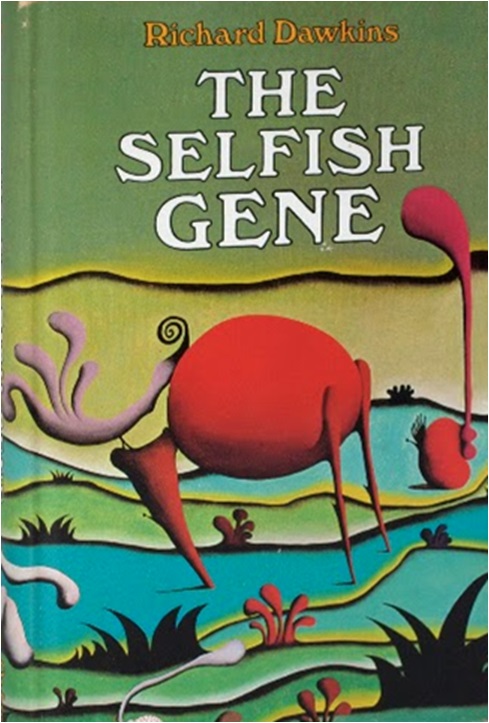
The_Selfish_Gene

The Selfish Gene 1st Edition (1976)

Not only good ideas, but also ill ones, like the opposition to inoculations, can self-replicate, mutate analogously to a gene, and disseminate in a population. Richard Dawkins coined the term “meme,” in The Selfish Gene (1976), to refer to such units of information/ideas sharing, although his examples were not about antivaxxers (people who nowadays battle against vaccines on pseudo-science grounds, religion, or consensus-ignorance —my emphasis) but rather illustrated how catchphrases, fashion or melodies emerged and settled in culture. Dawkins wrote: “we need a name for [this kind of] replicator, a noun that conveys the idea of a unit of cultural transmission, or a unit of imitation. ‘Mimeme’ comes from a suitable Greek root, but I want a monosyllable that sounds a bit like ‘gene.’ I hope my classicist friends will forgive me if I abbreviate mimeme to meme.”

The word meme itself passed around as a replicator among academics, it became highly scrutinized, as well as valued, and an entire field of study, memetics, was born in the 1980s. Sadly, by 2005, the Journal Memetics: Evolutionary Models of Information Transmission, the peer-reviewed forum for scholarly articles, published its last issue. JM became dormant more than extinct.

The metaphorical merit of the meme concept was both its major strength (for suggesting a didactic model to explain cultural information copying from one mind to another) and weakness (for not attaining consensus in the scientific community due to its subjectivity and the challenge to measure it). However, Dawkins and later “memeticists” (specialists in memetics) did manage to keep alive the meme debate for decades, and there is no indication that the meme hypothesis is irrelevant to modern science. After all, “cultural entities” are certainly hosted in brains, mimicked, subject to variation, competition for survival, and inheritance. Good, with-adaptive-value memes stick around, bad ones are prone to vanishing, but not without first instigating considerable damage.

Herd Immunity

Source: Illustration by Autumn Mariano

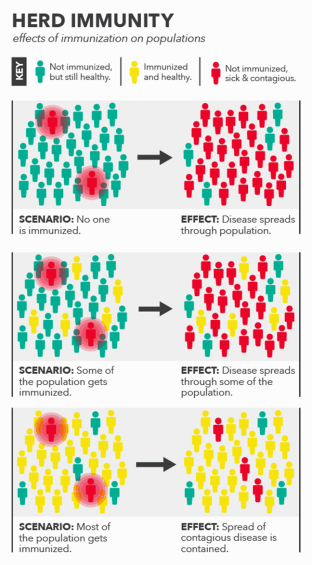
But, let us go back to antivaccination memes and their harmful makeup. As long as the number of vaccinated individuals in a population overwhelms the amount of unvaccinated, the “herd-immunity effect” will continue to protect those who have not yet developed defenses. The rule is mathematically simple: the probability of infection —and death— increases when the number of unvaccinated people augments. In fact, those lacking vaccine-induced immunity to smallpox, rubella, polio, pertussis, mumps, measles or diphtheria can “free-ride” in society only when the vast majority of the population has been vaccinated at an average rate of 83-88 percent, depending on the disease. That is perhaps all a nation needs to understand to get the shots!

But if the “public good” argument is no antidote for antivaxxer-poison, here I offer a single, yet historically gruesome example that illustrates why vaccinations have become required in many countries: smallpox, the sole predator of 300 to 500 million people during the 20th century, and possibly of 20 million North-, Central- and South-American natives after the Europeans’ arrived —from the Caribbean— in the 1520s.

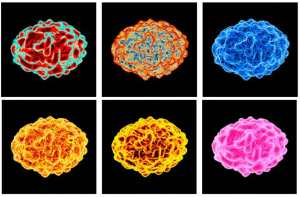
Smallpox is caused by the variola virus, which transferred from wild or domesticated animals to Sub-Saharan humans, at least 3,000 years ago. Variola behaves like a “hit and run” pathogen, incessantly moving to the next target. Once it enters via inhalation the airway passages of the host’s lungs, it incubates for one or two weeks in lymphatic ganglia and disseminates to multiple organs. The patient becomes symptomatic when lacerations or blisters appear in the skin and endothelial membranes (inside the mouth, nose and throat), combined with fatigue, fever, forehead ache, overall muscle soreness and joint pain, nausea and vomiting. Ineffective immune response leads to death in 1-2 days. Smallpox is fatal in up to 30 percent of cases.

Smallpox Virus Images Evolution Literacy

Smallpox virus (click on image to be redirected to source:  gettyimages)

The key point is that when the virus runs out of “fresh prey,” it dies out, and this makes it vulnerable to vaccines. Via safe inoculations of laboratory-engineered-strains of the virus, scientists can “trick” the immune system to generate antibodies against variola. Relying on this procedure, smallpox was eradicated in the late 1970s. And by vaccinating most infants, in urban and rural areas worldwide, we all gradually built the herd-immunity effect on which the unvaccinated can freely —but unsafely— ride.

It is a risky bet, of course, to attempt to replicate the antivaxxer-meme and infect the populous with the reckless notion that we should refuse, as a matter of self-determination and individual freedom principles, to “put unnatural substances in our bodies,” or, worse, continue to link vaccinations to “mental retardation and autism in children,” a fabricated story long ago debunked by science (links to references provided below).

Lethal No-Injection Cartoon Evolution Literacy

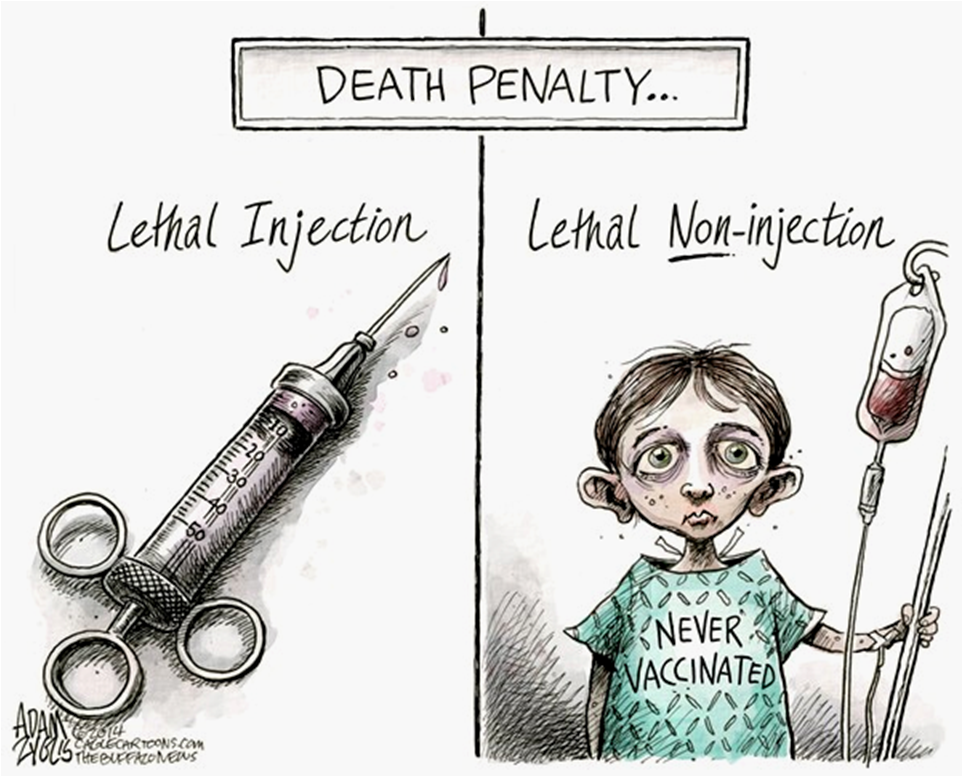
Lethal Injection vs. Lethal Non-injection

Although non-adaptive memes are destined to disappear in the milieu of great-versus-wicked ideas, the human cost, in health and lives, during the path to eradicating the anti-vaccination movement, will be regrettably painful. Still new diseases will emerge in the future, old ones resurrect, while competent physicians try to manage them in crowded environments. But the anti-science gang will only succumb to a robust “educated-public-herd effect.” — © 2015 by EvoLiteracy, with updates during 2016 and 2017, all rights reserved.

Scientific paper on a 67-country survey on the state of vaccine confidence

The State of Vaccine Confidence 2016: Global Insights Through a 67-Country Survey, see also a commentary about this article in Science.

And on the same topic: The Vaccine Wars: Debunking myths, owning real risks, and courting doubters from Science.

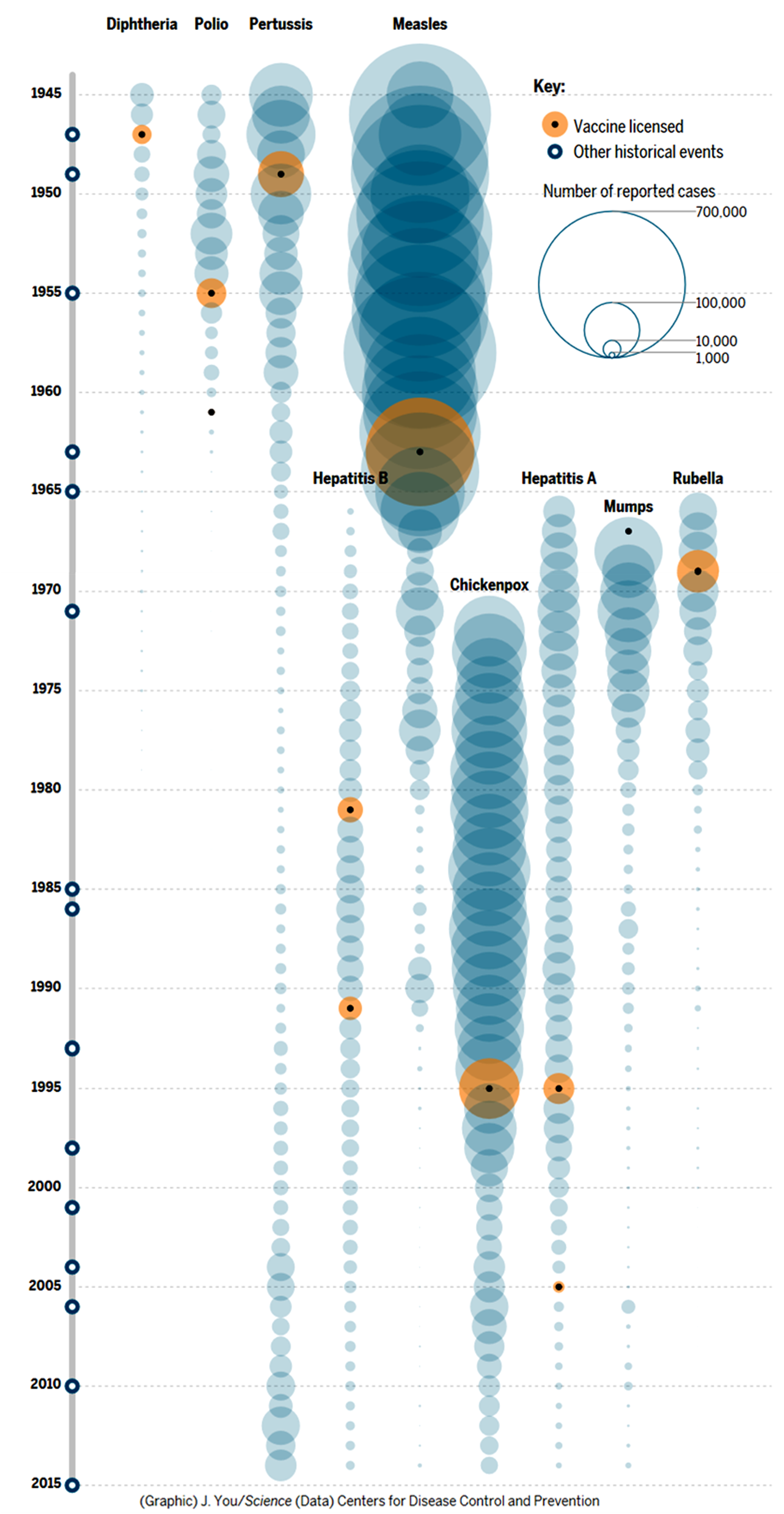
Graphic generated by Science with data from the Centers for Disease Control and Prevention

Visual proof of why vaccines do more good than harm (Science)

Scientific papers rejecting the alleged association between childhood vaccines and autism, and between maternal immunization and autism (source PLoS)

Watch 4:34 min excellent video on “How We Conquered the Deadly Smallpox Virus”


Watch 8:47 min video “Just for Hits” by Richard Dawkins (2013)

http://www.youtube.com/watch?v=GFn-ixX9edg


And another video on “Should you get vaccinated?” by Piled Higher and Deeper PHD Comics 

national-average-vaccinations-usa

Above: Animation: Herd Immunity, How it Works

Above: Animation: Regional reduction in the unvaccinated population from 2000 to 2015

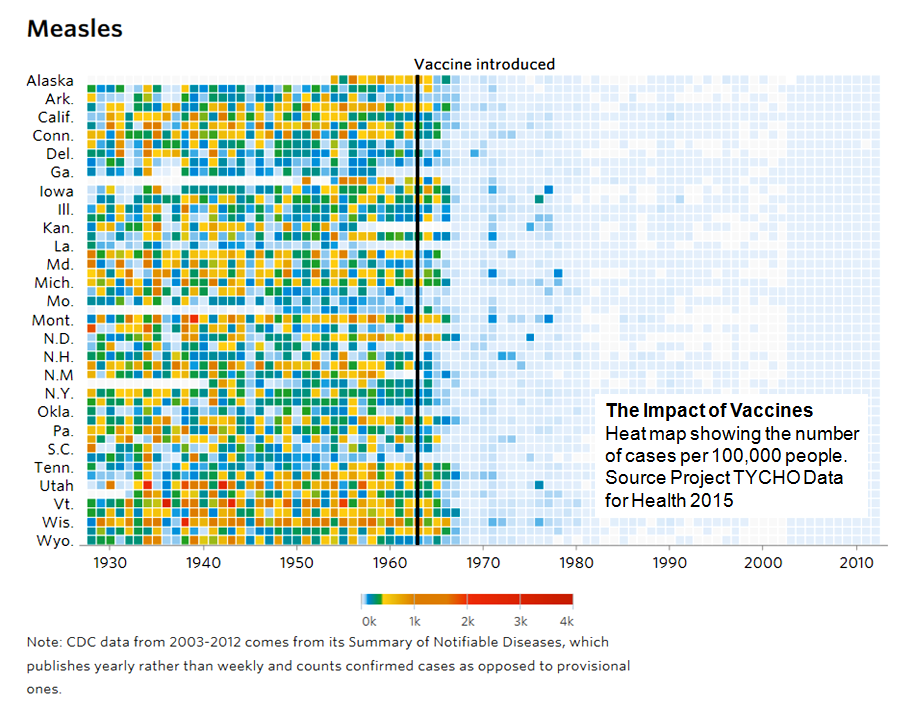
A - Measles Project TYCHO data for Health 2015

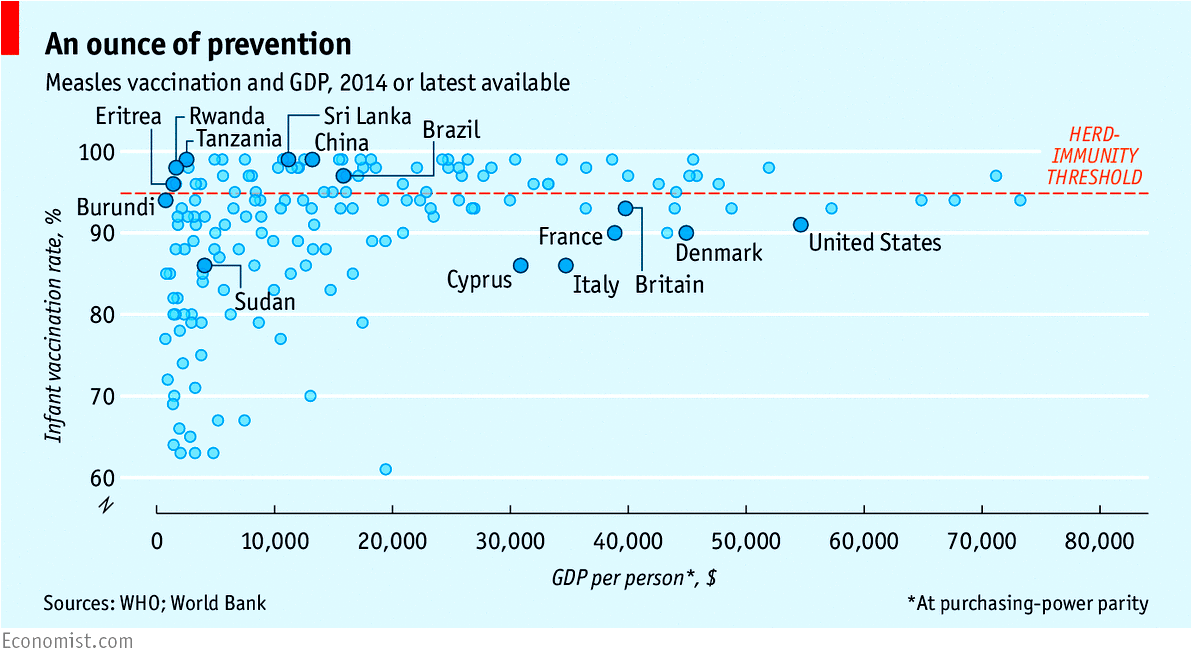
Measles vaccination and GDP 2014 The Economist - Evolution Literacy

B - Hepatitis-A Project TYCHO data for Health 2015

C - Mumps Project TYCHO data for Health 2015

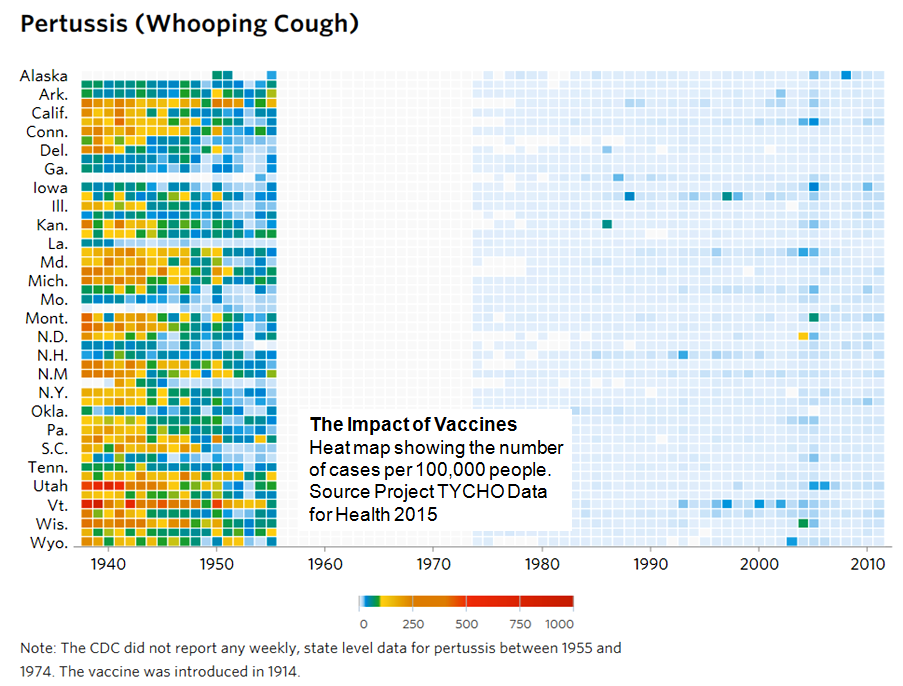
D - Pertussis Project TYCHO data for Health 2015

E - Polio Project TYCHO data for Health 2015

F - Smallpox Project TYCHO data for Health 2015

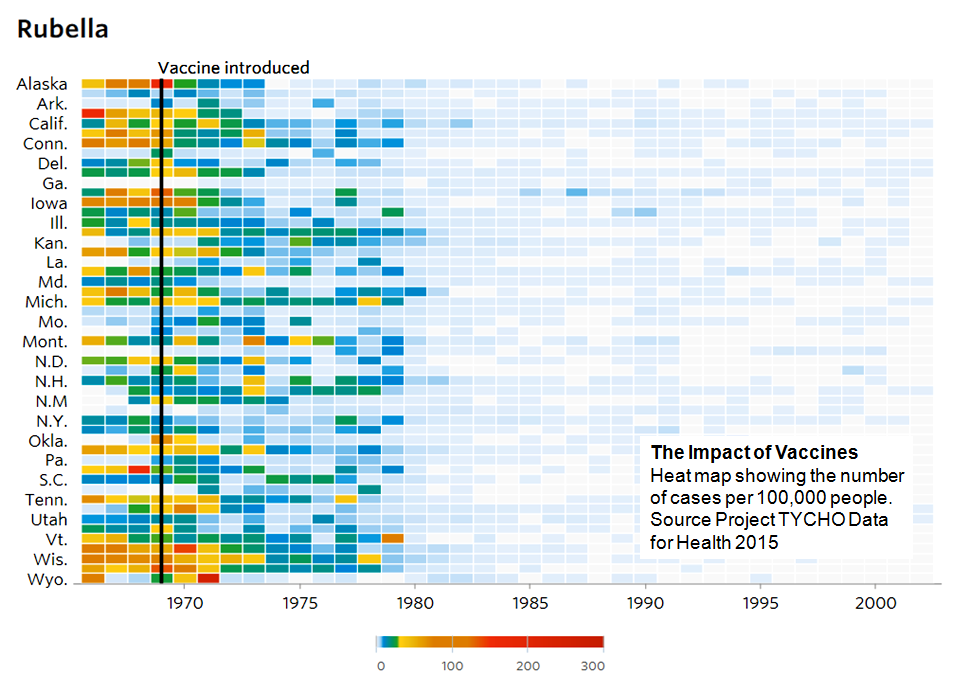
G - Rubella Project TYCHO data for Health 2015

Additional Readings and Resources 

Memetics publications on the web.

Autism’s fight for facts: A voice for science. Convinced by the evidence that vaccines do not cause autism, Alison Singer started a research foundation that pledges to put science first. Nature 479, 28-30 ( 02 November 2011 ).

CDC AUTISM SPECTRUM DISORDER. Autism spectrum disorder (ASD) is a group of developmental disabilities that can cause significant social, communication and behavioral challenges. CDC is committed to continuing to provide essential data on ASD, search for factors that put children at risk for ASD and possible causes, and develop resources that help identify children with ASD as early as possible.

Learn about the latest Ebola research in Science Magazine.

Reduced vaccination and the risk of measles and other childhood infections post-Ebola, also in Science Magazine.

How the Anti-Vaxxers Are Winning – The New York Times

Watch how the measles outbreak spreads when kids get vaccinated – and when they don’t – The Guardian

The Next Pandemic? – The Economist

Autism and Vaccines

Source: The Scientific Facts About Autism and Vaccines nowsourcing.com

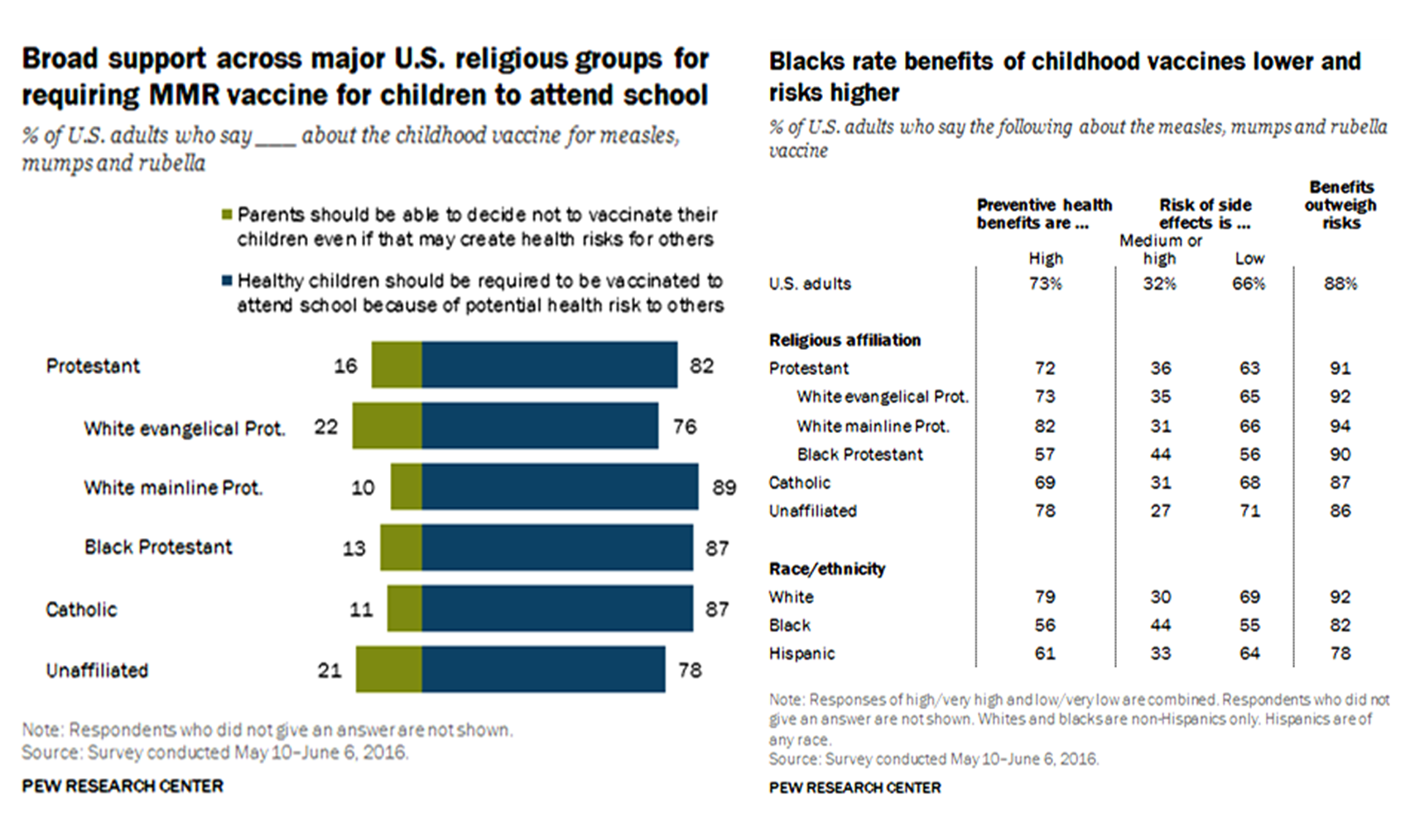
support-to-vaccinations-by-religious-group-and-ethnicity-us-pew-2016

Support to Vaccinations by Religious Group and Ethnicity United States – Pew 2016

Cartoons

Anti Vaccines Cartoons Evolution Literay