Wrong at Forecasting Armageddon – Editorial The Standard Times – June 3, 2011

Harold Camping wrong at forecasting “Biblical End”

[click on title to be redirected to The Standard Times]

Dr. Guillermo Paz-y-Miño C. — © 2011

Department of Biology, University of Massachusetts Dartmouth 

Scripture is a silly source of insight to forecast the end of the world. But science helps us hypothesize more fascinating phenomena than the delusional Rapture…

If human extinction comes abruptly, it shall be from the darkness of our galaxy or from within the Earth. In fact, cosmic collisions and mega eruptions have decimated life more than once during Earth’s 4.6 billion-year existence. Ubiquitous nuclear explosions and the effects of radiation could also wipe out people and most organisms, but I will not elaborate here on such threats, since they have been examined by scholars and speculated in the media.

We can predict the probability of occurrence of some events based on prior empirical observations. I am certain that, for example, all readers of this article will not be around in the year 2100. I can forecast with less confidence that 20 percent of my college students’ grandparents, ages 60-70, will pass away within this decade, and that one in every five students’ excuses for missing an exam — due to a “death in the family” — will be legitimate. And I can infer from survivorship tables compiled by the U.S. Centers for Disease Control and Prevention that Judgment-Day spiritualist Harold Camping, age 89 — who just postponed his “The End” of the world from May 21 to Oct. 21 of this year — is reaching his own finale.

Harold Camping Armageddon Evolution Literacy Image

Judgment-Day spiritualist Harold Camping forecasting The End… of the world for either May 21 or October 21, 2011

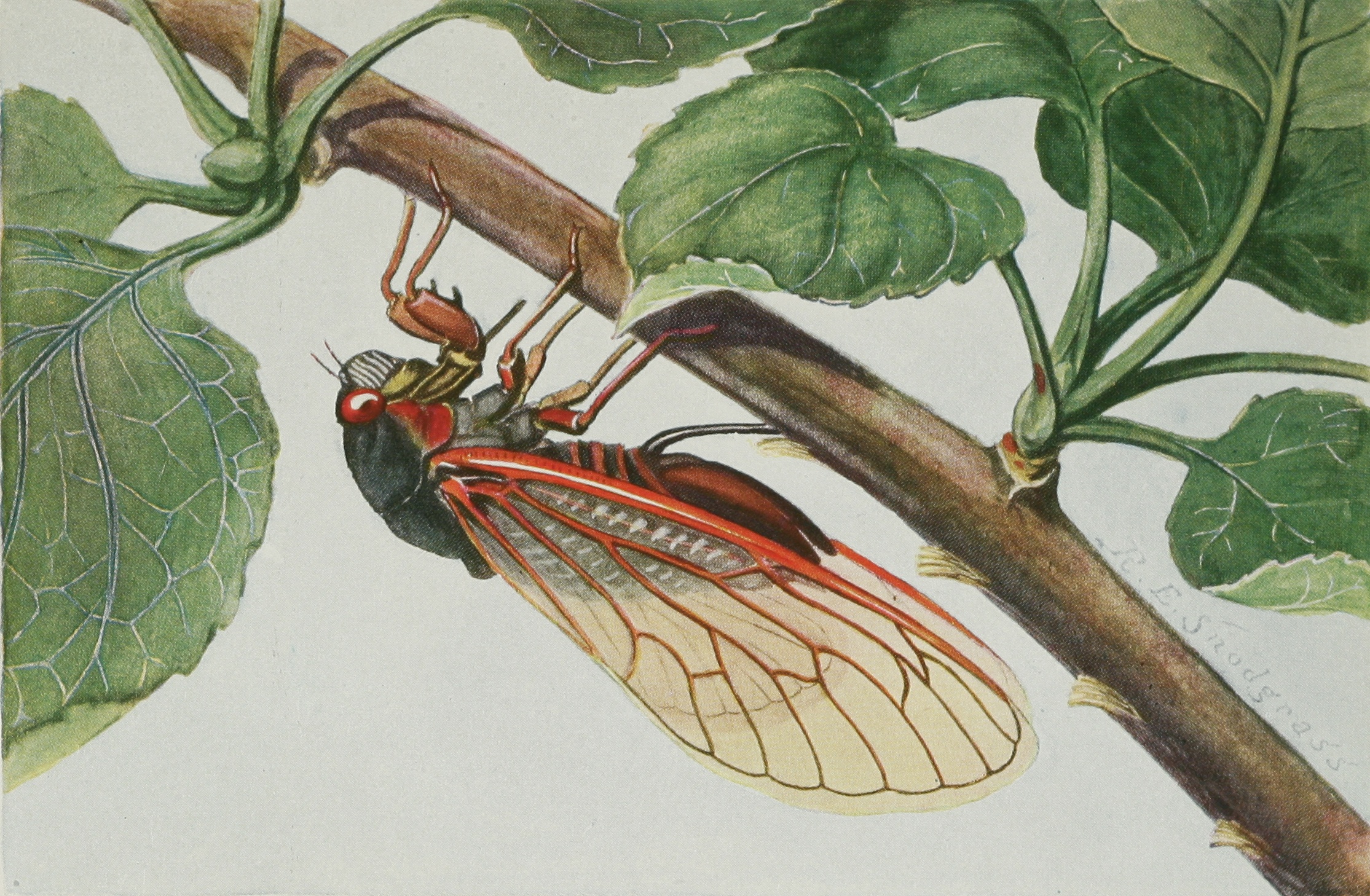
Redundant natural phenomena have led human intellect to discover predictable patterns of reality and, in consequence, reject superstition. And this is true about the cycles of the moon, the emergence and diversification of life from simple to more complex forms, the continental migrations of birds, the blooms of magicicadas every 13-17 years, or the seasonal intensification of tornadoes and hurricanes. Science has awarded us the luxury of anticipating the maladies of the blood (hemophilia) or the mind (porphyria) among the inbred Royal Houses of Europe, as much as foreseeing the geographic journey of the next influenza outbreak.
Magicicada Image Evolution Literacy

Magicicada illustration by R. E. Snodgrass (click on image for full resolution)

The self-correcting character of science guided astronomers to debunk Ptolemy’s geocentric model of the years 100 — when the Earth was worshipped as “the heart” of the universe — and replaced such optical illusion with Copernican heliocentrism — 16th century — an obvious deduction for those who refused to imagine heavens and constellations in the sky and rather saw planets and their moons revolving around our closest star, the sun.

Astronomy and modern cosmology have made sense of the chaotic night sky and allowed us to broadcast the passage of comets, alignment of planets, meteorite falls and polar auroras triggered by the collision of solar-wind particles against the atmosphere.

But why should we care about predicting cosmic events? Because by witnessing their majestic beauty and immensity we can also study and assess their destructive potential; and an educated public in matters of real global survival is more precious and needed than a vociferous street crowd surrendering at the brainless certitude of Camping’s prediction of Armageddon.

NASA eclipse website Evolution LiteracyThe NASA Eclipse Website offers an impressive education playground for those curious about previous eclipses of our sun and moon, plus accurate schedules of upcoming eclipses up to 2015 [updates reach year 3000]. And NASA’s Asteroid and Comet Impact Hazards Program informs online surfers about the predictability and reasonable uncertainty concerning future collisions between Earth and cosmic debris.

Watching the sky for possible encounters with large asteroids is a priority considering our planet’s heritage: A 6-mile asteroid cremated the “ruling class” Reptilia 65 million years ago when blasting a 110-mile-wide crater in the Yucatan Peninsula of Mexico. Few reptile lineages survived and repopulated.

Don Davis image Dinosaurs Extinction Evolution Literacy

Illustration by Don Davis (for additional images visit Don Davis asteroid impact

The end of the dinosaurs dragged tiny mammals out of their burrows, and they revisited old reptilian professions with limited originality: they became arboreal climbers, terrestrial herbivores and hunters, cave flyers, aquatic divers, and killers of killers. Their major evolutionary innovations were sweat glands turned into milk-producing udders and breasts, internal eggs that matured within a womb, and large skulls encasing clever minds. And it was the primate mind, shaped even further by natural selection in ape descendants, us, the thinking apes, that evolved scientific reasoning and consciousness.

Chicxulub crater image Evolution Literacy

The Chicxulub crater in the Yucatan peninsula of Mexico (for additional information visit “Revisiting Chicxulub” by the National Science Foundation)

It is the human mind through which the universe understands and predicts itself. And it is the scientific method, which civilizations have discovered and perfected over millennia, the most reliable approach to understanding the past and present, and hypothesizing about the future. There will never be Judgment Day or Rapture or Armageddon. Our planet shall remain cosmically unsafe with fluctuating danger until our sun, the cause of our existence, runs out of fuel within the next 5 billion years. — © 2011 by Guillermo Paz-y-Miño-C. all rights reserved

*          *          *

Humor: Judgment Day… did not happen

Harold Camping cartoon Evolution Literacy

A Stationary Ark on Isle of Jersey – Editorial The Providence Journal – March 25, 2011

A Stationary Ark on Isle of Jersey

[click on title to be redirected to The Providence Journal]

Dr. Guillermo Paz-y-Miño C. — © 2011

NoahsArk_as_by_TheProvidenceJournalIf the biblical story about the Ark were true, Noah’s attempt to save animals from the Flood would have driven them into inbreeding depression.

Sentenced to incest, the descendants from the surviving sexual pairs — which themselves were allegedly confined to uncertainty in a drifting vessel — would have accumulated lethal combinations of genes and followed an inescapable vortex toward extinction.

Indeed, critically small populations of organisms store much less genetic wealth than the progenitors from whom they usually originate. Deprived from a healthy shuffling of paternal and maternal traits — a phenomenon known as recombination and that enriches the genome of creatures that mate — the offspring of repetitive kin procreations soon become unfit, fail to reproduce and gradually vanish.

The cosmos appears indifferent to this pain and suffering. Yet the laws of nature have steered the emergence of empathy and consciousness in the universe via Darwinian selection. Self-aware apes, such as humans, understand tragedy or joy when afflicted or delighted by them; empathic people can also infer when other animals experience distress or appeasement. But this assertion is incomplete, since the cognitive Homo sapiens is surrounded by a diverse mosaic of mental power in his close and distant phylogenetic relatives.

Planet_Earth_NASAIntelligence has evolved gradually and in a continuum. And just like the fossil record, the pattern of human’s “brained companions” is scattered after historical and always ongoing natural extinctions. Chimpanzees, bonobos, gorillas, orangutans, capuchin monkeys and feathered creatures such as ravens, jays and parrots possess and seek empathy. They are proof that the mind is another byproduct — not a goal — of favorable conditions for the assemblage of organic matter in a Goldilocks-zone planet, hospitable like ours [click on image to be redirected to NASA: Earth], which has incubated life and later harvested intellect.

Empathy for each one of us and for other animals sometimes requires inspiration from the Ark’s metaphor, but not from Noah’s clumsy urgency to save provisions and secure self-subsistence in a landscape prone to fast inundation, but rather a well conceived and elegantly designed — under the scope of science — strategy for captive breeding and repatriation of endangered species.

I have a copy of “The Stationary Ark” (1976), with a handwritten note, “For Guillermo, with best wishes, Gerald Durrell.” But the first of Durrell’s books, in which he referred to the concept of the Ark in the context of preservation and propagation of threatened animal populations, was “The Overloaded Ark” (1953), which was followed by “My Family and Other Animals” (1956). Both gave this Anglo-Irish animal fanatic, born in India in 1925, fame and the income to fund the Jersey Zoological Park (1958) and house his personal collection of exotic animals.

TheStationaryArkBook

The Jersey Zoo became a world exemplar of how cutting-edge research, conducted at a tiny 30-acre patch of land in the English Channel Islands, off the French coast of Normandy, could lead to an international effort and successful captive breeding and reintroduction of the Mauritius kestrel and the Mongolian Przewalski’s horse — evidence that zoos can reverse the course of some human assaults on nature.

The_DodoDurrell adopted the flightless Dodo — a 3-foot-tall and 40-pound archaic pigeon endemic to Mauritius, in the Indian Ocean, which became extinct in the 17th Century — as symbol of the Jersey Wildlife Preservation Trust, JWPT (nowadays Durrell Wildlife Conservation Trust, DWCT), founded in 1963. The trust sponsors conservation of rare and endangered mammals, birds, amphibians and reptiles. The Wildlife Preservation Trust International (WPTI) was later established in the United States, in 1971, as counterpart benefactor of JWPT, and evolved into EcoHealth Alliance.

Today, the Stationary Ark not only oversees conservation research of 200 species of animals in peril, but inspires empathy for wildlife among “educated Noahs” at a mini-university established at Les Noyers, and adjacent to the zoo. It was there where, in 1987, Durrell autographed the book I have, while I was student at the International Training Centre for captive breeding of endangered species; 2,700 graduates from 128 countries have been educated at the center since 1978, when it opened. — Durrell died at age 70.

Zoo_Trainees_JWPT_with_Gerald_and_Lee_Durrell_1987

Zoo keepers and trainees at Gerald Durrell’s home in Jersey (1987). Gerald Durrell, Lee Durrell and Jeremy Mallinson (Zoo Director at that time) appear in the back row, right.  Guillermo Paz-y-Miño C. is in the front row, second from the right. 

Perhaps the ark metaphor can still be used, or resuscitated, as by Gerald Durrell, to inspire curiosity for investigating the frontiers of nature and to propose scientific solutions to the genetic erosion of increasingly small animal populations worldwide. Then there’s the “full-scale” depiction of Noah’s Ark at a 160-acre Genesis theme park to open in Kentucky in 2014, a $150 million investment that will intoxicate the minds of visitors with the idea that incest mating between two of a kind — just like Adam and Eve — can populate the Earth. — © 2011 by Guillermo Paz-y-Miño-C. all rights reserved

GMO_NoahsArk_cartoon

No_Missing_Links_cartoon

All History is Black History – Editorial The Standard Times – March 2, 2011

All History is Black History

[click on title to be redirected to The Standard Times]

Dr. Guillermo Paz-y-Miño C. — © 2011

Department of Biology, University of Massachusetts Dartmouth 

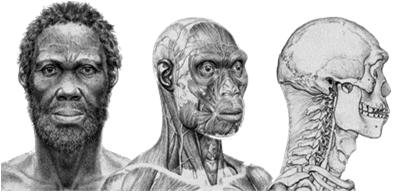
AfricanPhenotype 

Illustration by JH Matternes, click on image to access more of artist’s fantastic work

An African American blogger just settled an online dispute over human origins by asserting, with magnificent wisdom, that “all history is Black History.”

His co-bloggers had rejected the evolutionary significance of a recent fossil discovery in Hadar, Ethiopia, of a 3.2 million year old foot bone belonging to Australopithecus afarensis –the famous Lucy’s lineage– which has unveiled hints about the locomotion habits of early hominids. The clever blogger brought reason into a trivial exchange of brain gas among sponsors of one wrong over another belief about human ancestry. “Deal with it” –that is with our common African heritage– were his last gentle, yet shut-up devastating words.

The left fourth metatarsal bone described in Science magazine by professors Carol Ward, William Kimbel and Donald Johanson, the latter discoverer of the very Lucy, also in Hadar, in 1974, tells a compelling story: Lucy’s relatives walked upright, a conclusion awaiting unequivocal evidence for almost four decades, and the tiny bone just provided it in its complex anatomy. The now famous AL-333-160 three-inch bone (in paleontology identification numbers are precious) resembles the bipedal human ‘arched’ metatarsals –shock absorbers for “walker apes”– and differs from the quadrupedal chimpanzee’s, bonobo’s and gorilla’s, which are more elongated.

AL-333-160 left fourth metatarsal A afarensisAL-333-160 left fourth metatarsal in dorsal, lateral, medial, plantar, and proximal views (Ward et al. Science 2011;331:750-753). Click on image to explore the Science magazine article and to download the power point slide for teaching. 

Lucy, herself 3.2 million years old, still is the most famous, although not most significant, hominid fossil ever described. Ardi, a 4.4-million year old almost complete skeleton discovered in Aramis, Ethiopia, by Tim White in 2009, and Toumai, a 7-million year old hominid skull found in Chad by Michel Brunet in 2001, are Lucy’s fair competitors.

Lucy was brought to celebrity status by her always calculating manager, Johanson, who named her after The Beatles song Lucy In The Sky With Diamonds,” thus launching her popularity into textbooks, anatomical reconstructions, cartoons of a stocky yet friendly smiling “ape cousin,” and full-body hairy depictions of her 3-feet tall “reconstructed flesh” at museums and exhibits of human origins.

Lovely Lucy Australopithecus afarensisLovely Lucy Australopithecus afarensis, for image credit and additional images click on her rostrum

For bloggers and alike who question the African origin of humans, of which Lucy’s tale is only part of the story since she was also born to common ancestors between her family and ours, the enigma has long been solved. But the journey to acknowledge that “we are all Africans” has been tortuous.


“…the journey to acknowledge that ‘we are all Africans’ has been tortuous…”

In The Descent of Man, 1871, Charles Darwin reasoned: “In each great region of the world the living [animals] are closely related to the extinct species of the same region. It is therefore probable that Africa was formerly inhabited by extinct apes closely allied to the gorilla and chimpanzee; and as these two species are now man’s nearest allies, it is somewhat more probable that our early progenitors lived on the African continent than elsewhere.”

Darwin’s inference was brilliant, but it took more than a century to be definitely embraced by scholars. This “Out of Africa” hypothesis has been corroborated by DNA evidence, physical anthropology, and specimens.

Out of Africa Hypothesis

The out-of-Africa journey and dispersal of modern humans. Click on Human Migration image from National Geographic to access high-definition map

Indeed ancient forms of Homo sapiens evolved to anatomically modern humans entirely in the Ethiopian realm, about 200,000 years ago. And they walked out of Africa to populate the planet, which can be demonstrated with fossils and genetic pedigrees of indigenous peoples worldwide. Even human languages follow a pattern of geographical distribution consistent with a common origin in Northeastern Africa and nearby Mesopotamia.

More recently, the “Multi Regional” hypothesis of human origins, which counters the out-of-Africa postulate by conceiving an overall hybridization and integration of all world Homo species, including archaic forms, such as the Asian Peking Man, Homo erectus, and modern variants, such as the Northeast African and Southern European Homo sapiens, into a unified single Homo sapiens sapiens, has regained closer attention –after losing power during the 1990s– due to the discovery of shared genetic features between us and Neanderthals, a fairly modern human variety which became extinct 40,000 years ago.

The single origin or Out of Africa idea is nowadays well accepted among scientists. And even if the multi-regional hypothesis regains strength, all ancestral forms of hominids seem to coalesce to Africa. Disagreements among scientists do not invalidate science as believed by misinformed illiterate bloggers, who insist that there are not enough fossils to account for evolution or that the questions about human origins are far from being answered.

As much as our African American blogger so intuitively stated that all history is, ultimately, Black History, Darwin’s own writings from 1871 continue to alert us about the essence of belief-based debates: “It has often and confidently been asserted, that man’s origin can never be known: but ignorance more frequently begets confidence than does knowledge: it is those who know little, and not those who know much, who so positively assert that this or that problem will never be solved.” — © 2011 by Guillermo Paz-y-Miño-C. all rights reserved

African American Colorful Fishes

Two African Americans celebrating color and creativity, photo courtesy Rashida Charles

POLLS and SURVEYS on ACCEPTANCE of EVOLUTION and related topics

100 percent should accept evolution

GALLUP POLLS (click on links)

Gallup 2012: U.S. Confidence in Organized Religion at Low Point

Gallup 2012: In U.S., 46% Hold Creationist View of Human Origins

Gallup 2012: Four in 10 Americans are “very religious”

Gallup 2010: Four in 10 Americans Believe in Strict Creationism

Gallup 2010: Religion

Gallup 2010: Evolution, Creationism, Intelligent Design

Gallup 2009: On Darwin’s Birthday, Only 4 in 10 Believe in Evolution

Gallup 2008: Republicans, Democrats Differ on Creationism

Gallup 2007: Majority of Republicans Doubt Theory of Evolution

Gallup 2007: One-Third of Americans Believe the Bible Is Literally True

Gallup 2006: Almost Half of Americans Believe Humans Did Not Evolve

Gallup 2006: American Beliefs: Evolution vs. Bible’s Explanation of Human Origins

Gallup 2005: Most Americans Engaged in Debate About Evolution, Creation

Gallup 2005: Most Americans Tentative About Origin-of-Life Explanations

Gallup 2005: Darwin or Divine? Teens’ Views on Origin of Species

Gallup 2004: Third of Americans Say Evidence Has Supported Darwin’s Evolution Theory


PEW RESEARCH CENTER POLLS (click on links)

PEW 2010: U.S. Religious Knowledge Survey

PEW 2009: Public Praises Science; Scientists Fault Public, Media

PEW 2005: Public Divided on Origins of Life


CANADA (click on links)

2011: EKOS

2011: EKOS attitudes toward science

2008: Origin of life


UNITED KINGDOM (click on link)

2009: Faith and Darwin: Harmony, Conflict, or Confusion?


23 COUNTRIES (click on link)

2011: Ipsos Global advisory: Supreme Being(s), the Afterlife and Evolution


EDUCATION (click on links)

2012: State of State Science Standards

2011: Education Pays: Bureau of Labor Statistics

2011: How America Pays for College

2001-2010: Science and Nature by Polling Reports


New England Professors Accept Evolution, But They Are Religious – Editorial The Standard Times – Jan 15, 2011

Why Accepting Evolution Matters

…New England professors accept evolution, but they are religious…

[click on title to be redirected to The Standard Times]

Dr. Guillermo Paz-y-Miño C. — © 2011

Department of Biology, University of Massachusetts Dartmouth 

People do not “believe” in evolution; we either accept it, or doubt about it, or reject it. But the reality of the evolutionary process continues regardless of our cognitive awareness or position about it. Evolution is true.

Together with my collaborator, Dr. Avelina Espinosa, professor at Roger Williams University in Rhode Island, we have uncovered the patterns of acceptance of evolution among university professors in New England, and the results are both fascinating and startling.

A cultural assumption has been that scholars are supportive of science and remain distant from belief-based perspectives regarding the natural world. Is this factual?

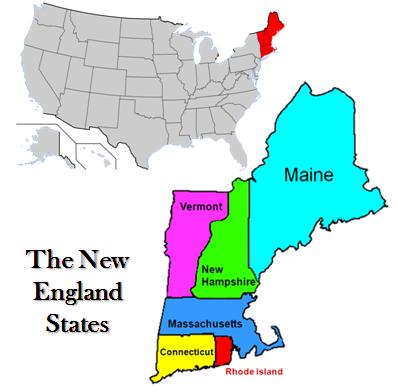
We surveyed 244 faculty — 90 percent Ph.D. holders in 40 disciplines at 35 colleges and universities widely distributed geographically in Connecticut, Maine, Massachusetts, New Hampshire, Rhode Island and Vermont. Our study was recently published online in Evolution, Education and Outreach, and the hard-copy report will appear in the March 2011 issue of the journal.

NewEnglandStatesInTheUSA

Why New England? The first shocking fact that triggered our interest in studying the Northeast of the United States was that, back in 2005, the Pew Research Center for the People and the Press had documented that only 59 percent of New Englanders accept evolution, the highest score nationwide, and that the overall regional acceptance of evolution in the United States was even more distressing: 57 percent in the Northwest, 45 percent in the Midwest, and 38 percent in the South.

More alarmingly, in 2006, the United States ranked 33rd among 34 other countries where acceptance of evolution was assessed, in contrast to Iceland, Denmark, Sweden, France, Japan and the United Kingdom, top in the list, where 75 to 85 percent of adults accept evolution (Science, 2006).

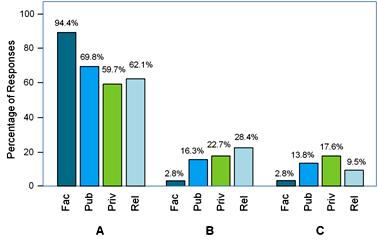
Our study revealed that 91 percent of the New England professors were very or somehow concerned about the controversy of evolution versus creationism versus “intelligent design” and its implications for science education. In fact, 96 percent of them supported the exclusive teaching of evolution in science classes and a 4 percent minority favored equal time to evolution and creationism (the latter declared unconstitutional by the Supreme Court in 1987). And 92 percent of the faculty perceived intelligent design as not scientific and as proposed to counter evolution, or as doctrine consistent with creationism.

NewEnglandFaculty_IntelligentDesign 

Percentage of New England faculty (Fac) versus college students from public secular (Pub), private secular (Priv), and religious (Rel) institutions who consider one of the following statements to be consistent with intelligent design (ID): (A) ID is not scientific but has been proposed to counter evolution based on false claims; (B) ID is religious doctrine consistent with creationism; (C) no opinion; (D) ID is a scientific alternative to evolution and of equal scientific validity among scientists; (E) ID is a scientific theory about the origin and evolution of life on Earth.

Although 92 percent of the professors thought that evolution relies on common ancestry — or that organisms can be traced back in time to ancestors that reproduced successfully and left descendants — one in every four faculty did not know that humans are apes, or relatives of primates. Worse, 30 percent of the faculty were Lamarckian, or believed in the inheritance of acquired traits during an organism’s lifetime, like longer necks, larger brains, or resistance to parasites, which are passed on to the progeny, a hypothesis rejected a century ago.

NewEnglandFaculty_DefineEvolutionAs

Percentage of New England faculty (Fac) versus college students from public secular (Pub), private secular (Priv), and religious (Rel) institutions who consider the following definitions of evolution to be either true (black bars) or false (color bars): (A) gradual process by which the universe changes, it includes the origin of life, its diversification and the synergistic phenomena resulting from the interaction between life and the environment; (B) directional process by which unicellular organisms, like bacteria, turn into multicellular organisms, like sponges, which later turn into fish, amphibians, reptiles, birds, mammals, and ultimately humans, the pinnacle of evolution; (C) gradual process by which monkeys such as chimpanzees, turn into humans; (D) random process by which life originates, changes, and ends accidentally in complex organisms such as humans; and (E) gradual process by which organisms acquire traits during their lifetimes, such as longer necks, larger brains, resistance to parasites, and then pass on these traits to their descendants.

We asked the professors if faith in God is necessary for morality, if religion is important in their lives, and if they pray. Only 5 percent agreed with the need of a God to secure proper social behavior, but 30 percent considered religion to be very important in their daily existence, and 17 percent confessed to pray daily.

The one-third of the faculty who thought that religion is important in their lives was comparable to the 33 percent of American scientists who admit to believe in God (Pew Research Center, 2009), but differed from the 12 percent of “professional evolutionary scientists” — members of the North American, European, United Kingdom, and other countries’ National Academies of Sciences (American Scientist, 2007) — and particularly the 7 percent of members of the United States National Academy of Sciences who believe in a personal God (Nature, 1998).

Indeed, most international scientists and the elite of the United States researchers are not religious.

NewEnglandFaculty_AcceptEvolutionOpenly

Percentage of New England faculty (Fac) versus college students from public secular (Pub), private secular (Priv), and religious (Rel) institutions who believe one of the following statements describes them best: (A) I accept evolution and express it openly regardless of others’ opinions; (B) no opinion; and (C) I accept evolution but do not discuss it openly to avoid conflicts with friends and family.

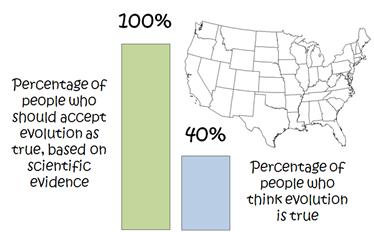
Why does acceptance of evolution matter? Because public acceptance of evolution in the United States (about 40 percent) correlates with support to: (1) proper science education in public schools; (2) science and technology as essential components of development and prosperity; and (3) rationalism and freedom of thought, all indisputable ingredients for a thriving society.

And it also matters because only the highly educated university professors of New England — hopefully of the nation — have levels of acceptance of evolution (97 percent according to our study) comparable to or higher than the ordinary public in other industrialized countries of Northern and Western Europe.

Because attitudes toward evolution correlated positively with understanding of science and negatively with religiosity and political ideology, aspects examined in our study, we concluded that science education combined with vigorous public debate should suffice to increase acceptance of naturalistic rationalism and decrease the negative impact of creationism and intelligent design on collective evolution literacy. — © 2011 by Guillermo Paz-y-Miño-C. all rights reserved

For original scientific article (New England Faculty and College Students Differ in Their Views  About Evolution, Creationism, Intelligent Design, and Religiosity), published in Evolution Education & Outreach, click on [PDF]

*          *          *

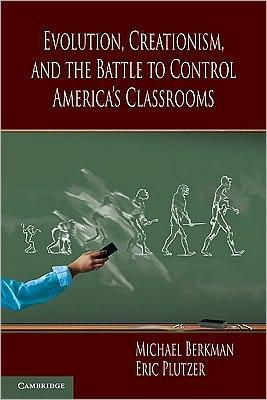
Recommended Book: Evolution, Creationism, And The Battle To Control America’s Classrooms, by Michael Berkman & Eric Plutzer click on book for link

EvolutionCreationism_Book_Berkman_Plutzer_2010

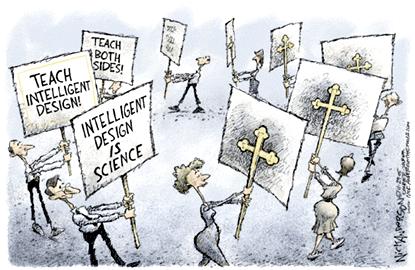
Cartoon: Intelligent Design as Science…

IntelligentDesignAsScience

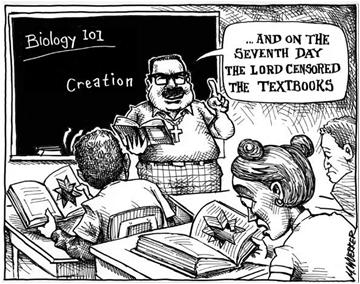
Cartoon: Biology 101… The Lord Censored Textbooks

TheLordCensoredTextbooks

TEN TIPS ABOUT: How university professors can contribute to strengthen evolution literacy

By Guillermo Paz-y-Miño C. & Avelina Espinosa — © 2011

Excerpts from “New England Faculty and College Students Differ in Their Views  About Evolution, Creationism, Intelligent Design, and Religiosity” published in Evolution Education and Outreach

(1) By being proactive rather than reactive in confronting the “anti-evolution wars.” It is imperative that the university professors reach out to the public and lead the debate over science education and evolution literacy.

(2) By persuading the education departments at their institutions to fortify science training of future educators: higher education and outreach programs in science, particularly biology, for school teachers are fundamental to integrate evolution into our society’s culture.

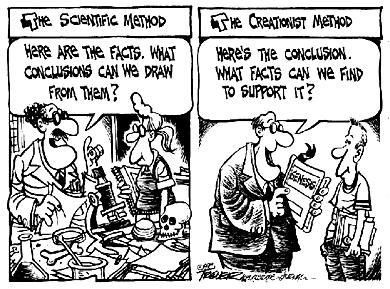
TheScientificMethod

(3) By changing the emphasis with which college science is taught and improving the science curriculum: it is easier and faster to change the perspectives with which a course is taught than to modify the university/college curriculum; however, both might be indispensable to improving positive attitudes toward science and evolution.

(4) By creating a new type of professorship position: “professor for the public understanding of science,” whose exclusive role shall be to explain to the public the significance of the research conducted by each discipline, and also by assigning the most reputable professors and best communicators of science to the large-lecture courses, usually attended by nonscience majors.

(5) By constantly surveying variations in attitudes toward science and evolution among faculty, students and staff, and coordinating immediate responses to emerging antievolutionism: contrary to the assumption that skepticism toward creationist views predominates in academia, U.S. university professors, even at prestigious research institutions, increasingly embrace religiosity, a factor negatively correlated with acceptance of evolution; it is conceivable to forecast a decline in acceptance of evolution by university professors.

SchoolAdmissions

(6) By sponsoring in- and off-campus lecture series, workshops and debates, open to the local high school teachers and the public, where university professors of all disciplines examine the anti-evolution phenomena, learn about the limitations established by schools boards on the science school curriculum and orient the audience on how to communicate modern science to all. Workshop discussion modules on “why evolution matters” can be particularly effective when organized for school board members, school district administrators, science teachers and university professors.

(7) By actively pursuing participation in “town Evo Edu Outreach halls for scientists and public” to discuss issues related to scientific research and the controversy of evolution versus creationism versus ID.

DownWithEducationCartoon

(8) By organizing multidisciplinary teams of professors (anthropology, biology, education, ethics, history, law, philosophy, political science, social psychology, and religious studies) committed to advice community groups on theoretical and practical aspects of civil action to counter anti-evolution campaigns, anti-intellectualism tendencies, and pro creationism and ID agendas.

(9) By never underestimating the influence of the anti-evolution movements that grow strong among misinformed citizens, vary in impact geographically, and benefit from the frequent disconnect between scientists and society. Indeed, the regional differential acceptance of evolution in the U.S. (i.e., Northeast 59%, Northwest 57%, Midwest 45%, South 38%; The Pew Research Center for the People & the Press 2005) suggests that pro-evolution campaigns shall require strategies compatible with local idiosyncrasies.

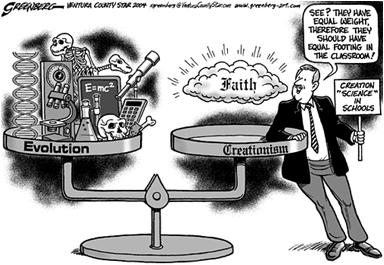
EqualWeighEvolutionCreation

 (10) By including in the “broad impact” section of research grant applications specific multidisciplinary outreach modules to educate the public in the areas of scientific literacy, “on-the-job-training” workshops for local/ regional high school teachers, online-mini courses, online assessment of local/regional attitudes toward science/evolution, laboratory internships and field work. The National Science Foundation, U.S. Department of Education, and private donors encourage and even require grant applicants to reach out to the public in meaningful areas of current interest and societal debate. — © 2011 by Guillermo Paz-y-Miño-C. & Avelina Espinosa all rights reserved

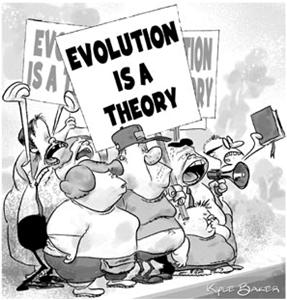
TeachBothSidesCartoon

For original scientific article (New England Faculty and College Students Differ in Their Views  About Evolution, Creationism, Intelligent Design, and Religiosity), published in Evolution Education & Outreach, click on [PDF]

“Theory of Evolution” versus “Concept of Evolution”

By Guillermo Paz-y-Miño C. & Avelina Espinosa — © 2011

Excerpt from “On the Theory of Evolution versus the Concept of Evolution” published in Evolution Education and Outreach

“…It is important to make a distinction between the theory of evolution and the concept of evolution, but without compromising logic…

As scientific theory (Greek theoria), evolution provides naturalistic explanations of empirical observations, it organizes them in a comprehensive system with central and auxiliary hypotheses.

From the epistemological perspective (Greek episteme, epistemology = theoryof knowledge), the theory of evolution encompasses the nature and scope of knowledge about the phenomenon of evolution (=what really happens), including the chronological discoveries by naturalists and scientists during the development of our cumulative understanding of how evolution works.

Scholars call the latter “theory of evolution,” whose epistemological beginning is attributed to the mid and late 1800s, and to Charles Darwin (1809-1882) and Alfred R. Wallace (1823-1913) as main contributors to the conceptualization of evolution at the mechanistic level (=natural selection).

Charles Darwin and Alfred Wallace

Charles Darwin and Alfred Wallace co-discovered the mechanism of natural selection

But the phenomenon of evolution is ongoing, precedes Darwin and Wallace in billions of years, and it shall continue, with comparable magnitude, in time and space.

The concept of evolution, therefore, is about the occurrence of evolution (i.e., the aggregation of matter, the emergence of organic compounds from simpler molecules, the formation of self-replicating macro-molecules, the encasing of chemical reactions within the boundaries of lipid-layered membranes, the formation of cells and their reproduction and differentiation, and the diversification of uni- and multi-cellular life) and it helps us understand and represent cognitively—via mental symbolism and abstraction— the reality of evolution.

Our understanding of evolution improves with new discoveries, but the reality of evolution continues to exist regardless of our awareness and level of understanding of it…” — © 2011 by Guillermo Paz-y-Miño-C. & Avelina Espinosa all rights reserved

For original scientific article (On the Theory of Evolution versus the Concept of Evolution), published in Evolution Education & Outreach, click on [PDF]

Related article: Why the Notion that “The Theory of Evolution is Not an Explanation for the Origin of Life” is Wrong.

Recommended Book: Why Evolution is True by Jerry A. Coyne click on book for link

BookWhyEvolutionIsTrue

Acceptance of evolution by Biology Majors at the University of Massachusetts Dartmouth is one the highest in the United States

What is an effective way of communicating evolutionary principles to students?

By Guillermo Paz-y-Miño C. — © 2011

Comprehensively: (i) discuss the reality of evolution explicitly and directly, (ii) teach human evolution and place humans within the Apes, as primates, as animals, (iii) explain why the fossil record is discontinuous and incomplete, (iv) connect forensics, or the “applications of molecular techniques” to the evolutionary implications of molecular evolution, e.g. DNA connects organisms via common descent, (v) discuss how the human mind is the product of evolution.

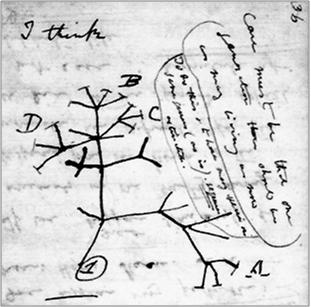
I_Think_Darwin

 Darwin’s “I Think…” handwriting from Notebook B: Transmutation of species 1837-8

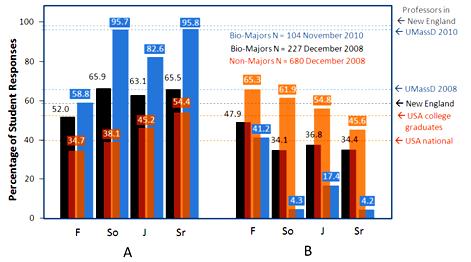
The histogram below summarizes the patterns of acceptance of evolution openly (A) or no opinion (B) among undergraduates at the University of Massachusetts Dartmouth (UMassD) as function of their academic level: Freshman (F), Sophomore (So), Junior (J) or Senior (Sr). Note that public acceptance of evolution in the United States of America (USA national) is about 40 percent (data The Gallup Poll 2009) and in New England 59 percent (data The Pew Research Center for the People and the Press 2005), the highest nationwide (shown as horizontal lines in Figure 1). 

UMass Dartmouth Statistics

Figure 1. Acceptance of evolution openly (A) or no opinion (B) by UMassD undergraduates as function of academic level F (Freshman), So (Sophomore), J (Junior), Sr (Senior). Data G. Paz-y-Miño C. © 2011

Biology Majors in 2008 (black bars in Figure 1) had levels of “open acceptance” of evolution between 52.0 percent (Freshman) to 65.5 percent (Seniors). No opinion decreased from 47.9 percent (Freshman) to 34.4 percent (Seniors).

In contrast, Non-biology Majors’ (orange bars) highest levels of acceptance of evolution reached 54.4 percent among Seniors (a value that most likely remained unchanged by the time of graduation), comparable to the level of the “arriving-to-college Biology Majors” (52.0 percent), similar to the USA college graduates (53 percent, The Gallup Poll 2009), and below the New England average (59 percent, The Pew Research Center for the People and the Press 2005). No opinion decreased as function of academic level but from 65.3 percent (Freshman) to only 45.6 percent (Seniors).

After re-conceptualizing the Freshman Biology Majors courses Biology of Organisms BIO-121/122 and Laboratories BIO-131/132 (re-conceptualization began in the 2007-2008 academic year – to present), which now have a comprehensive evolutionary approach, all cohorts of Biology Majors (blue bars) have increased significantly their acceptance of evolution, from 58.8 percent (Freshman) to 95.8 percent (Seniors)…

CharlesDarwinCartoonByDGranlund…These values are comparable to the 97 percent acceptance of evolution by the New England Professors and rank among the highest in the US…

Longitudinal analysis of two Freshman cohorts (2008-9 or 2009-10) revealed significant increase in acceptance of evolution in a single academic year (means: 56 percent in September, 70 percent in December, and 80 percent in May). — © 2011 by Guillermo Paz-y-Miño-C. all rights reserved

For related topics click on Research Articles on Acceptance of Evolution

The “Jackprot” Simulation

The Jackprot is a didactic slot machine simulation that illustrates  how mutation rate coupled with natural selection  can interact to generate highly specialized proteins.

NEWConceptualized by Guillermo Paz-y-Miño C. (University of Massachusetts Dartmouth), Avelina Espinosa (Roger Williams University) and Chunyan Y. Bai (Roger Williams University), the Jackprot uses simplified slot-machine probability principles to demonstrate how mutation rate coupled with natural selection suffice to explain the origin and evolution of highly specialized proteins. The Jackprot also helps us understand why evolution by means of natural selection cannot be a random process.

Winning the ‘jackprot,’ or highest-fitness complete-peptide sequence, requires gradual and cumulative smaller ‘wins’ (rewarded by selection) at the first, second and third nucleotide positions in each of the codons coding for a polypeptide (= ‘jackdons’ that lead to ‘jackacids’ that lead to the ‘jackprot’).

TheJackprotSimulation

A slot-machine represents the cellular chemical apparatus, product itself of Darwinian evolution, required to generate, step by step, each of the three nucleotides coding for an amino acid. The probability of getting the correct triplet, for example, the start codon methionine or ATG, in a single attempt (or winning the ‘jackacid’), is equal to 1/64, or one divided by 4 x 4 x 4 (i.e. the total number of possible nucleotides per position multiplied by itself three times)…

…But because molecular evolution occurs gradually, a naturalistic assumption of the ‘jackprot’ model, each time any of the correct nucleotides is generated by the slot-machine, natural selection rewards it and keeps it (partial nucleotide win in a codon or ‘jackdon’)…

…Therefore, the probability of arriving, nucleotide by nucleotide, at the ATG sequence is equal to 1/12, or one divided by 4 + 4 + 4 (i.e. the summation of the individual probabilities for each nucleotide position), a much faster evolutionary process. Note that the sequential and additive arrival at the phenotypically meaningful sequence of A plus T plus G, represents, in reality, the accumulation of events fixed by natural selection during protein evolution, which entails clustered changes of multiple parts, and at diverse locations, within functional protein domains.

NCBITeachers and students can access The Jackprot Simulation (click on illustration above) and run statistical analyses of protein evolution by simply cutting and pasting genomic (nucleotide) sequences obtained from the National Center for Biotechnology Information NCBI. The Jackprot generates statistics on nucleotide evolution under selection (both observed and expected values) and at random (expected values without selection). — © 2011 by Guillermo Paz-y-Miño-C. all rights reserved

For detailed guidelines on how to use The Jackprot Simulation click on Guidelines Jackprot

To access original scientific article on The Jackprot Simulation, published in Evol Edu Outreach, click on PDF

Watch Demonstrational Video in YouTube (click on icon below) Jackprot_Simulation_YouTube


*    *    *    *    *

Interesting Site: “Darwin’s Notebook”

“…A team of hip-hop and contemporary dancers injected life into the still artifacts at a museum… in a show called “Darwin’s Notebook” held at the University of Cambridge Museum of Zoology ” (Source Science Magazine: click on image below for details).

DarwinAsModernDarwin

Darwin’s Image Credit: Ben Swift/Nonsinthetik, from Hip-Hoppin’ Through Darwin’s Theories